How should a project choose a facial recognition access control supplier?
Choose a facial recognition access control supplier by evaluating the complete identity-to-passage workflow, not by comparing a camera resolution or a recognition-speed claim in isolation. The buyer must define the entrance, user population, enrollment process, access policy, alternative credential, privacy boundary, controller or gate interface, network behavior, maintenance plan and acceptance evidence. The supplier must then prove that the proposed face terminal, software boundary and physical access device work together in the actual project environment.
What should buyers define before contacting a supplier?
Facial recognition is only one step in an access decision. A terminal at a staffed office lobby has a different job from a weather-exposed campus gate, a warehouse time-attendance point or a high-throughput turnstile at a commercial park. The proposal becomes comparable only after the project team documents the entrance, people, operating hours, fallback method and decision owner.
Describe the access point
Record whether the terminal is mounted on a wall, turnstile column, speed gate, swing barrier, flap barrier, tripod turnstile or another controlled opening. Document the lane width, walking direction, mounting height, lighting, rain or dust exposure, queue length, expected throughput, emergency route, power source and network path. The terminal may be technically capable while the selected mount, gate controller or safety sensor is unsuitable.
Describe the identity lifecycle
Define who creates an identity, who approves access, how the face template is enrolled, how a user changes role, when access expires, how a template is revoked and which team reviews exceptions. Separate employees, contractors, visitors, residents, students, drivers and emergency responders. A facial recognition access control supplier should show how identity records map to doors, floors, schedules and event history without assuming that one administrator role is appropriate for every project.
Define the alternative credential
Face recognition should not be the only path by default. A person may be unable or unwilling to use face authentication, a camera may be obstructed, a device may be offline, or a policy may require a card, PIN, fingerprint, QR code or staffed verification path. The alternative must be designed, issued, logged and tested. It should not be an informal bypass that removes the access policy.
| Project input | Buyer should document | Supplier evidence to request |
|---|---|---|
| Entrance type | Wall, door, turnstile, speed gate, elevator or controlled zone; dimensions, direction and safety conditions. | Mounting drawing, wiring diagram, relay or Wiegand boundary, supported gate types and exceptions. |
| User population | Employees, contractors, visitors, residents, students, drivers and expected peak flow. | Template capacity, enrollment workflow, role model and throughput assumptions. |
| Identity policy | Approval owner, purpose, retention, revocation, access schedules and audit requirements. | Administration roles, event fields, deletion method, export scope and policy controls. |
| Credential mix | Face, fingerprint, card, PIN, QR, mobile or staffed alternative and recovery path. | Supported carriers, priority order, fallback behavior and failure test cases. |
| Deployment | LAN, Wi-Fi, 4G, local server, cloud, hybrid, power and maintenance access. | Data flow, network ports, offline behavior, synchronization and update responsibility. |
| Commercial scope | Quantity, sample, finish, branding, destination, documents, delivery and support expectation. | Configuration, MOQ, price basis, lead-time basis, warranty and change-control terms. |
How should a facial recognition access control supplier be evaluated?
A catalogue, chipset name or “AI” label is not enough to approve a supplier. Evaluate the supplier across face-capture quality, liveness controls, access interfaces, identity governance, outdoor or indoor suitability, production evidence and after-sales responsibility. The best supplier conversation moves from a generic feature list to a model-specific test plan.
Check whether the supplier understands the gate
Ask how the terminal sends an authorization result to the physical opening and how it receives status or safety conditions. A face match may be a relay output, Wiegand message, RS485 transaction or a software event that a controller interprets. Confirm who owns the anti-tailgating sensor, emergency release, fire-alarm interface, passage direction and manual override. A valid identity decision does not by itself prove safe passage.
Check whether published claims have conditions
Recognition speed depends on image quality, user movement, distance, lighting, threshold and device configuration. Template capacity depends on the model and firmware. IP protection applies to the specified enclosure and installation conditions. Network behavior depends on the chosen interface and software. A responsible facial recognition access control supplier states the model, version, environment, test method and exclusions behind each claim.
Check the evidence chain
Request a datasheet, installation drawing, wiring diagram, supported credential matrix, software or firmware revision, sample configuration, inspection record and acceptance checklist. For a multi-site rollout, ask how the approved sample is linked to production units and how a component or firmware change is communicated. Evidence should let the integrator separate an enrollment issue from a terminal issue, a gate issue, a network issue or an administrator-policy issue.
Which face-terminal format fits the project?
Face terminals are not interchangeable. The location of the camera, the direction of movement, the physical access device, the weather exposure and the identity workflow determine the suitable form factor. A supplier should recommend a terminal after reviewing the entrance schedule rather than forcing one device across every opening.
Turnstile and pedestrian-gate terminals
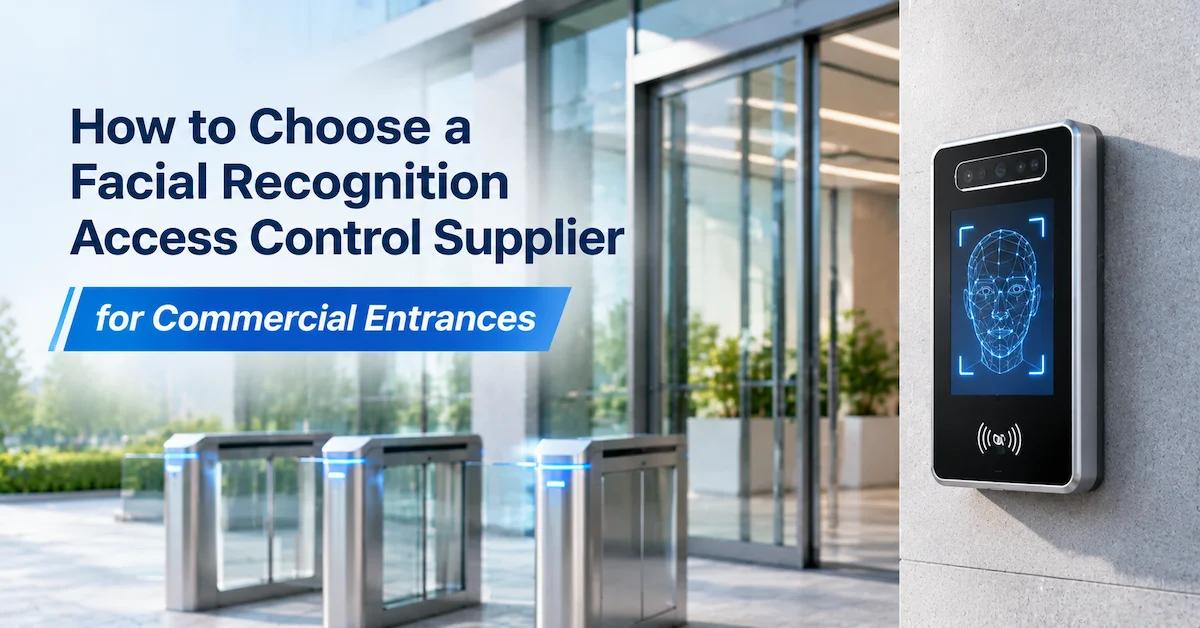
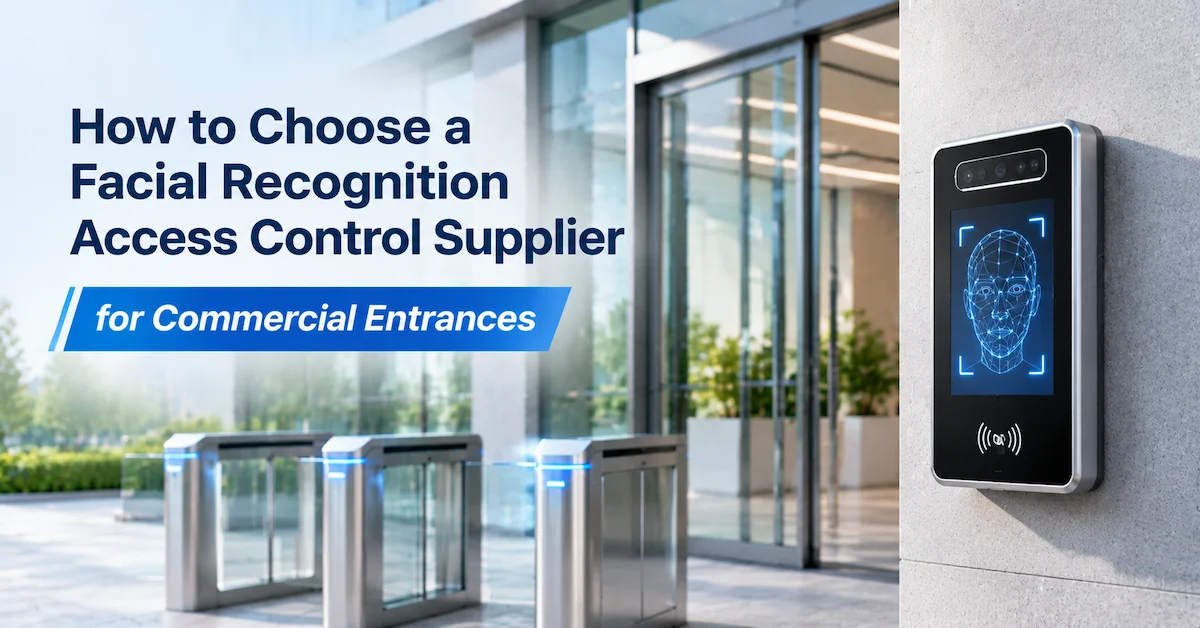
High-throughput gates need fast user presentation, controlled lane behavior and a clear interface to the gate controller. Confirm mounting height, walking direction, anti-passback or anti-tailgating requirements, emergency release and accessible lanes. For outdoor gates, check rain, dust, temperature, glare and maintenance access. A wall-mounted terminal may need a different field of view from a column-mounted device even when both support the same credential.
Lobby and office terminals
Indoor lobbies may prioritize an intuitive display, multiple credential options, visitor handling and integration with a door controller. The buyer should decide whether the terminal enrolls users, only verifies them, or depends on a central identity service. Confirm how a receptionist handles a visitor who cannot use face authentication and how the access event is associated with the visitor record.
Time-attendance and workforce points
Time attendance is not identical to door authorization. The project must define whether the terminal is recording a work event, opening a door, or doing both. Approval, retention, correction, payroll integration and employee notice may be different from a security access workflow. Keep these responsibilities explicit in the RFQ so a supplier does not assume that a terminal feature automatically provides a complete workforce system.
What do the published KEYPLUS terminals show?
The two public models below provide concrete starting points for a technical shortlist. They are model-level facts, not a universal promise for every building, country or integration. The facial recognition access control supplier should confirm the current revision, local compliance, face-enrollment policy, controller interface and quotation terms before a purchase order.
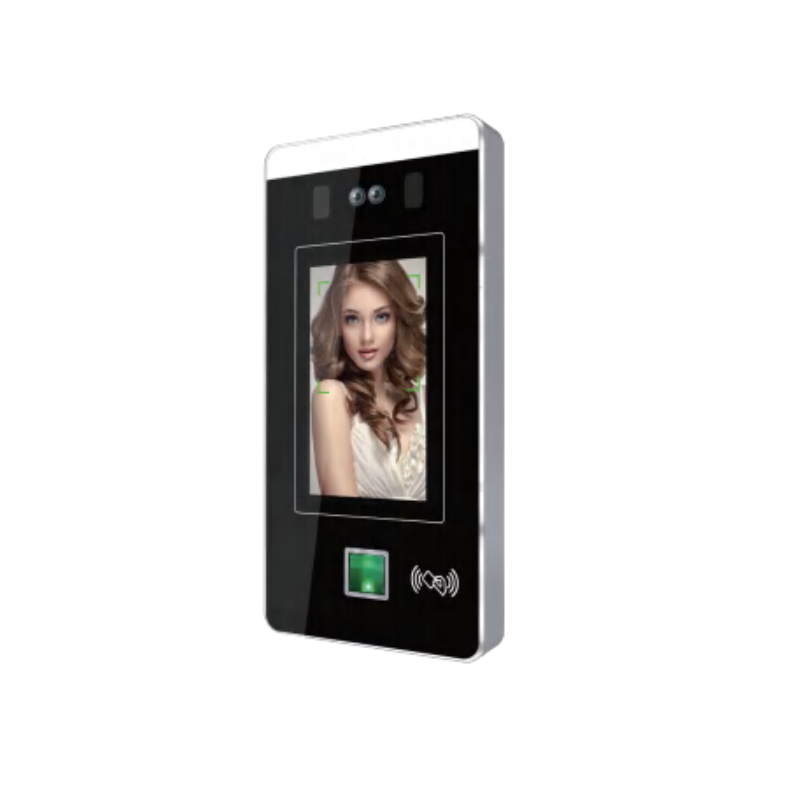
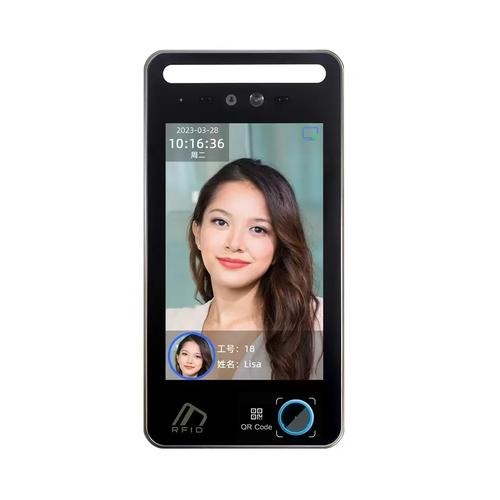
| Published model | Publicly stated details | Potential project role | Confirm before order |
|---|---|---|---|
| KEYPLUS EN-KIFTA | IP65; 1-megapixel dual-lens module; dynamic binocular IR liveness; identification speed listed as up to 0.2 seconds; 0.3–2.0m recognition distance; TCP/IP, USB, optional Wi-Fi and 4G; Wiegand and RS485; 5,000 faces standard with customization listed up to 10,000. | Outdoor or semi-outdoor turnstiles, speed gates, flap barriers, tripod turnstiles, campus gates and business-park entrances. | Actual lighting and movement, gate controller, emergency release, liveness policy, network path, local approval and sample results. |
| Ai28EFW | IP65; 8-inch HD IPS touchscreen; 2MP color plus 2MP IR WDR dual-lens camera; face, fingerprint, RFID card and PIN support; 5,000 faces, 10,000 fingerprints and 15,000 cards listed; TCP/IP, Wi-Fi, Wiegand and RS485. | Commercial lobbies, controlled staff entrances and projects needing a visible display with multiple credential paths. | Mounting, door or controller interface, user enrollment, alternative credential policy, screen placement, privacy notice and current software scope. |
These product pages do not establish universal biometric accuracy, legal approval, delivery time, MOQ, warranty SLA or compatibility with every access platform. The KEYPLUS Manufacturing & Quality process explains why the approved requirement, sample, specifications, test method and production release evidence should remain aligned. Request the evidence applicable to the exact model, market and configuration.
How should face enrollment, privacy and fallback be designed?
Face recognition changes the identity lifecycle because a biometric template is not a disposable card. The project should define the lawful purpose, notice or consent requirement where applicable, retention period, access to templates, deletion method, administrator roles, audit trail and alternative route. The supplier can provide device capabilities, but the project owner and responsible professionals must set the policy for the target market and use case.
Control enrollment quality
Specify who enrolls a user, how the user is verified during enrollment, how duplicate or poor-quality templates are handled and how a failed enrollment is resolved. Test different heights, glasses, masks, lighting and normal movement where those conditions are expected. A terminal that performs well in a controlled demonstration may need a different threshold or alternative credential at a busy entrance.
Limit administrative access
Separate enrollment, access-policy administration, technical maintenance, event review and export rights. Record who can add or delete a face template and who can change the matching threshold. Define how administrator credentials are protected and how a departing administrator is removed. The access system should remain the authority for door permissions even when face matching occurs at the terminal.
Design the fallback path before the pilot
Test a lost or unreadable face credential, a blocked camera, a user outside the access schedule, a network outage, a power interruption and a person who cannot use face authentication. The fallback may be a card, PIN, fingerprint, QR code, receptionist approval or mechanical route depending on the project. It must be authorized, logged and included in the same acceptance plan.
What integration questions should the supplier answer?
“Supports access control” is not an integration specification. The buyer needs to know where the face decision is made, how the result is transported, which controller receives it, what event is recorded, how a revocation reaches the terminal and what happens when the network or central service is unavailable.
| Integration layer | Buyer question | Evidence required |
|---|---|---|
| Identity source | Where are users created, approved, changed and deleted? | Data owner, enrollment sequence, role mapping, deletion method and audit fields. |
| Face terminal | Does it enroll, match, store templates, cache permissions or only send a result? | Model and firmware behavior, capacity, threshold settings and local event storage. |
| Controller or gate | How does an accepted or rejected result operate the opening? | Relay, Wiegand, RS485 or API diagram; timing, input/output and emergency behavior. |
| Network and platform | What is local, private, cloud or hybrid, and what survives an outage? | Topology, ports, authentication, offline cache, synchronization and recovery test. |
| Audit and support | Who reviews events and diagnoses a failed access attempt? | Event schema, retention, permissions, logs, support RACI and escalation path. |
Use the right interface language
Ask for the supported interface, message direction, authentication, event fields, timestamps, retries, error codes and version dependencies. Wiegand can carry a credential result, but it does not define the full identity lifecycle. RS485 may support a local device connection, but the project must still confirm the protocol and software behavior. TCP/IP or Wi-Fi availability does not by itself prove cloud or access-platform compatibility.
Assign the RACI before commissioning
The terminal supplier may own device firmware and hardware support. The distributor may own logistics and first-line service. The integrator may own controller mapping, network, software and gate commissioning. The property owner may own user policy, privacy review and incident handling. Put these boundaries in the RFQ and pilot sheet. Otherwise, a failed revocation or gate release can be passed between parties without an accountable owner.
How should the sample and acceptance test be run?
A sample should represent the production configuration and the real entrance. Record the model, finish, mounting, firmware, credential types, controller, gate, network, power supply and software revision. Test the access decision and the physical passage as one sequence. A desk demonstration can show a screen and a successful match, but it cannot prove turnstile safety, enrollment quality, network recovery or administrator governance.
Test normal access
Test approved users at different heights and normal walking speeds. Verify schedule rules, duplicate identities, expired access, role changes and a user who requires the alternative credential. Measure the time from presentation to opening and observe queue behavior. Record false rejects and the operator action required to resolve them.
Test adverse conditions
Include backlight, low light, glare, rain or dust where relevant, glasses, masks, movement, partial obstruction and a busy queue. For outdoor equipment, test the actual enclosure and installation rather than treating an IP rating as a substitute for commissioning. For a face terminal connected to a gate, include sensor blockage, tailgating response, emergency release and manual recovery.
Test failure and recovery
Disconnect the network, restart the controller, remove a credential, interrupt power, fill a defined template capacity and restore the connection. Confirm whether the terminal retains authorized users, records events locally, reports a health condition and synchronizes after recovery. Test administrator removal and template deletion. The acceptance record should identify expected result, observed result, evidence file and responsible owner.
What should be included in a facial recognition access-control RFQ?
A comparable RFQ gives every facial recognition access control supplier the same entrance schedule, identity policy, alternative method, interface boundary and evidence request. Separate terminal hardware, controller, gate or lock, software, enrollment, installation, integration, training, support and optional customization. Require suppliers to state assumptions and exclusions instead of quietly quoting different architectures.
| RFQ section | Buyer should provide | Supplier should return |
|---|---|---|
| Entrance and environment | Photos, drawings, mounting, lane width, flow, lighting, weather, power and emergency route. | Terminal model, mounting drawing, wiring, gate compatibility, environmental conditions and exclusions. |
| Identity and privacy | User groups, purpose, enrollment, retention, revocation, roles, notices and alternative credential. | Capacity, credential matrix, administration model, deletion method and event record. |
| Integration | Controller, gate, access platform, network, API or protocol, server and cybersecurity constraints. | Interface scope, version, topology, RACI, offline behavior, commissioning and limitations. |
| Sample and acceptance | Representative entrance, test users, scenarios, dates, measurement method and acceptance owner. | Sample configuration, preparation time, test support, evidence format and approval record. |
| Commercial and lifecycle | Quantity, spares, branding, destination, documentation, delivery and support expectation. | MOQ, price basis, lead-time basis, warranty, training, replacement and change-control terms. |
Facial recognition access-control RFQ checklist
- Site type, country and responsible operating team
- Entrance type, mounting height, lane width and flow direction
- Lighting, weather, dust, temperature and maintenance conditions
- User groups, enrollment owner and access schedules
- Face-template purpose, retention, deletion and administrator roles
- Alternative credentials and exception procedure
- Controller, turnstile, lock, elevator or gate interface
- Network, power, offline, synchronization and emergency behavior
- Sample entrance, test users, acceptance criteria and evidence owner
- MOQ, delivery, warranty, documents, training and after-sales scope
Use the KEYPLUS RFQ route for a model-specific access hardware review. Include the entrance schedule and identity workflow so the response can connect Access Control products with the Access & Identity system.
Frequently asked questions about facial recognition access control suppliers
What should a facial recognition access control supplier receive before quoting?
Send the site type, entrance photos or drawings, mounting and flow conditions, user population, identity policy, alternative credential, controller or gate, network, power, sample requirement, quantity, destination and acceptance plan. A request for “face terminals” without the physical opening and identity workflow cannot produce a comparable quotation.
Is facial recognition the same as access control?
No. Facial recognition is one identity signal. Access control also includes authorization, schedules, credential delivery, door or gate operation, event logging, revocation, safety behavior and exception handling. A terminal may match a face while a separate controller decides whether the opening is authorized.
Can face terminals operate a turnstile directly?
Some terminals provide relay, Wiegand or RS485 interfaces, while the gate controller may own passage logic and safety sensors. Confirm the exact model, interface, timing, emergency release and commissioning responsibility. A physical integration test is required before a batch order.
What alternative credential should be provided?
The alternative depends on the project and may be a card, PIN, fingerprint, QR code, mobile credential or staffed verification. It should be authorized, logged and tested for users who cannot use face authentication, for a blocked camera, and for network or power failure. Do not create an untracked bypass.
How should biometric privacy be evaluated?
Define the lawful purpose, notice or consent requirement where applicable, template retention, deletion, administrator access, audit trail, security controls and user alternative. Local legal and policy review is required. The supplier should document device capabilities and data flow without claiming that technical features alone satisfy every market requirement.
How many face templates should a project specify?
Specify the active users, growth period, duplicate policy, visitor turnover, offline cache and future sites. Public KEYPLUS pages list model-specific capacities, such as 5,000 faces for EN-KIFTA and Ai28EFW, but capacity does not by itself establish throughput, retention, cross-device synchronization or a complete identity platform.
What should be checked in a face-terminal sample?
Check enrollment, matching, liveness behavior, user height, movement, lighting, glasses or masks, alternative credentials, schedule rules, revocation, event records, controller output, gate safety, network loss, power recovery, administrator roles and template deletion. Approve the exact model, firmware, mount, finish and software configuration.
Can a supplier guarantee recognition accuracy at every entrance?
No responsible supplier should transfer a result from one scene to another without evidence. Performance depends on camera position, target distance, lighting, movement, occlusion, user conditions, threshold, firmware and operating procedure. Require a representative evaluation method and a written statement of limitations.
What happens if the network is unavailable?
Behavior varies by terminal, controller and software configuration. Confirm whether authorized templates and schedules remain local, whether events are stored, how revocation is handled, and how data synchronizes after reconnection. Include network loss, time drift, power interruption and recovery in the acceptance test.
What MOQ and lead time should a buyer expect?
There is no universal MOQ or lead time across terminal models, customization, branding, quantity, destination, packaging, software and support. Request a dated quotation for the exact configuration. The supplier should state validity, assumptions, warranty, delivery basis and change impacts in the commercial response.
Conclusion
A project should choose a facial recognition access control supplier by comparing the full identity-to-passage system, not a face terminal in isolation. Define the entrance, user lifecycle, privacy boundary, alternative credential, controller interface, offline behavior, safety response, sample test and commercial assumptions before comparing price.
KEYPLUS provides a path from Access Control products to the Access & Identity system and model-specific RFQ review. Shortlist the terminal that fits the real entrance, validate it with representative users and conditions, and keep capacity, compatibility, compliance, MOQ, delivery, warranty and support terms in the current technical and commercial quotation.