
Opening, closing and restricted access
Staff entrances, stock rooms, offices and service areas use supported permissions and exception records. Attended handling covers failed credentials and unusual after-hours activity.
KEYPLUS · Solutions
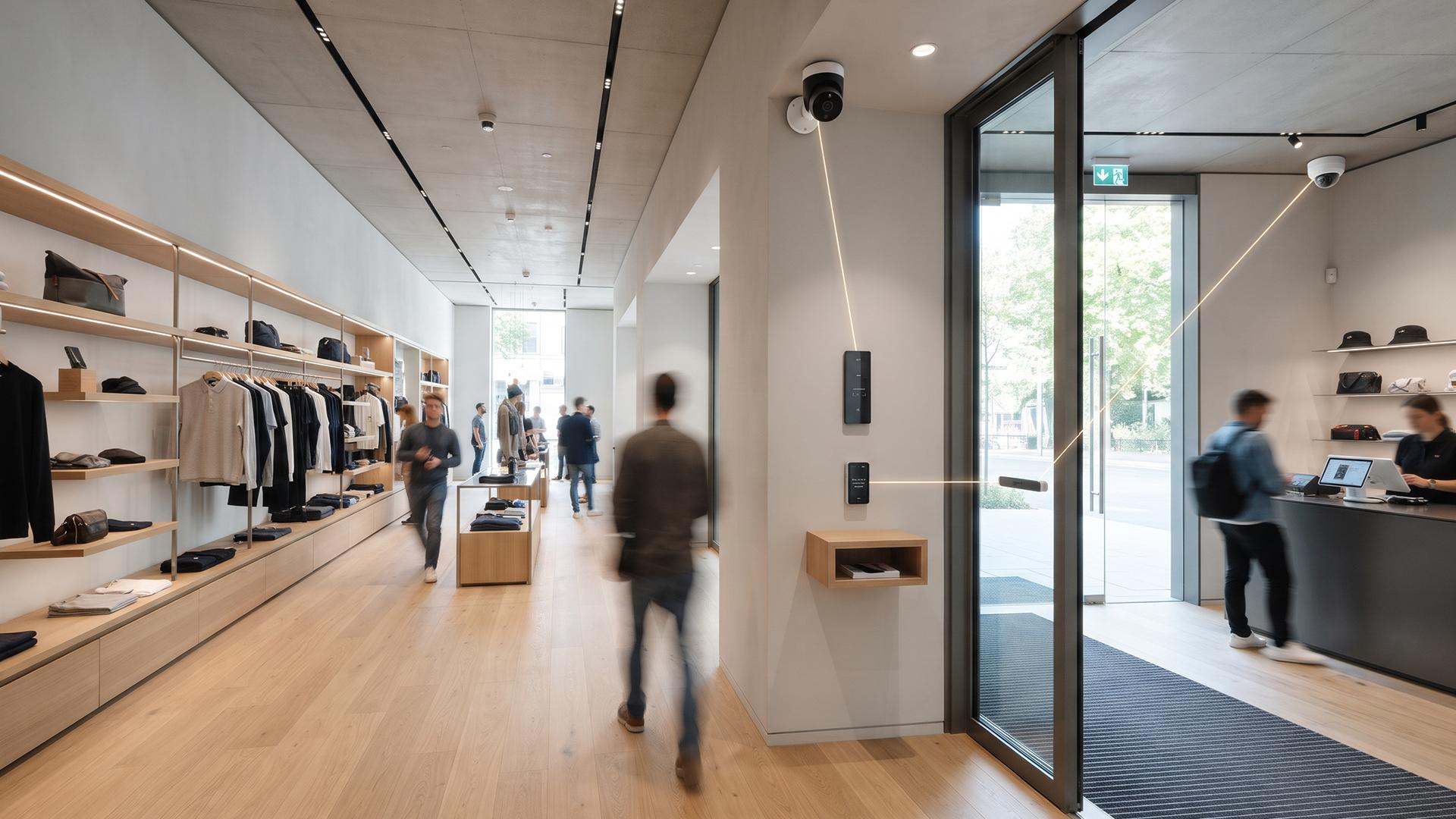
Coordinate store access, opening and closing, restricted areas, selected video events, environmental conditions, energy and multi-site response. KEYPLUS helps retail teams turn store signals into clearer priorities without disrupting customer experience.
Deliveries, staff changes, trading hours and cleaning give each store a changing daily rhythm. Store teams need a clear local response, while central teams need exceptions that identify the site, condition and responsible role. Shared information connects those two levels of operation.
Access, selected video views and environmental information serve the daily store routine. Opening checks, deliveries and shifts connect these systems with local staff and central teams, giving an exception a location and a responsible role.
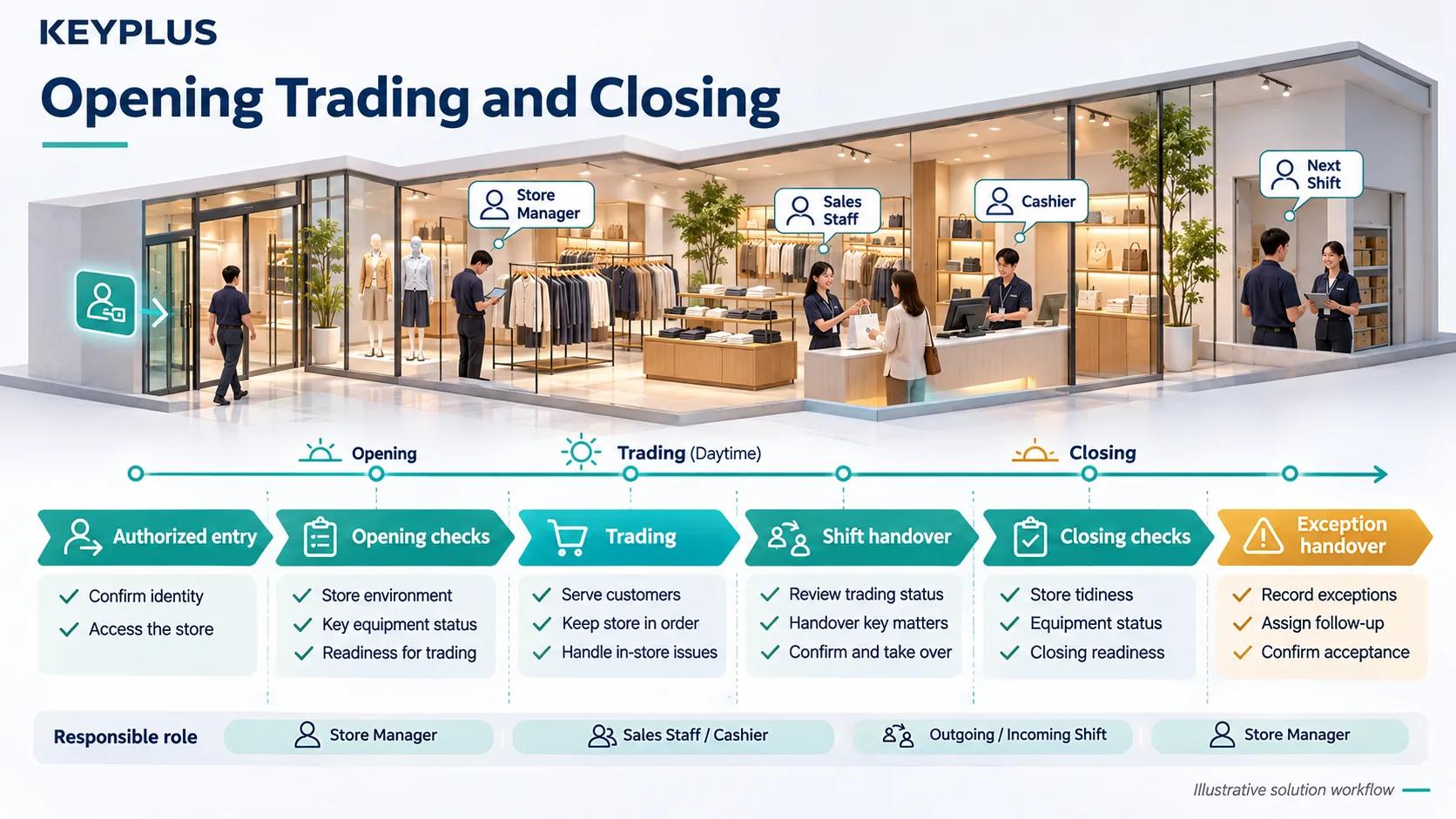
Staff entrances, stock rooms, offices and service areas use supported permissions and exception records. Attended handling covers failed credentials and unusual after-hours activity.
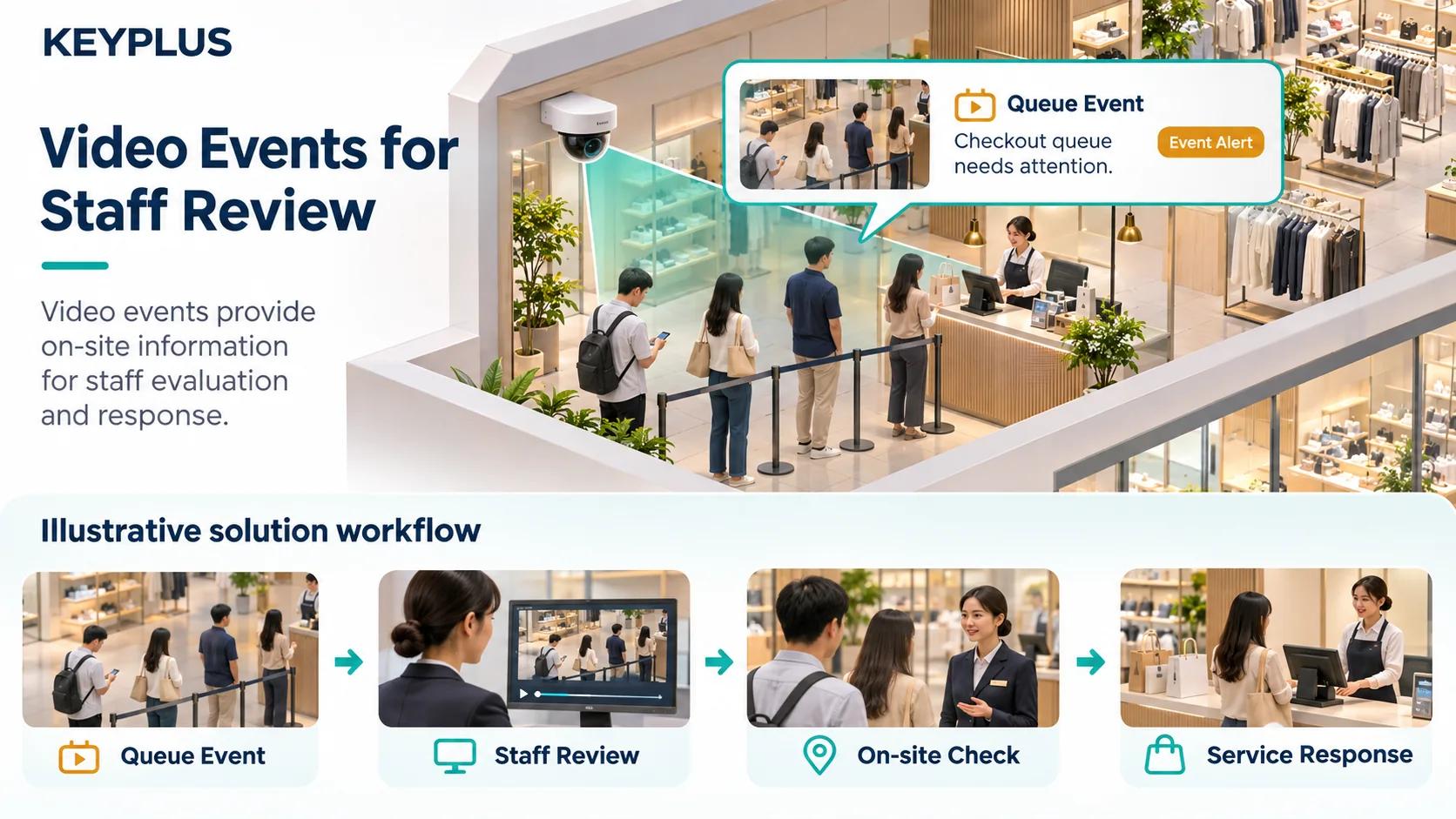
Selected visual tasks bring queue conditions, boundary events and other defined scenes into store review. AI indications add evidence for staff assessment without establishing intent or replacing store procedures.
Relevant refrigeration, temperature, leak, power and device conditions connect with a response workflow. Critical equipment keeps its dedicated controls and maintenance requirements.
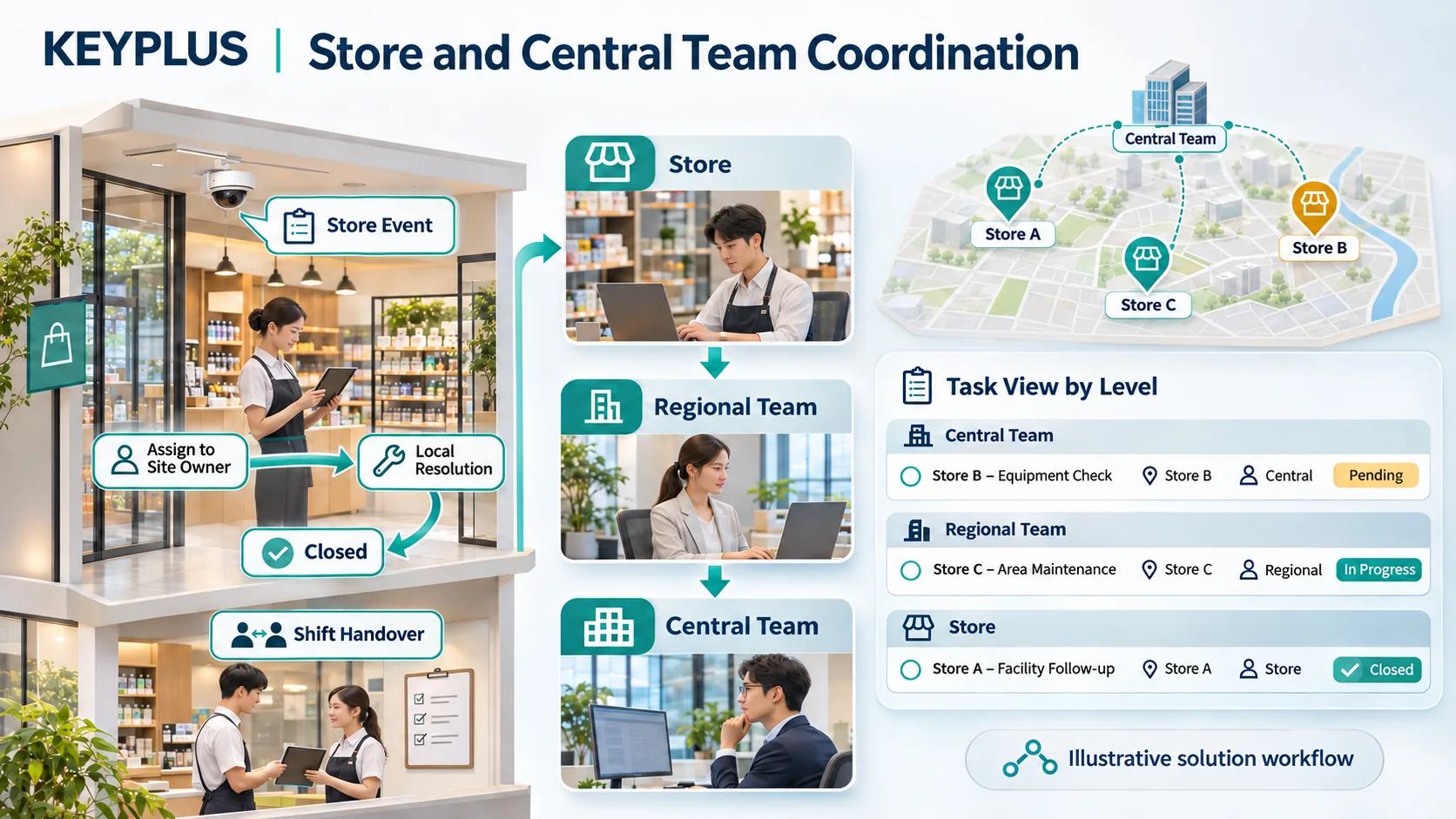
Store, region and responsibility views bring together events, open work and recurring patterns. Central teams can prioritize work while local staff retain defined response and escalation paths.
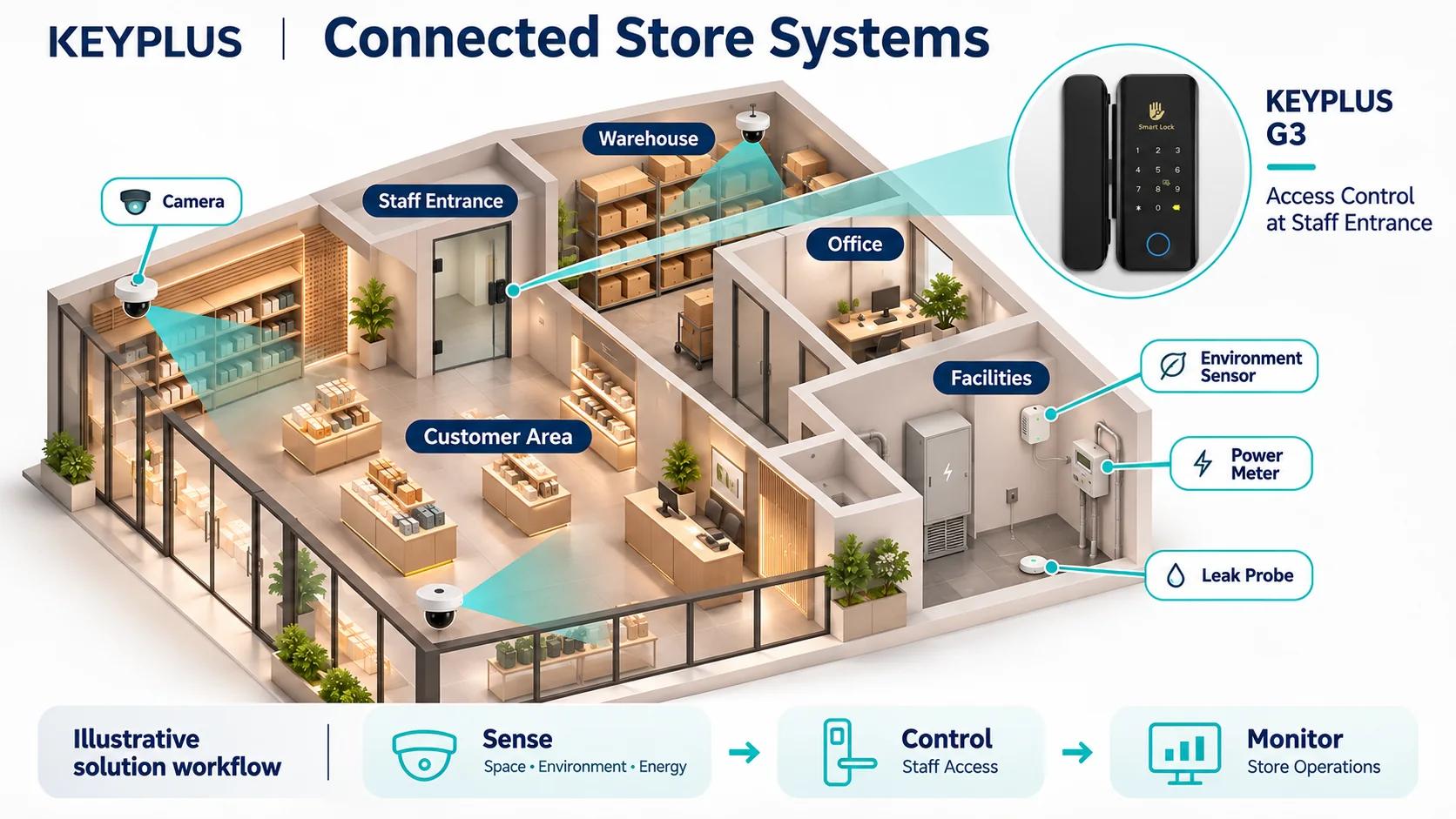
Staff and service access, public- and restricted-area video, environmental sensing and utility information form the store’s field system. Equipment interfaces, alarm events and operator views connect it with the approved business workflow. Payment and customer-identification systems remain separate unless included in the agreed scope.
Unresolved work remains part of the next shift’s operating picture. Acknowledgement and handover records connect the first notification with the later service response, while store context makes comparisons between locations more meaningful.
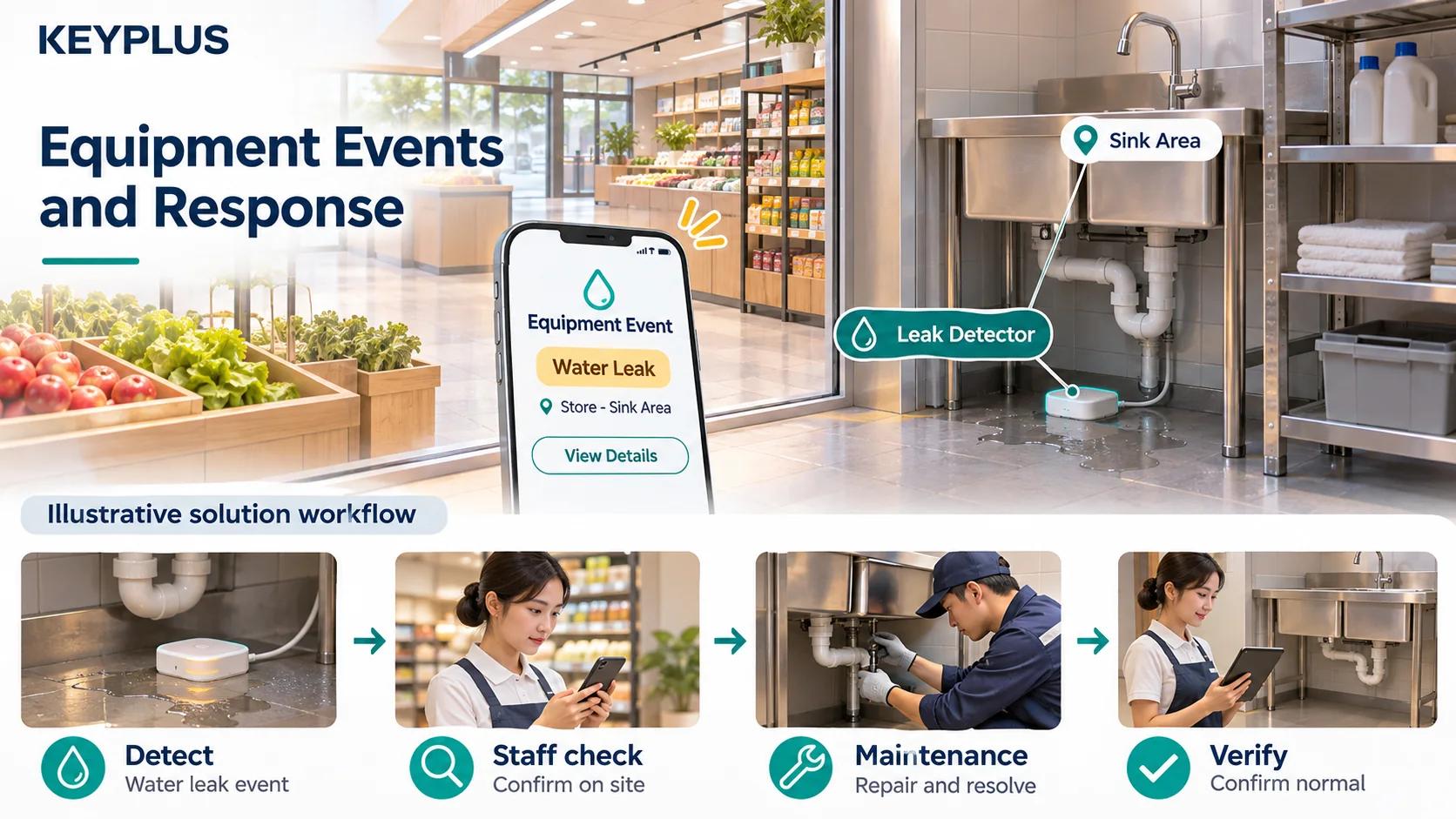
Flagship stores, shopping-centre units, supermarkets, convenience stores and fulfilment locations have different hours and facility needs. The system mix connects those formats with the stock, service and operating responsibilities at each site.
Explore staff access, selected visual events, equipment sensing and operating views across stores.
No. Video AI supports defined tasks and scenes; an event is information for review, not proof of a person’s intent.
A common operating standard can support multiple stores, while layout, equipment and connectivity give each site its own configuration needs.
Only if a defined workflow, approved interface and data policy justify that integration.
Opening, deliveries, staff shifts and closing give each store a recurring operating rhythm. Connected access, selected sensing and event views support local work and multi-store oversight.