
Measure at an actionable level
Whole-site, submeter, tenant, room-group and equipment points form a documented metering hierarchy, helping distinguish totals and allocations without double counting.
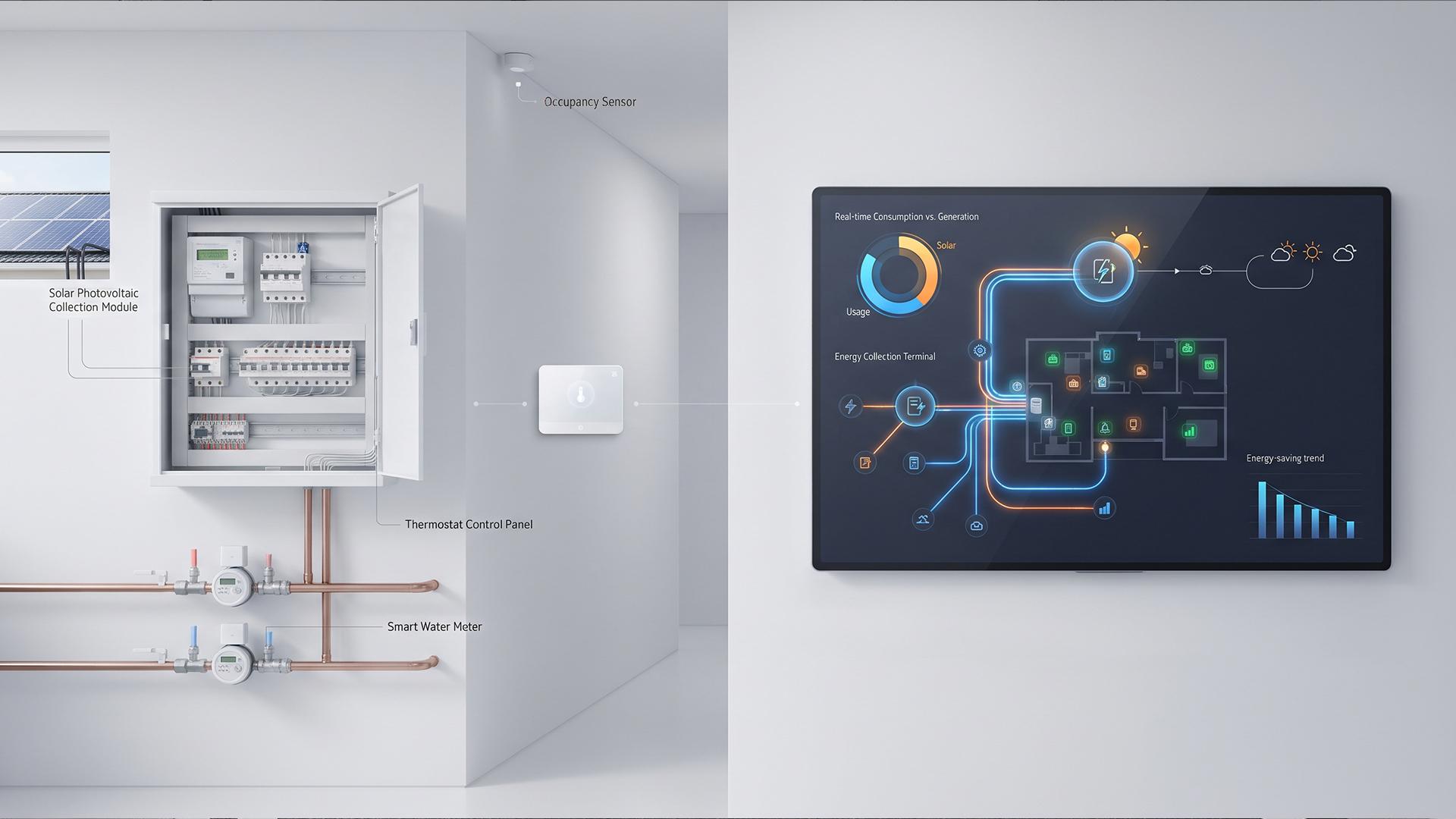
KEYPLUS · Systems
Connect trustworthy utility measurement and selected controls to the spaces, schedules and operating decisions they support. KEYPLUS plans meters, collection, interfaces and energy intelligence as one verifiable chain rather than a dashboard without engineering context.
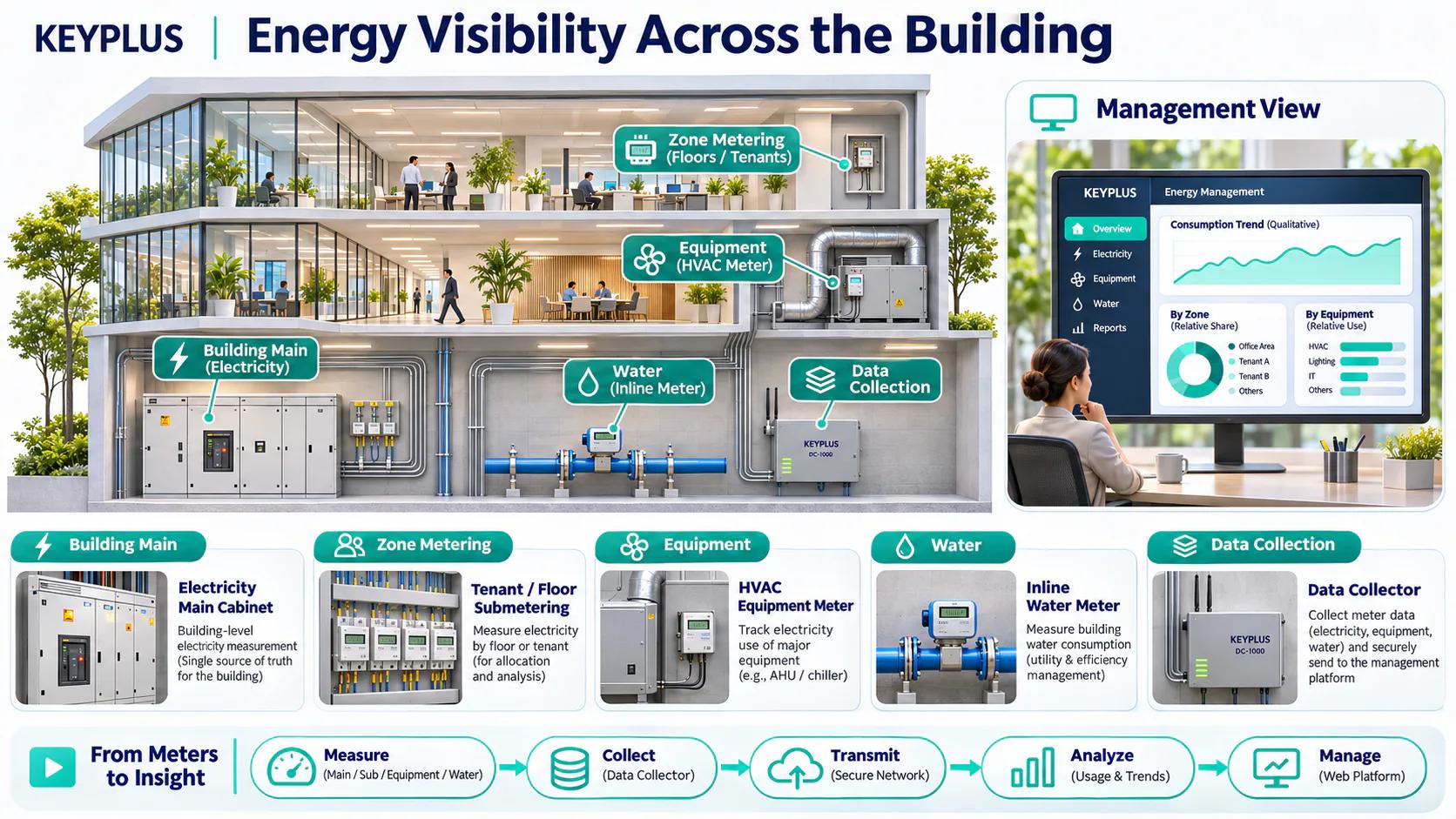
Metering becomes useful when the point represents a clear decision: building totals, tenant allocation or equipment operation. Measurement location, units, intervals and equipment relationships give the data that meaning. Billing, engineering monitoring and optimization serve different purposes and carry different requirements.
Meter location, units, reporting interval and equipment relationships give each reading a place in the energy picture. Source and time information connect field measurement with meaningful reporting.
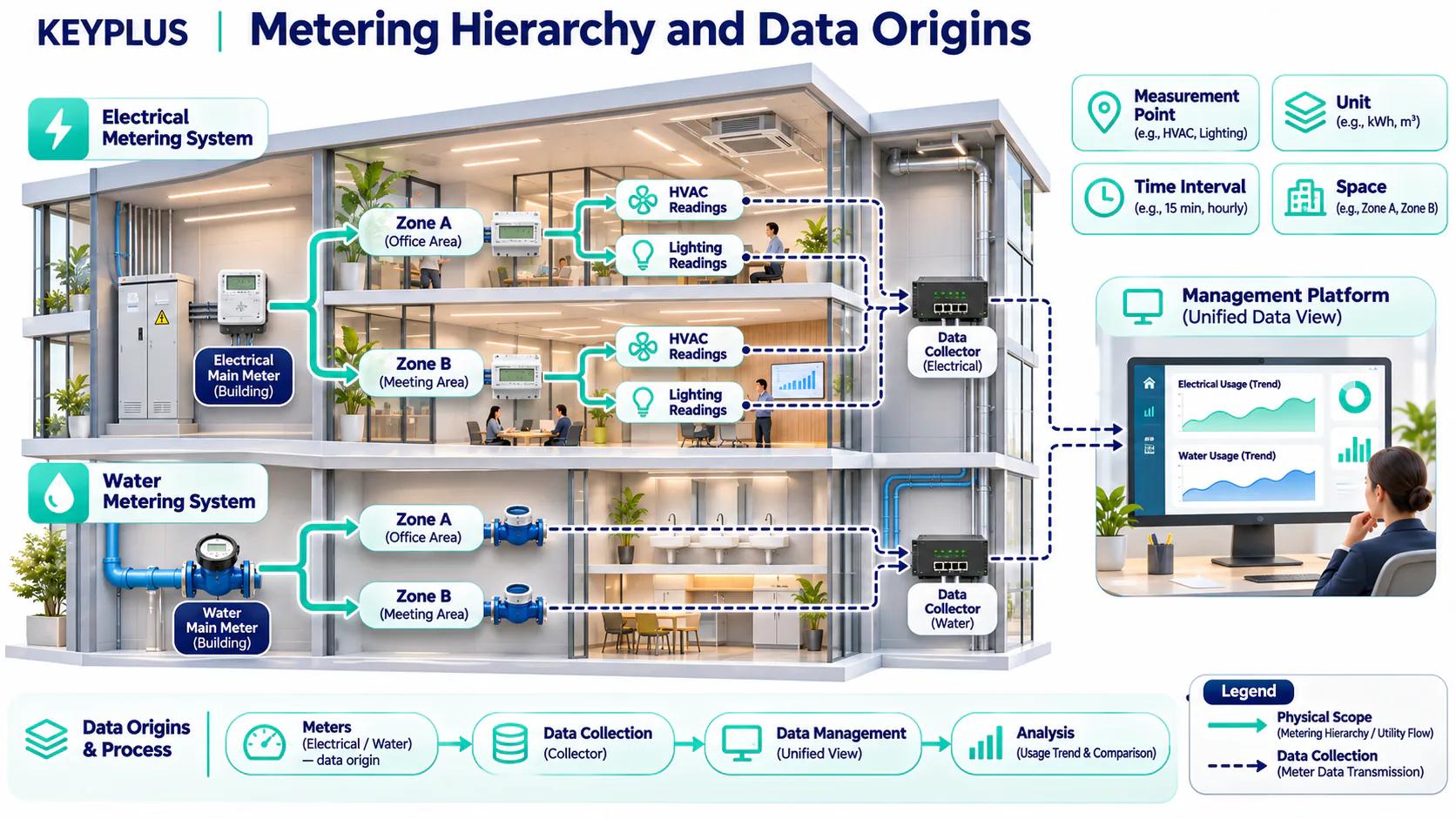
Whole-site, submeter, tenant, room-group and equipment points form a documented metering hierarchy, helping distinguish totals and allocations without double counting.
Units, scaling, timestamps, gaps, quality flags and source ownership give each reading a clear meaning for reporting and analysis.
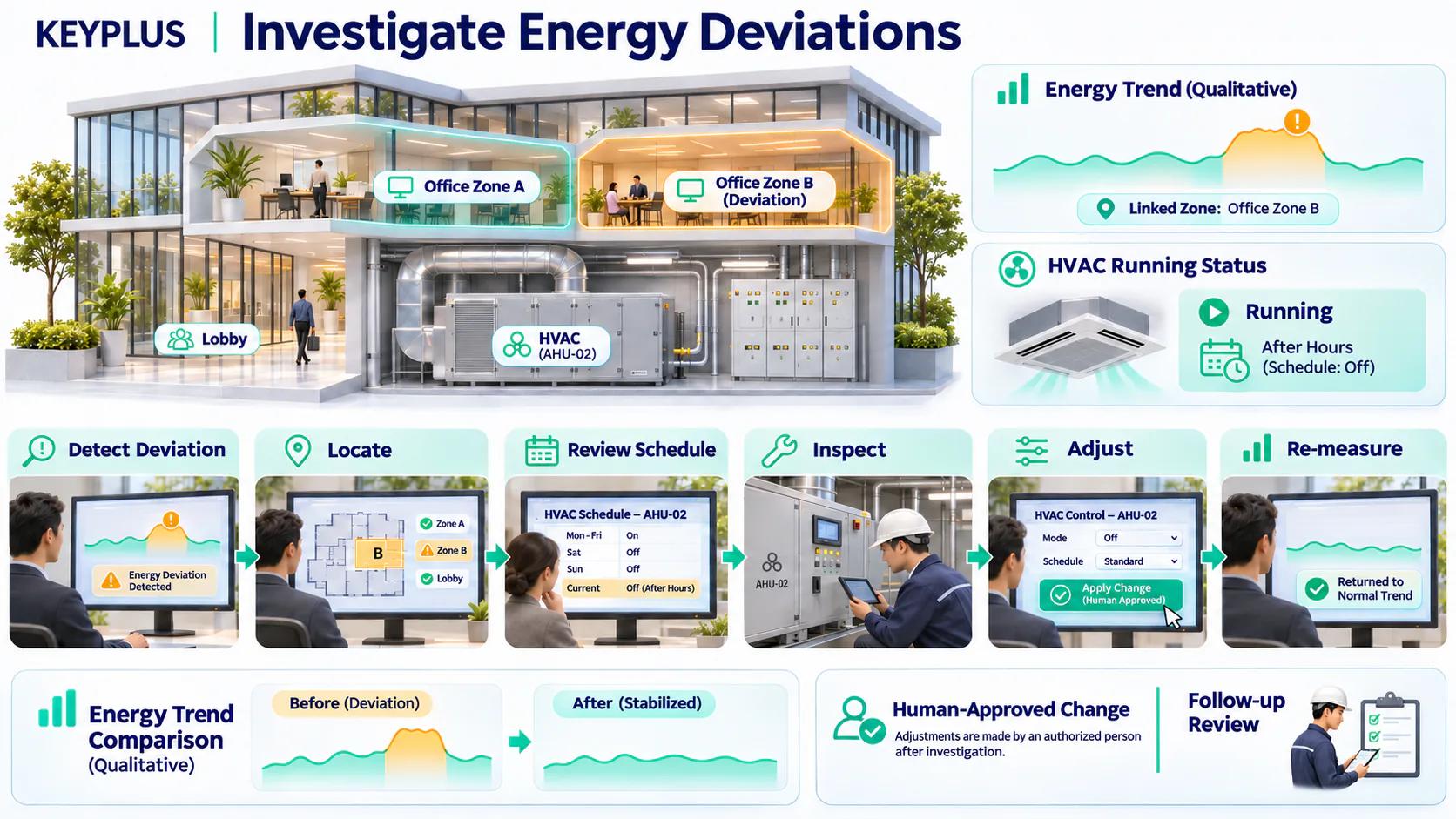
Thresholds and suitable analytics highlight consumption changes. Schedules, weather, occupancy proxies and equipment conditions add context before a cause is assigned.
Where control is included, compatible interfaces carry bounded settings to equipment. Device response and later measurements show the result while local safety limits remain active.
Electricity, water and gas meters provide readings; current transformers, multi-circuit monitors, collectors and gateways build the measurement chain. Where control is included, compatible HVAC interfaces, thermostats, relays, smart breakers or valves connect approved settings with equipment. Local protection, essential services and specialist plant controls retain their own control responsibilities.
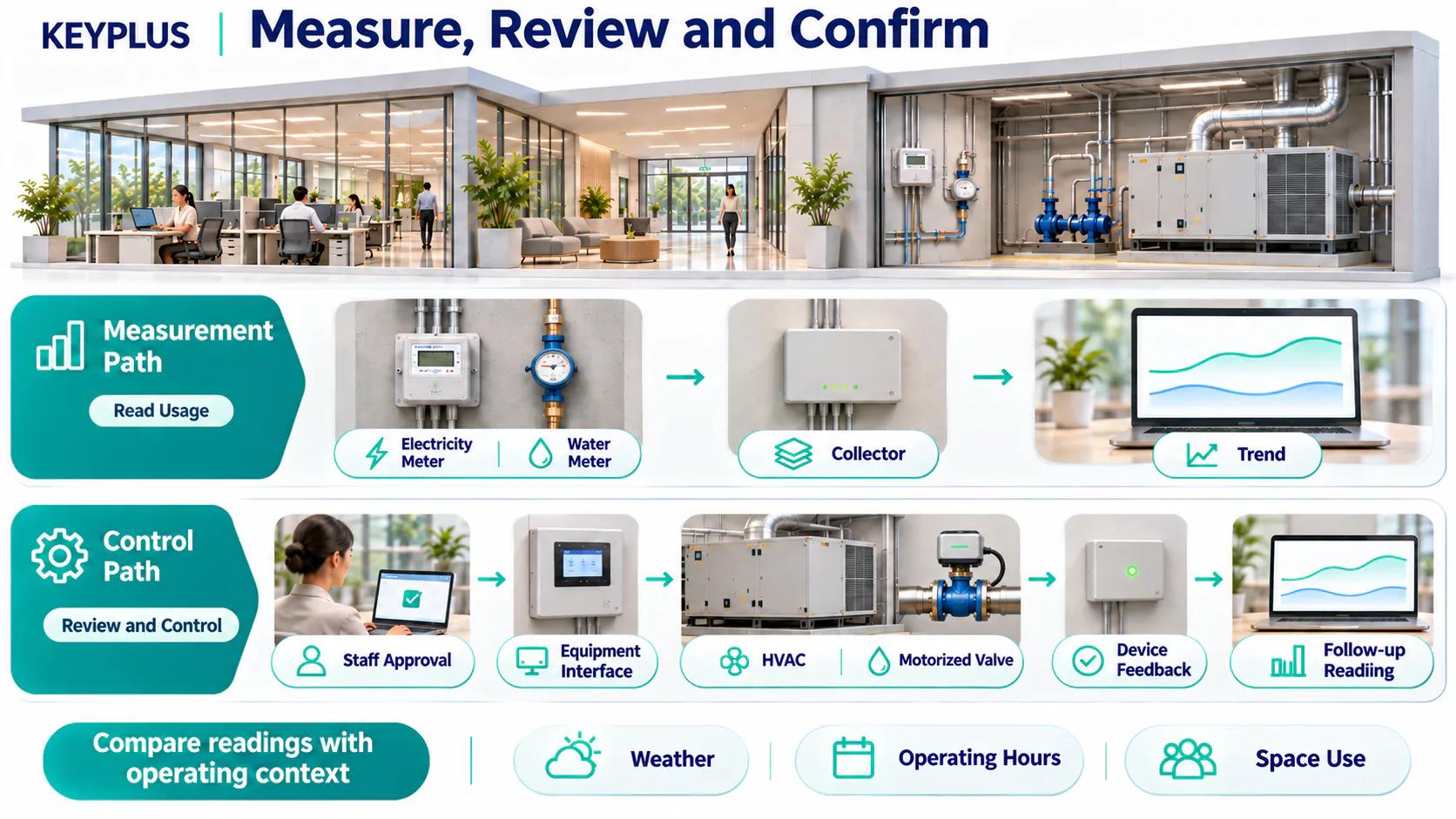
Energy intelligence can progress from descriptive reporting to anomaly detection, diagnostic assistance, forecasting and evaluated optimization recommendations. Advanced analysis requires suitable baselines and validation. An anomaly is not automatically a fault; savings are established through comparable measurements.
Energy deviations become more meaningful alongside weather, schedules and equipment conditions. Measured comparisons connect an operating change with the baseline, while billing and regulated measurement retain their separate requirements.
Metering engineering connects the electrical installation with ratios, units, timing and collection. Commissioning brings representative readings and reference values together, with the control boundary kept separate from measurement.
From individual properties to multi-site estates, energy information serves different operating priorities. Tenant billing and regulated measurement remain distinct from general engineering monitoring.
Explore meters, collection paths, energy analytics and bounded equipment control alongside platform integration and deployment.
No. Measurement and control require different hardware, interfaces and safeguards.
Compatible electricity, water and gas sources can be evaluated within a defined hierarchy.
No. Results depend on baseline, equipment, operations and verified changes.
No. Higher consumption can reflect operating hours, measurement boundaries or other conditions as well as equipment performance.
Metering points connect electrical and utility information with the decisions your team needs to make. Collection, analytics and permitted control give that information an operating purpose.