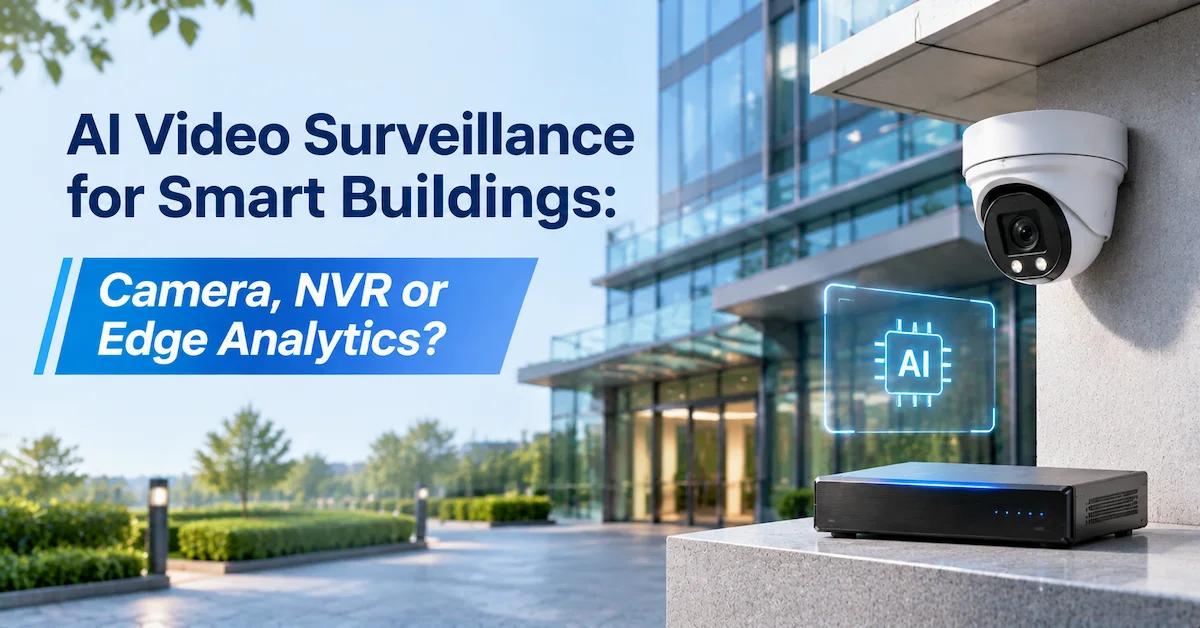
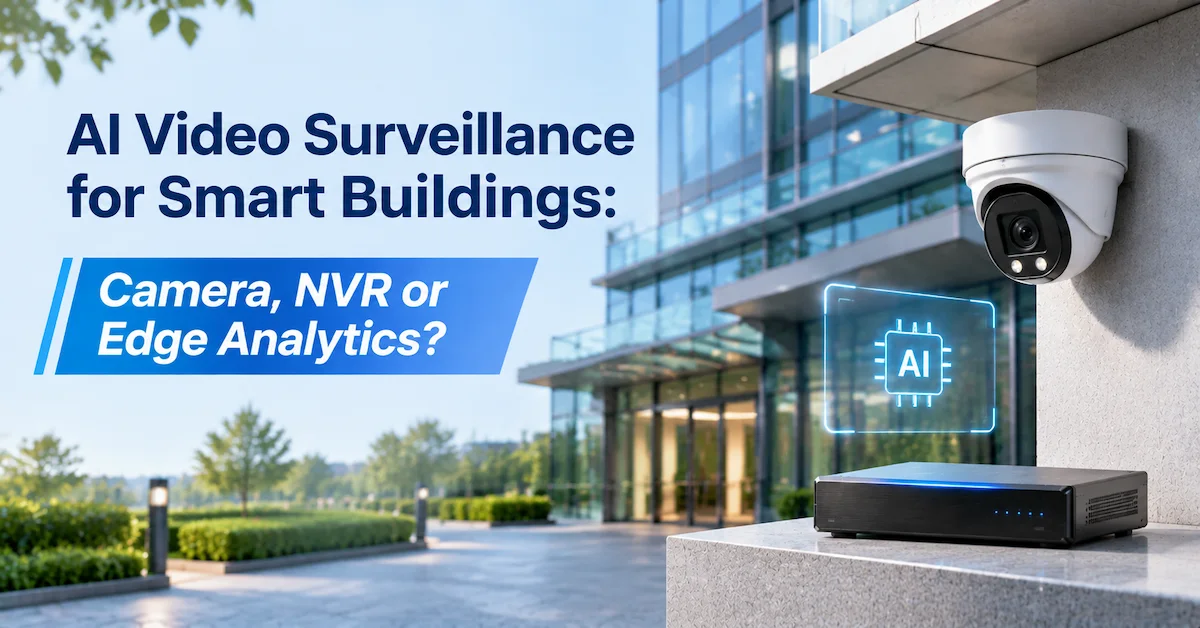
Should a smart building use AI cameras, an NVR, or edge video analytics?
An AI video surveillance manufacturer should not begin a smart-building proposal with an algorithm name. The correct starting point is the operating event the building must see, record, review and act on. Cameras capture the scene, an NVR or VMS preserves and retrieves video, and edge analytics processes selected streams close to the site. A commercial project may need one of these roles, or all three, with responsibilities divided between the device, local infrastructure and platform.
This guide is written for security integrators, video-surveillance distributors, commercial property owners, retail operators and campus or industrial-park project teams. It answers a transactional question: how should a buyer compare an AI video surveillance manufacturer when the shortlist includes AI cameras, network video recorders and edge analytics? The answer must cover scene design, storage, network capacity, privacy, interoperability, lifecycle evidence and the team that responds to an event.
The KEYPLUS AI Video portfolio includes AI and IP cameras, a 4-channel PoE NVR, a 4G solar PTZ camera and an AI edge NVR kit. The Video Security system explains the wider chain from coverage and recording to event review and authorized response. These are the commercial destinations for this article; model fit, analytics, protocol support and project terms still require a current technical review.
What must the building team decide before selecting a manufacturer?
Most failed video projects begin with a device list that is disconnected from an operating responsibility. “Cover the lobby” does not say whether the owner needs face detail at a turnstile, a searchable record for a dispute, a people-counting event, a vehicle alert or a deterrent response. Those outcomes require different lens choices, lighting assumptions, storage rules, processing locations and operator workflows.
Write the event in operational language
Describe the event as a sentence that a responsible person can verify. Examples include “a vehicle enters the service gate outside an approved time window,” “a person crosses a restricted line beside the loading bay,” or “a queue remains above the agreed threshold at the retail entrance.” Define the zone, expected target, time window, acceptable delay, evidence required and action after review. A model that detects a person in a laboratory test may still be unsuitable if the project has backlight, glare, occlusion or a target that is too small at the camera position.
Separate the camera, recorder and analytics decisions
A camera determines what visual information reaches the system. An NVR determines how supported streams are recorded, searched, played back and exported. Edge analytics determines where selected processing occurs and which metadata or event is produced. These functions can be integrated in one product, distributed across products, or retained in an existing estate. A proposal should identify the boundary instead of implying that every camera includes every AI function.
| Buyer question | What to define | Evidence to request from the manufacturer |
|---|---|---|
| What must be seen? | Target size, distance, field of view, lighting, movement, occlusion and privacy boundary. | Lens recommendation, image samples or test plan, mounting assumptions and exceptions. |
| What must be retained? | Channels, stream profiles, retention period, redundancy, export format, time accuracy and user roles. | Storage calculation, recorder capacity, retrieval workflow and failure behavior. |
| What must be detected? | Object, zone, line, queue or other approved event, with acceptable delay and review owner. | Supported analytic, processing location, model or firmware dependency and representative test method. |
| Where may data move? | Local, private, hybrid or cloud boundary; bandwidth, privacy, cybersecurity and service ownership. | Topology, data flow, access controls, update responsibility and degraded-network behavior. |
| What action follows? | Operator review, access event, alarm, maintenance ticket, deterrence response or documented escalation. | Interface scope, event fields, acknowledgements, audit record and RACI ownership. |
When is an AI camera the right first investment?
An AI camera is the right first investment when the scene itself is the hard part and the camera can provide the required image quality, local detection and environmental behavior. This is common at entrances, perimeters, loading areas, retail aisles and building approaches where lighting and target geometry determine whether an event can be evaluated. The camera should be specified around the scene, not around the label “AI.”
Specify the optical job before the analytic
Record the mounting height, target distance, horizontal angle, expected movement and the image detail needed for the decision. A wide overview may show that a person entered a zone, while a narrower view may be required to read a vehicle plate or identify a package condition. Daylight, low light, backlight, rain, reflections and headlight glare should be included in the site survey. For a smart building, one camera position may need an overview stream for operators and a second stream or camera for analytic accuracy.
Use active deterrence only with a defined response
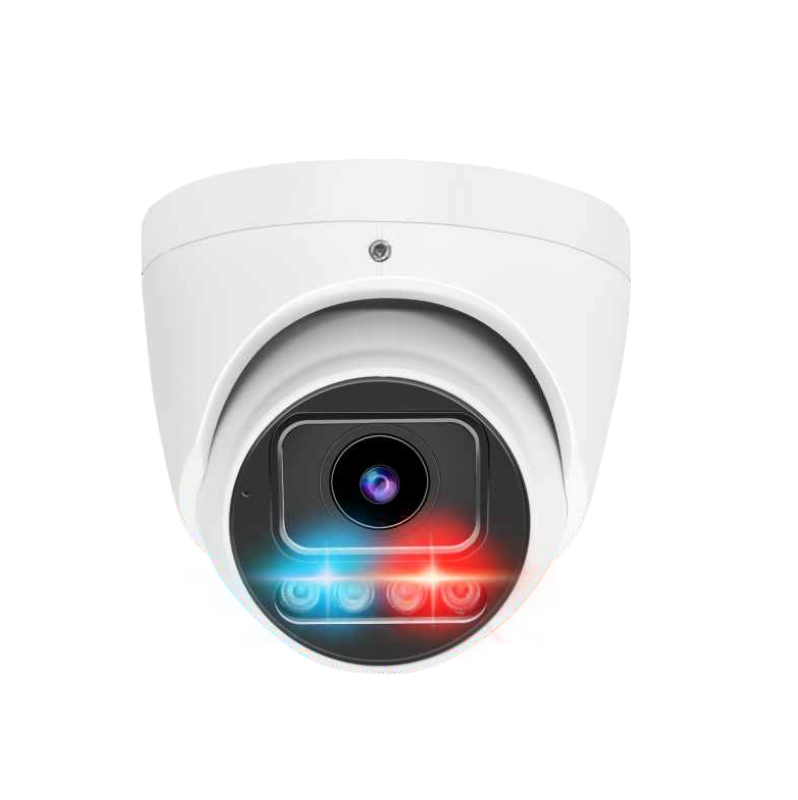
Some KEYPLUS camera models publish red and blue warning LEDs or active deterrence features. That capability can be useful at a restricted gate or perimeter when the owner has approved the warning behavior and understands when it triggers. It should not be presented as proof that a crime is occurring. Define the event rule, operator review, local regulations, audio or light policy and how false alerts are handled before enabling the response.
Camera evidence from the KEYPLUS portfolio
The published BC-IE40BBW-5M3 is a 5MP active-deterrence PoE turret camera with a 2.7–13.5mm 5X motorized zoom, smart dual illumination, red/blue warning LEDs and AI human/vehicle detection. The published BC-IE402WW-5MA is a 5MP AI turret camera with full-color night vision, a 1/1.8-inch sensor, F1.0 aperture, human/vehicle detection, two-way audio and PoE. Those facts support a shortlist; they do not remove the need to test the actual scene, firmware and integration.
When is an NVR the control point?
An NVR is the control point when the project depends on local recording, predictable retention, quick playback and a clear evidence-export process. It can also simplify a small commercial site by combining PoE connectivity, recording and operator access in one appliance. An AI video surveillance manufacturer should show how the recorder fits the camera mix and the operator workflow instead of presenting channel count as the whole solution. The NVR does not automatically solve camera placement, analytic accuracy, storage sizing or third-party interoperability. Those are separate acceptance items.
Design storage from streams and retention
Storage depends on channel count, resolution, frame rate, codec, activity, retention, continuous or event recording, redundancy and export requirements. Ask the AI video surveillance manufacturer to show the assumptions behind the calculation. A recorder’s headline decoding number is not the same as guaranteed analytic throughput or storage duration. Confirm which streams are recorded, which are used for analytics, and what happens when a disk, network link or camera is unavailable.
Test retrieval as seriously as recording
Commissioning should include a known event, time-synchronized search, playback, export, user authorization and evidence handover. Test a busy period, a low-light period and an event near the retention boundary. Confirm whether the exported file includes a timestamp, camera identity, audit record and a method for verifying that it was not changed during transfer. A camera that records but cannot be searched by the operator is not a complete security outcome.
Published NVR option
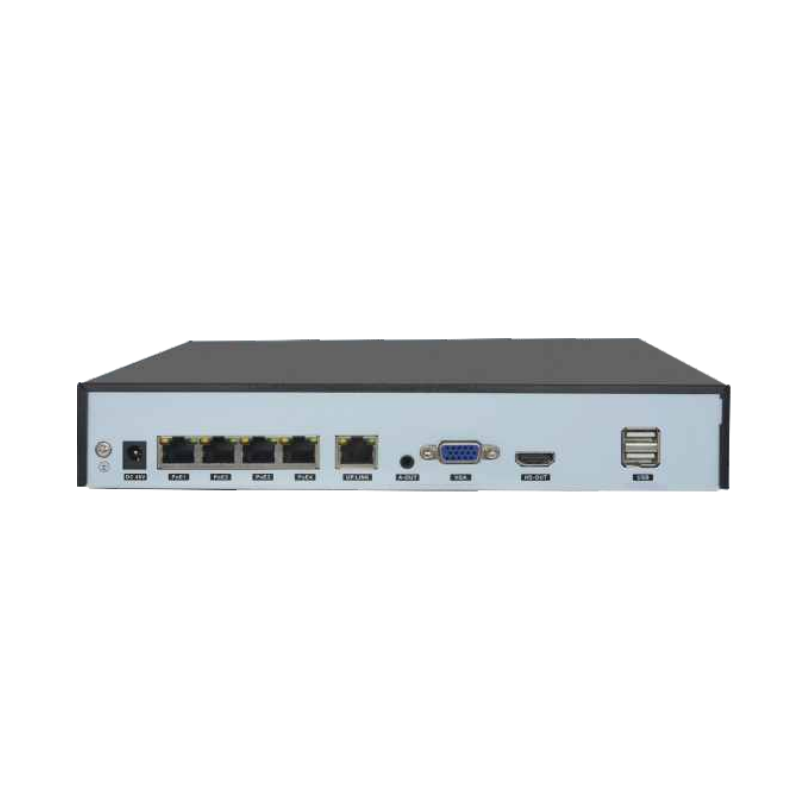
The KEYPLUS BC-N121-9MD1-P4 is published as a 4-channel PoE NVR supporting up to 12MP decoding, 64Mbps bandwidth, HDMI 4K output, H.265 compression and VideoLink remote access. A buyer should still confirm the camera mix, stream profile, disk configuration, remote-access policy, network topology, retention target and current software revision. The model is a building block in a tested system, not a universal capacity promise.
When should edge video analytics be added?
Edge analytics is appropriate when the project needs selected processing near the camera or site. Common reasons include lower event latency, reduced upstream video traffic, local continuity during a WAN outage, a private processing boundary or a requirement to use existing cameras with a compatible edge appliance. Edge does not mean “free AI.” It introduces compute sizing, stream compatibility, model support, update ownership and a new failure mode that must be tested.
Choose the processing location by workload
Ask which task requires local processing and which task can remain centralized. A camera may perform a simple human/vehicle rule, an edge NVR may compare faces or apply a perimeter rule across supported channels, and a platform may correlate the resulting event with access or alarm context. The KEYPLUS Video AI capability is intended for governed analytics and cross-system context, while the Flexible Deployment capability explains how cloud, private, hybrid and edge locations can be evaluated.
Define what happens when the connection fails
Document whether the edge device continues detection, stores events locally, buffers metadata, synchronizes after reconnection and reports its own health. Define the time source and drift tolerance. If the operator sees an event only after a remote service recovers, the project must say so. For a retail chain or campus, local continuity may matter more than a single central dashboard. For a low-risk office lobby, central review may be simpler and sufficient.
Protect privacy and governance
Facial comparison and other biometric functions require a separate legal, policy and security review. They should never be implied by the presence of an AI camera. Limit the purpose, authorized users, retention, audit trail and escalation path. Many useful smart-building events do not require identifying a person. A manufacturer should be able to explain the model, data flow and boundary without turning an operational question into an unnecessary biometric project.
Camera, NVR or edge: which architecture fits the project?
There is no universal winner. The practical choice is the smallest architecture that meets the defined visual evidence, event and continuity requirements, while preserving a path for later integration. The following patterns help an integrator frame the first design discussion.
| Architecture | Best fit | Main trade-off | Acceptance focus |
|---|---|---|---|
| Camera + existing recorder | Site upgrades where current storage and streams are usable. | Analytic and protocol limits may remain in the legacy system. | Image quality, stream compatibility, event delivery and retrieval. |
| PoE camera + local NVR | Small and medium sites needing local recording and straightforward operations. | Recorder capacity, disk resilience and remote policy must be sized correctly. | Storage, playback, export, user roles and failure recovery. |
| AI camera + NVR | Scenes where camera-side detection reduces operator search or enables deterrence. | Camera model, firmware and analytic behavior vary by scene and revision. | Detection under representative light, false-event review and metadata mapping. |
| Camera + edge video box or edge NVR | Existing camera estates or sites that need selected local analytics. | Compute, codecs, channel throughput and model licensing become dependencies. | Stream ingest, analytic latency, local continuity, health and synchronization. |
| Hybrid site and platform | Multi-site portfolios needing local recording with central event visibility. | Data ownership, bandwidth, cybersecurity and RACI are more complex. | Data flow, outage behavior, role permissions, audit and cross-site reporting. |
How should a smart-building scene be surveyed?
A dependable proposal starts with representative evidence. Provide floor plans, mounting heights, photos or short clips, lighting changes, target dimensions, network routes, power points, privacy zones and the expected operator view. If the project is a retrofit, document the installed camera models, firmware, codecs, ONVIF or RTSP behavior, recorder, storage, switches and available bandwidth. A generic product brochure cannot replace this information.
Measure the scene and the network together
Camera selection and network design are connected. Resolution and frame rate affect bitrate; multiple streams affect bandwidth; edge processing affects compute; retention affects storage; remote viewing affects uplink capacity. Include PoE budget, cable distance, switch capacity, time synchronization, VLANs, firewall rules and maintenance access. The manufacturer or integrator should state the conditions under which the proposed camera, NVR and analytics combination has been evaluated.
Build a privacy and access map
Mark public, staff-only, resident, customer, employee and restricted zones. Define who can view live video, search recordings, export evidence, change analytic rules and receive alerts. The map should include masking or exclusion areas where applicable. The Architecture & Governance guidance is a useful destination for deciding data, role and responsibility boundaries before the pilot.
Which KEYPLUS video devices belong on a technical shortlist?
The following matrix links public product facts to a buyer’s evaluation question. It is not a promise that every model is suitable for every smart building. The AI video surveillance manufacturer should confirm the current model, firmware, installation environment, analytic scope, software boundary and commercial configuration in the project response.
| Published model | Publicly stated details | Potential project role | Confirm before order |
|---|---|---|---|
| BC-IE40BBW-5M3 | 5MP active deterrence PoE turret, 5X motorized zoom, smart dual illumination, red/blue warning LEDs and AI human/vehicle detection. | Entrances, perimeters or loading zones where a visible deterrence response is approved. | Target size, lighting, trigger rule, warning policy, storage stream and current analytic behavior. |
| BC-IE402WW-5MA | 5MP Super ColorVu AI turret, 1/1.8-inch sensor, F1.0 aperture, full-color night vision, human/vehicle detection, two-way audio and PoE. | Commercial areas where low-light visual evidence and selected detection are important. | Night scene, glare, audio policy, analytic zones, NVR compatibility and privacy boundaries. |
| BC-N121-9MD1-P4 | 4-channel PoE NVR, up to 12MP decoding, 64Mbps bandwidth, HDMI 4K output, H.265 and VideoLink remote access. | Small-site local recording, playback and export with compatible PoE cameras. | Disk, retention, stream profiles, remote access controls, camera mix and failover behavior. |
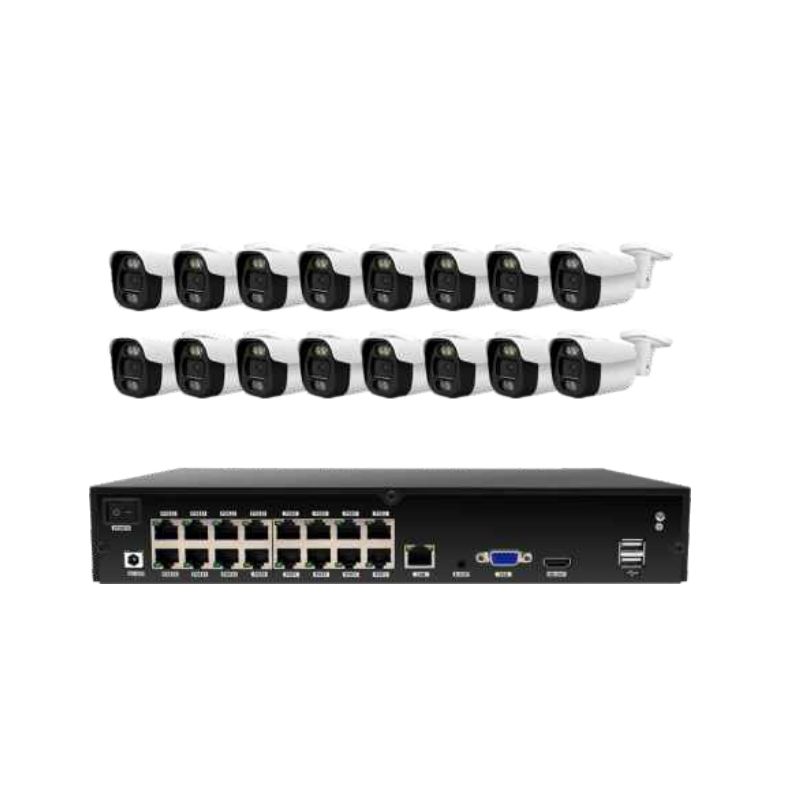
| BC-NK16E255D-RP16 | 16-channel facial AI edge NVR kit with 16 PoE ports, local facial comparison, perimeter electronic fencing and up to 14TB mass storage. | Selected sites requiring local multi-channel processing and a defined biometric or perimeter workflow. | Legal approval, model scope, storage mode, camera compatibility, local retention and operator governance. |
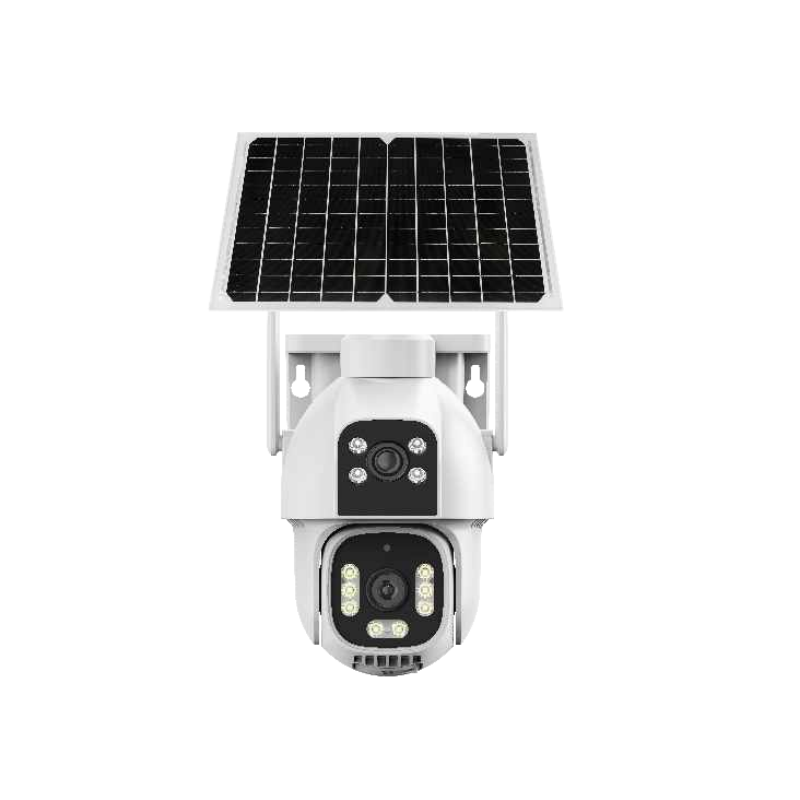
| VC-SQ203DW | Dual-lens 4G PTZ camera with a 20W solar panel, 12,000mAh battery and AOV recording. | Remote or temporary locations where wired power and network are constrained. | Solar exposure, weather, battery maintenance, 4G coverage, wake behavior and retention. |
The public Manufacturing & Quality page explains why the approved product definition, sample, test method, production controls and release evidence should stay aligned. It does not create universal claims for every model or market. Request the applicable inspection, environmental, cybersecurity, compliance and change-control evidence for the exact configuration.
How should the manufacturer prove integration and lifecycle support?
An AI video surveillance manufacturer is not evaluated only by whether a camera produces a picture. The project team needs a stable chain from device identity to event, storage, review, export, update and support. Ask for the interface and responsibility map before the purchase order. ONVIF or RTSP can be useful building blocks, but a protocol label alone does not prove the required stream, metadata, playback, event, PTZ or health operation.
Request a versioned interface boundary
Document stream codecs, resolution, frame rate, authentication, event fields, timestamps, retries, error codes, PTZ commands, storage access, export behavior and software versions. Identify whether the camera sends metadata directly, whether the NVR translates it, and whether the platform receives a normalized event. State which functions are tested and which remain out of scope.
Assign the operational RACI
The manufacturer may own device firmware, hardware documentation and selected technical support. The distributor may own logistics and first-line service. The integrator may own camera placement, network, VMS or platform mapping. The property team may own privacy policy, user roles, incident response and evidence retention. Put these responsibilities in the RFQ and pilot acceptance sheet so an alert failure is not passed between parties.
Test updates, failure and replacement
Ask how firmware, AI rules, certificates, passwords, storage and configuration are backed up and restored. Test a camera replacement, recorder restart, disk warning, network loss, time drift and edge-device recovery. Record whether events are lost, delayed or reconciled. A manufacturer should explain the supported lifecycle and change-notification process without promising a service level that is not in the quotation.
What should a buyer include in an AI video RFQ?
An effective RFQ gives every shortlisted AI video surveillance manufacturer the same scene, workflow, interface and evidence boundary. Separate camera hardware, NVR or edge hardware, software, storage, installation, integration, training, support and optional analytics. Ask bidders to state assumptions and exclusions instead of silently quoting different architectures.
| RFQ section | Buyer should provide | Supplier should return |
|---|---|---|
| Site and scene | Floor plans, photos or clips, mounting points, target distance, lighting, privacy zones and operating hours. | Camera model, lens, mounting, coverage drawing, image assumptions and exceptions. |
| Recording | Channels, stream profiles, retention, redundancy, export, time source and operator roles. | NVR/VMS model, storage calculation, topology, playback, export and failure behavior. |
| Analytics | Event definition, zone, target, acceptable delay, false-event handling and review owner. | Processing location, supported analytic, model/firmware dependency, metadata and test method. |
| Integration | Existing cameras, protocols, access/alarm systems, API, network and cybersecurity constraints. | Interface scope, version, RACI, commissioning steps, error handling and limitations. |
| Commercial and support | Quantity, spares, destination, training, documents, delivery need and service expectations. | Configuration, MOQ, price basis, lead-time basis, warranty, support and change control. |
AI video RFQ checklist
- Building type, country and operating responsibility
- Camera locations, heights, target size and lighting conditions
- Privacy, masking, retention and authorized-viewer policy
- Required camera streams, lens, PoE and environmental conditions
- NVR/VMS channels, storage, redundancy and export method
- Analytic event, zone, delay, evidence and escalation owner
- Existing camera models, codecs, ONVIF/RTSP and network details
- Cloud, private, hybrid or edge deployment boundary
- Pilot site, sample data, acceptance method and test dates
- MOQ, delivery, warranty, documentation and after-sales scope
Use the KEYPLUS RFQ route for a model-specific product or system review. Include representative scene evidence and the event workflow so the response can connect AI Video products with the Video Security system.
Frequently asked questions about AI video surveillance manufacturers
What does an AI video surveillance manufacturer actually supply?
It may supply cameras, recorders, edge appliances, software, firmware, analytics, integration documentation or a combination of these. Confirm the exact product, version, interface and support boundary. A company that sells an AI camera is not automatically the owner of the building’s NVR, VMS, network or incident workflow.
Is an AI camera better than an NVR?
They solve different parts of the system. An AI camera can process selected events close to the scene, while an NVR records and retrieves compatible streams. Many projects use both. Choose by the event, storage, latency, bandwidth and operating responsibility rather than by a generic “AI” label.
Can an edge box add analytics to existing cameras?
Potentially, if the streams, codecs, resolution, frame rate, channel capacity, protocol and required analytic are compatible. A sample or pilot should test the actual camera estate. The edge device must also be checked for latency, local storage, recovery, time synchronization and health reporting.
How much storage does a smart-building video system need?
Storage depends on camera count, resolution, frame rate, codec, activity, continuous or event recording, retention, redundancy and export needs. Ask the supplier to show the calculation and assumptions. Confirm how a disk failure, camera outage or recorder restart affects evidence availability.
Does AI analytics prove that an incident happened?
No. An analytic is a reviewable indication produced under defined conditions. The operator or approved process must confirm the event using the available video, access or alarm context. A trustworthy system keeps the analytic indication separate from a confirmed incident and records the review path.
Should every building use facial recognition?
No. Many useful tasks such as human/vehicle detection, line crossing, zone occupancy or queue review do not require biometric identification. Facial comparison should be considered only when the purpose, legal basis, user authorization, retention and security controls are explicitly approved.
What should be tested in an AI video sample?
Test the representative scene in day and night conditions, image detail, target size, analytic event, false-event handling, stream ingest, recording, search, export, time accuracy, network loss, edge recovery, user roles and the response workflow. Approve the exact model, firmware, lens, mounting and configuration.
Can a manufacturer guarantee analytic accuracy everywhere?
No responsible proposal should transfer an accuracy figure from one scene to another without evidence. Performance depends on camera position, target size, lighting, occlusion, weather, movement, firmware, model and operating threshold. Require a site-specific evaluation method and a clear statement of limitations.
What should be checked when replacing an existing camera?
Check the lens and field of view, mounting, PoE, stream profile, codec, recorder compatibility, event metadata, time synchronization, privacy masks, network capacity, storage impact, firmware and the operator’s retrieval process. Confirm that the new camera does not remove a function the property still relies on.
What MOQ and lead time should a buyer expect?
There is no universal MOQ or lead time across camera models, finishes, analytics, storage, branding, quantity, destination and packaging. Request a dated quotation for the exact configuration. The AI video surveillance manufacturer should state validity, assumptions, change impacts, warranty and support terms in the commercial response.
Conclusion
A smart building should not choose between a camera, NVR and edge analytics by comparing feature counts. Define the visual event, scene, evidence, retention, processing location, privacy boundary and operating response first. Then ask the AI video surveillance manufacturer to prove the proposed camera, recorder, edge appliance and platform path with representative tests and versioned responsibilities.
KEYPLUS provides a route from AI Video products to the Video Security system, Video AI and flexible deployment capabilities. Shortlist the smallest architecture that meets the real operating need, verify it on the real scene, and keep storage, compatibility, analytic limits, MOQ, delivery, warranty and support in the current project quotation.