
Receive and identify supported events
Each event carries its available source, space, timestamp and device state, with data quality and communication status adding context where supported.
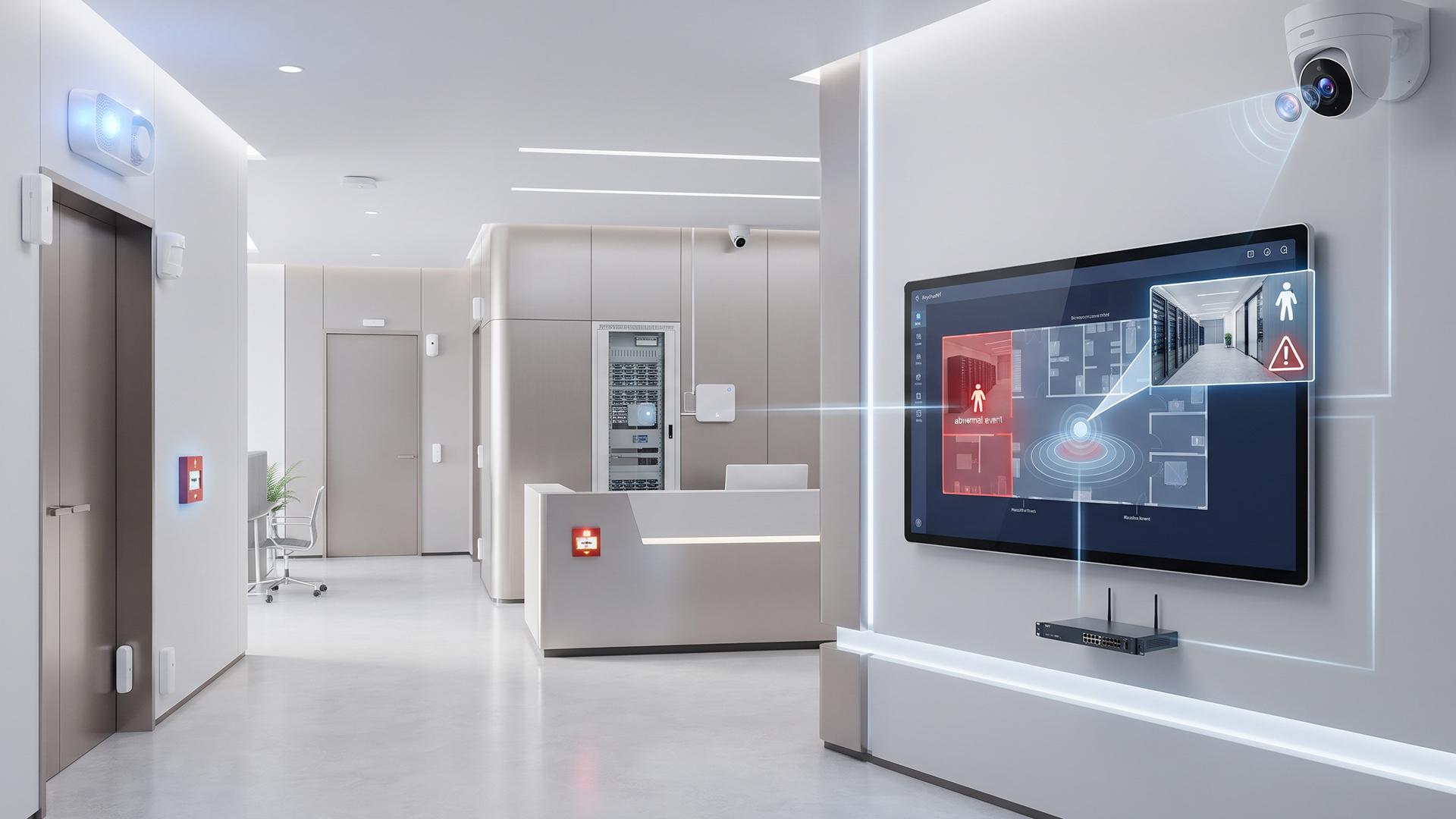
KEYPLUS · Systems
Turn supported alarm and device events into a structured process for acknowledgement, prioritization, escalation, response and review. KEYPLUS connects event sources with location, responsibility and available system context without replacing certified protection systems.
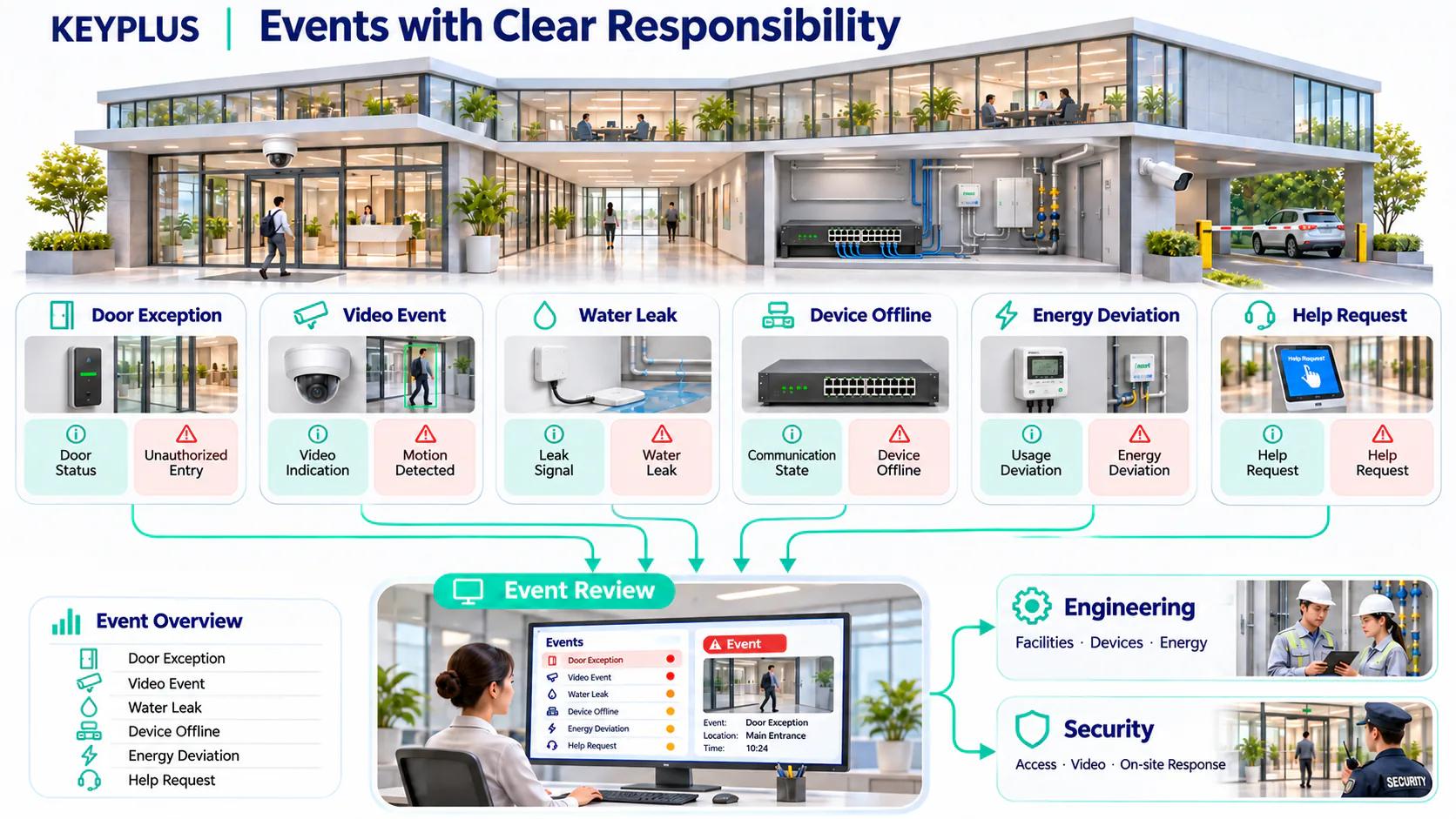
Event information becomes useful when its source, location and responsibility are clear. The response workflow connects informational, maintenance and urgent conditions with the appropriate team.
A leak, door exception and device warning can have different recipients and response paths. Event context connects the condition with its priority, work and completion evidence, giving notifications an operational purpose.
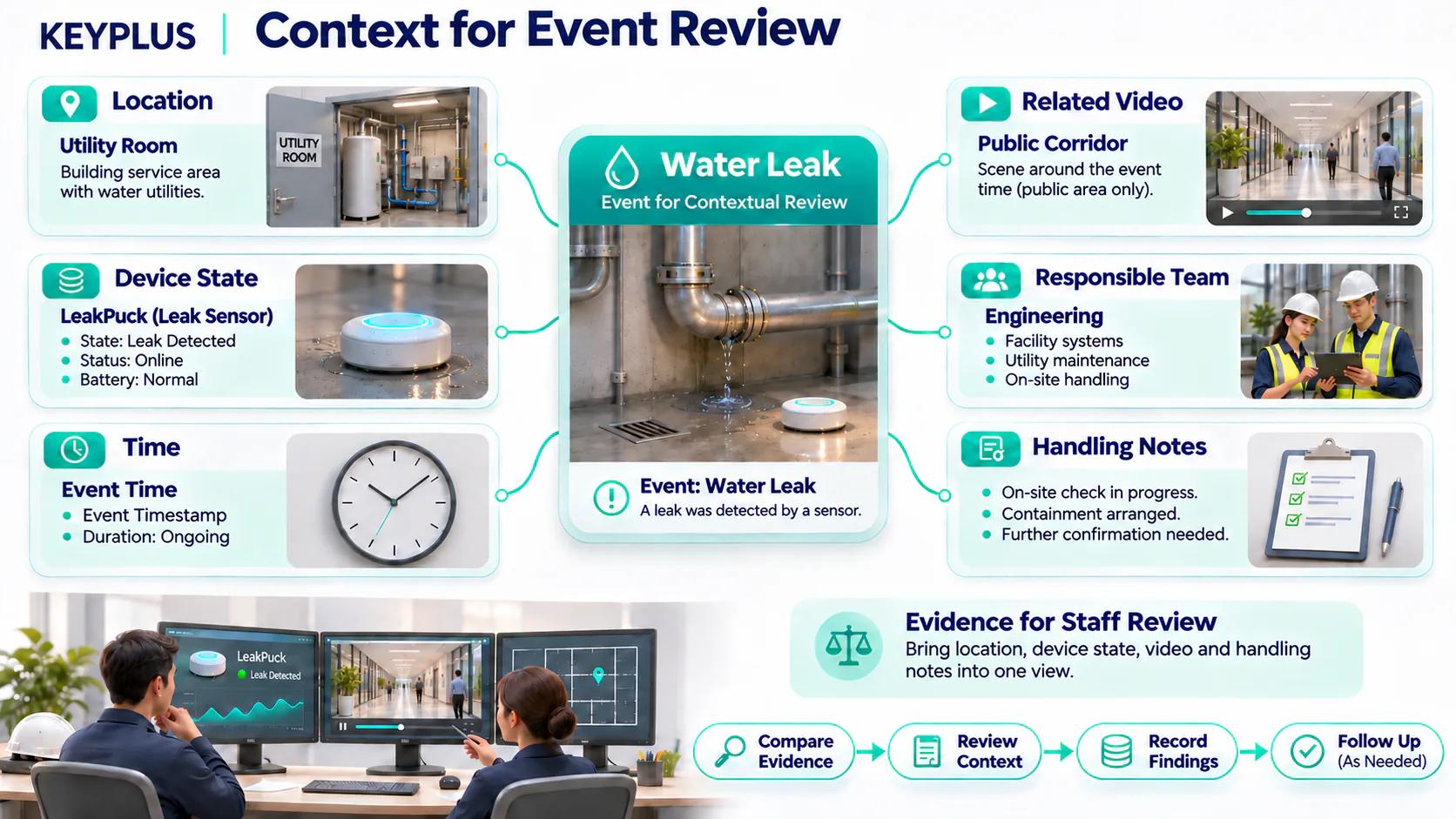
Each event carries its available source, space, timestamp and device state, with data quality and communication status adding context where supported.
Severity, schedule, responsibility and escalation rules direct the event to the appropriate person or system.
Authorized users receive event evidence, relevant procedures and permitted actions, with acknowledgement, handoff and notes retained in the handling record.
Operator confirmation, device status and follow-up readings provide different forms of closure evidence. Repeated events and unresolved patterns remain visible for review.
Door contacts, supported lock-tamper signals, intrusion detectors, leaks, panic buttons and device-health events contribute different alarm sources. Selected video analytics adds visual-event information. Specialist panels, sounders, beacons and other outputs enter the workflow only within their supported and approved interface scope.
Rules and analytics can group related signals, suppress configured duplicates and highlight events by context and urgency. AI assistance may summarize evidence or retrieve an approved procedure. An inferred relationship is not a confirmed cause, and AI does not independently close an event without verified evidence.
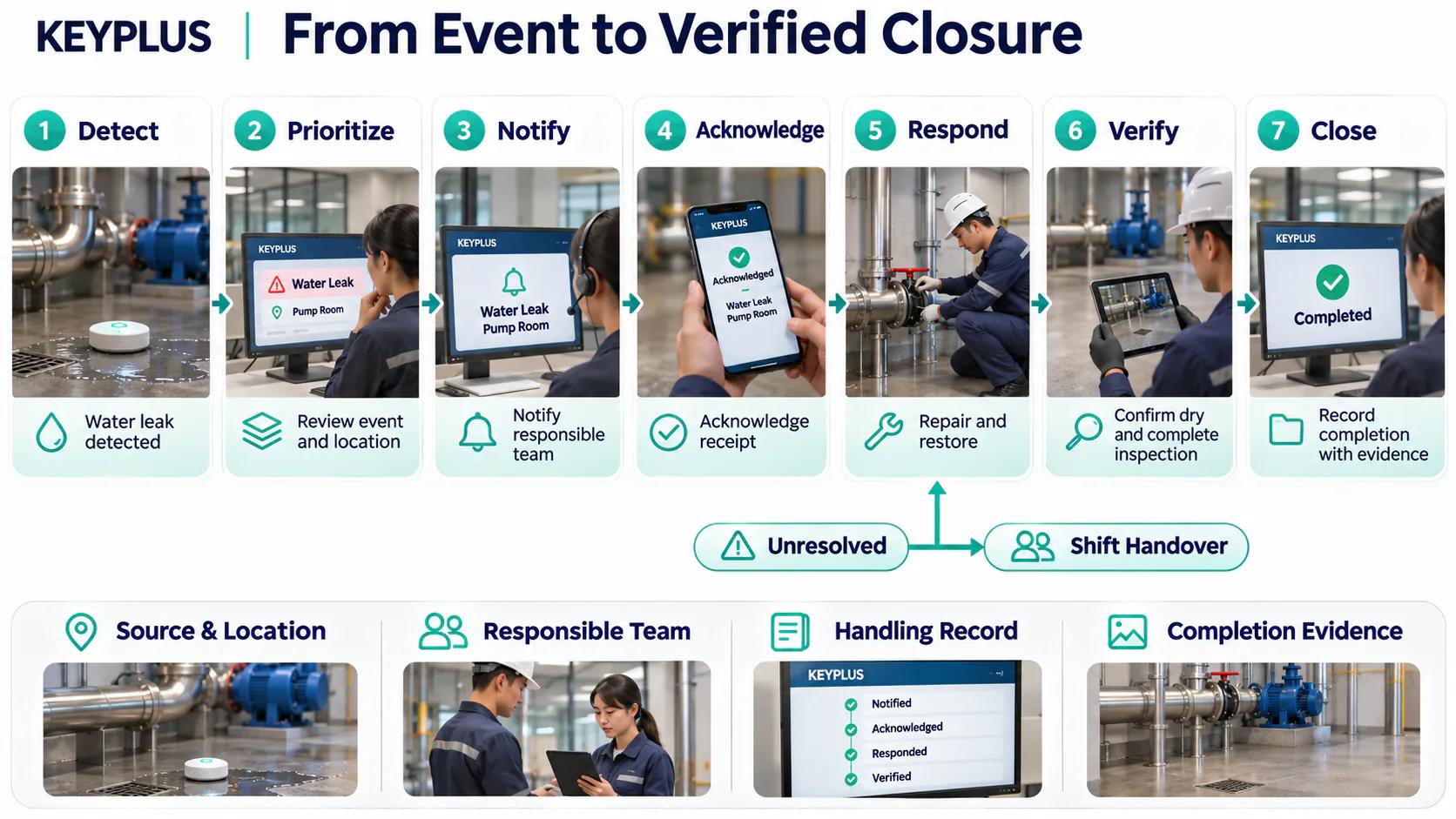
A leak event identifies the source and room
priority and responsibility are assigned
the team receives context and inspects
the approved response is completed
a later reading or other evidence supports closure
the record remains available for review. Notification, response and resolution stay distinct throughout.
Receipt, response and resolution represent different stages. Event records connect acknowledgement with the work performed and its completion evidence, while handover keeps unresolved matters visible between teams and shifts.
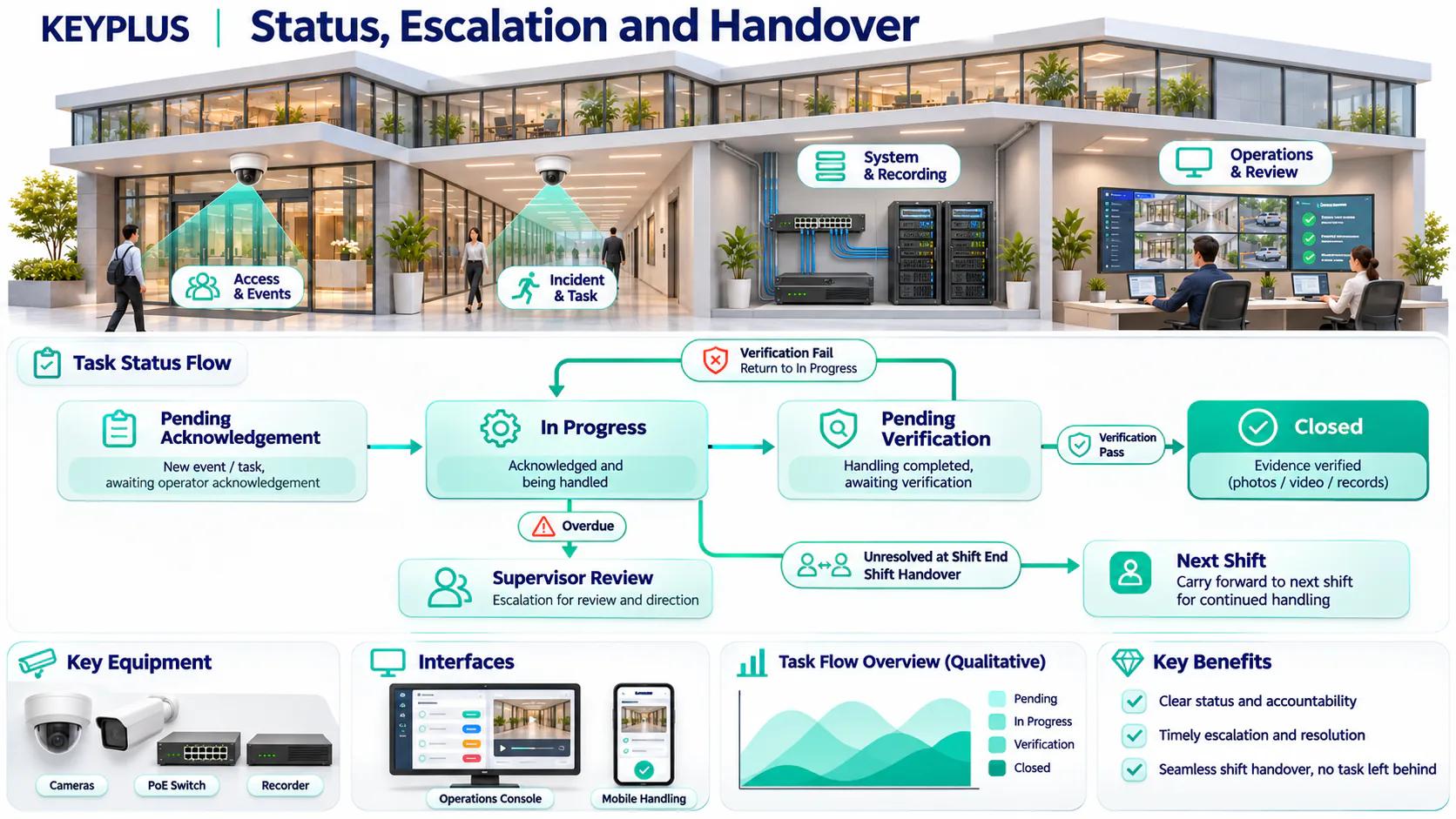
Event engineering connects the source catalogue with routing, acknowledgement and escalation. Completion criteria give the response a clear outcome, while communication and recovery behaviour remain visible in the operating design.
Hotels, housing, campuses, offices, retail portfolios, hospitals and mixed-use sites differ in staffing and escalation. The same signal may require a different response by location and time.
Explore alarm sources, operator interfaces, selected video evidence and the platform workflows that support acknowledgement, escalation and closure.
Yes, where their interfaces expose suitable event data and behavior.
No. Notifications and human review are important response paths in their own right.
No. Certified protection systems remain independent and authoritative.
No. Event consequences, time and responsibility give escalation its context; approved emergency procedures retain their dedicated role.
The event workflow connects detection with acknowledgement, ownership and closure evidence. Supported devices and interfaces bring the right context to the team handling the condition.