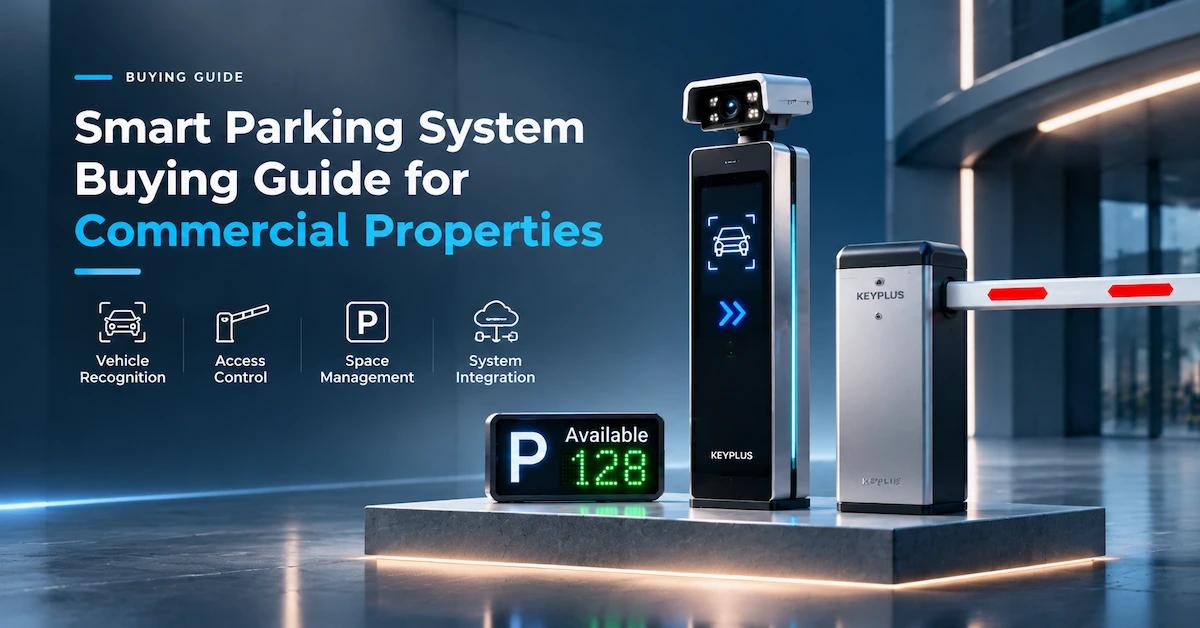
How should a commercial property choose a smart parking system supplier?
Choose a smart parking system supplier by comparing the complete vehicle journey, not by choosing the camera or barrier with the longest feature list. A commercial property should first define how residents, employees, visitors, delivery vehicles and contractors are identified, authorized, admitted, monitored and handled when recognition is uncertain. The supplier must then map those responsibilities to lane equipment, safety inputs, network interfaces, operator workflows, acceptance evidence and a support boundary.
This transactional guide is for parking system integrators, property owners, engineering contractors and channel partners sourcing equipment for shopping centres, offices, hospitals, campuses, logistics sites and mixed-use properties. It targets the decision before an RFQ or technical consultation: which smart parking system supplier can provide a comparable, testable and supportable scope?
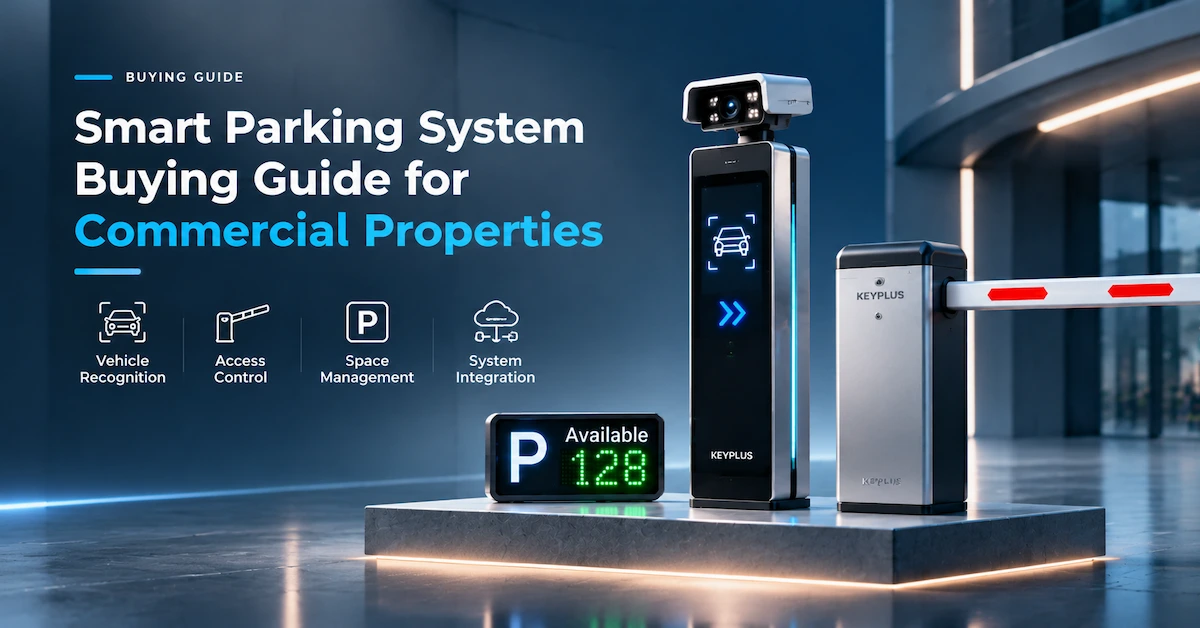
What should a commercial property define before contacting a smart parking system supplier?
The first document should describe operating responsibility, not a preferred brand or camera model. A smart parking system supplier cannot size a lane from parking-space count alone. A 300-space office garage with one entrance may need a different design from a 300-space retail site with visitor lanes, payment workflows, peak arrivals and mixed vehicle types.
Define the vehicle populations
List every group that must enter and exit: permanent tenants, employees, guests, deliveries, contractors, emergency vehicles, service providers and unknown vehicles. For each group, state whether the identifier is a license plate, UHF tag, card, QR code, barcode ticket, operator approval or a combination. Include temporary permissions, time windows, revoked access, lost credentials and vehicles that do not carry a readable plate.
Define the operating decision
Recognition produces a candidate identifier. Authorization decides whether the identifier is valid for the site, lane, time and user entitlement. Barrier control executes a permitted action while local safety devices protect vehicles and people. These responsibilities should remain visible in the RFQ. A supplier that writes “LPR opens the gate” without describing confidence, authorization, safety inputs and manual fallback has not yet supplied a complete system definition.
| Project input | What the buyer should document | Why the supplier needs it | Evidence to request |
|---|---|---|---|
| Property and traffic | Site type, number of entrances and exits, lanes, peak arrival pattern, vehicle classes and operating hours. | Determines lane count, equipment duty cycle, queue risk and operator coverage. | Site survey notes, traffic assumptions and proposed lane schedule. |
| Vehicle identity | Plate regions and formats, UHF tags, cards, QR or barcode tickets, fallback credentials and privacy rules. | Determines whether LPR, UHF, ticketing or a mixed workflow is appropriate. | Recognition or read test plan using representative vehicles and credentials. |
| Access policy | Who may enter, where, when, under which approval and with which exception path. | Separates identification from authorization and prevents unsafe direct triggering. | Policy matrix, event sequence and role permissions. |
| Lane and safety | Approach distance, stopping line, barrier position, loop or radar points, pedestrian route and emergency release. | Determines camera angle, reader placement, barrier choice and anti-smash logic. | Dimensioned lane drawing and safety acceptance record. |
| Integration | Existing barrier, access platform, visitor system, PMS, payment system, network and operator console. | Defines interfaces, ownership, data flow and migration risk. | Interface list, protocol map, responsibilities and test endpoint. |
| Commercial scope | Sample quantity, rollout phases, destination market, branding, documents, packaging and required delivery window. | Allows a comparable quotation and identifies configuration-dependent commercial terms. | Model-specific quotation, assumptions, validity and change-control rules. |
Which parking-device roles should a smart parking system supplier cover?
A parking system is a chain of roles. A smart parking system supplier may provide one device, a coordinated set or a broader integration scope. Record which party owns each function, because a catalogue does not establish responsibility for authorization, payment, data retention, safety or third-party software.
| Role | Typical equipment | Primary question | Do not assume |
|---|---|---|---|
| Vehicle recognition | LPR/ANPR camera or integrated LPR terminal. | Can the device produce a usable candidate plate under the actual approach, lighting, speed and plate conditions? | Recognition is identity, or that every plate and weather condition is supported. |
| Credential recognition | UHF RFID reader, card reader or other supported reader. | Can the lane read the intended tag or credential without cross-reading adjacent lanes? | Published range equals reliable field range in every mounting position. |
| Visitor handling | Ticket box, barcode/QR terminal, intercom or operator station. | How are temporary vehicles issued, validated, assisted and revoked? | Visitor entry is covered by a resident credential workflow. |
| Barrier actuation | Commercial barrier gate, boom, relay interface and manual release. | Can the barrier operate at the required cycle, speed, boom length and safety boundary? | The barrier can be triggered safely by any recognition result. |
| Lane control | Parking access controller, loop/radar inputs, signals and event controller. | Where are authorization, sequencing, feedback, alarms and offline rules executed? | A cloud or host server is always available at the moment of entry. |
| Space awareness | Ultrasonic space sensor, guidance controller and display. | Can occupancy status be mapped, communicated and maintained for the intended garage? | A sensor reading is an infallible billing, reservation or navigation record. |
Compare each smart parking system supplier by responsibility coverage
Ask every bidder to mark each role as included, optional, third-party, configurable, requiring development or excluded. This simple matrix prevents a low device price from hiding an unpriced controller, integration project, safety review, field test or operator workflow. It also makes channel-partner proposals easier to compare when one bidder supplies hardware and another owns the software.
How should buyers choose between LPR, UHF, ticketing and mixed access?
The correct identity method follows the vehicle population and operating policy. Commercial properties often need more than one path. A resident or employee lane may use UHF, a visitor lane may use a ticket or pre-registered plate, and a delivery lane may require operator approval. LPR can reduce friction, but its result must still be evaluated against plate format, scene conditions and the authorization database.
When LPR is the primary method
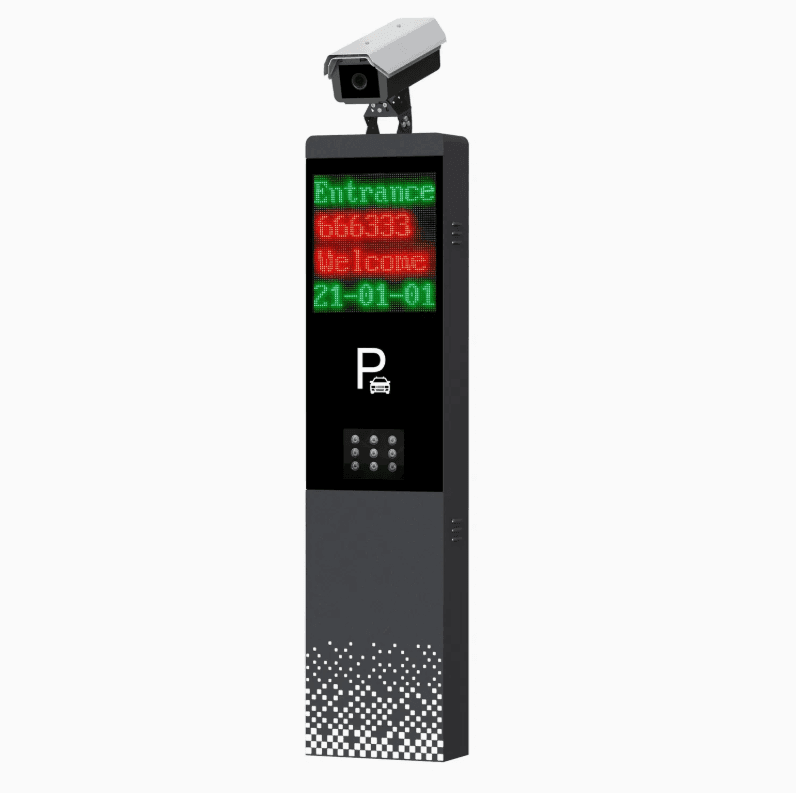
LPR is useful when vehicles approach in a controlled direction, plates are visible at a repeatable distance and the property wants a hands-free candidate identifier. The RFQ should state plate countries, front or rear plate position, lane width, vehicle speed, camera height, lighting, glare, rain, dirt, motorcycle traffic and the action when confidence is low. The KEYPLUS NF-LPR-LED-Y2 is publicly described as a 2MP starlight all-in-one terminal with TCP/IP and RS485, an integrated P4 display, voice broadcast and IP54 housing. Those published features still need a representative site test.
When UHF is the primary method
UHF can suit registered fleets, tenants and controlled vehicle populations where windshield or vehicle tags can be issued and maintained. The buyer should test read-zone geometry, tag placement, lane separation, interference, speed, mounting angle, vehicles without tags and credential revocation. The public KEYPLUS Long-Range UHF RFID Reader page lists ISO 18000-6C, RS232, RS485, WG26, RJ45 and relay interfaces, with base, advanced and pro variants published at 20m, 25m and 30m ranges. Treat those as model-specific published values, not a promise that every site will achieve the same read distance.
When ticketing or visitor terminals are required
Ticketing is useful when a property receives transient drivers who cannot be pre-enrolled. The workflow must cover ticket issuance, validation, payment or cashier ownership, lost tickets, visitor approval, intercom assistance, exit validation and network failure. The KEYPLUS TGWRFID-01 Parking Ticket Box is publicly described with RFID and barcode/QR handling, TCP/IP control, a heavy-duty iron enclosure, display prompts and an intercom substation. The buyer should confirm the actual payment, database and software boundaries before treating it as a complete revenue system.
| Identity method | Best-fit population | Strength | Procurement risk | Acceptance test |
|---|---|---|---|---|
| LPR | Visitors, residents or mixed traffic with readable plates. | Hands-free candidate identification and visible driver feedback. | Plate, light, angle, weather, speed and confidence variation. | Representative plates, day/night scenes, low-confidence review and authorization response. |
| UHF | Registered tenants, employees and fleet vehicles. | Fast credential reading without window interaction. | Tag placement, cross-lane reads, interference and lost-tag administration. | Read-zone map, adjacent-lane test, speed test and revoked-tag test. |
| Card or QR | Controlled users, scheduled visitors and assisted access. | Clear entitlement and revocation process. | Driver interaction, queueing, damaged credentials and offline validation. | Valid, expired, duplicate, unreadable and manually approved credentials. |
| Ticket/barcode | Transient public parking and visitor-heavy sites. | Does not require pre-enrollment. | Ticket loss, payment integration, paper supply and exit exceptions. | Issue, scan, validate, pay, lose, replace and recover a ticket. |
| Mixed | Properties with residents, staff, visitors and deliveries. | Matches different arrival responsibilities. | Multiple policy paths and inconsistent operator training. | End-to-end event test for every vehicle group and fallback. |
How should the barrier, controller and safety layer be specified?
The barrier is a safety-critical actuator, not a visual accessory to the camera. A supplier response should identify the barrier model, boom type and length, opening and closing behavior, duty cycle, power, emergency release, feedback, anti-smash inputs and local manual controls. The access decision must not bypass local safety logic simply because a recognition result looks confident.
Specify physical and duty-cycle constraints
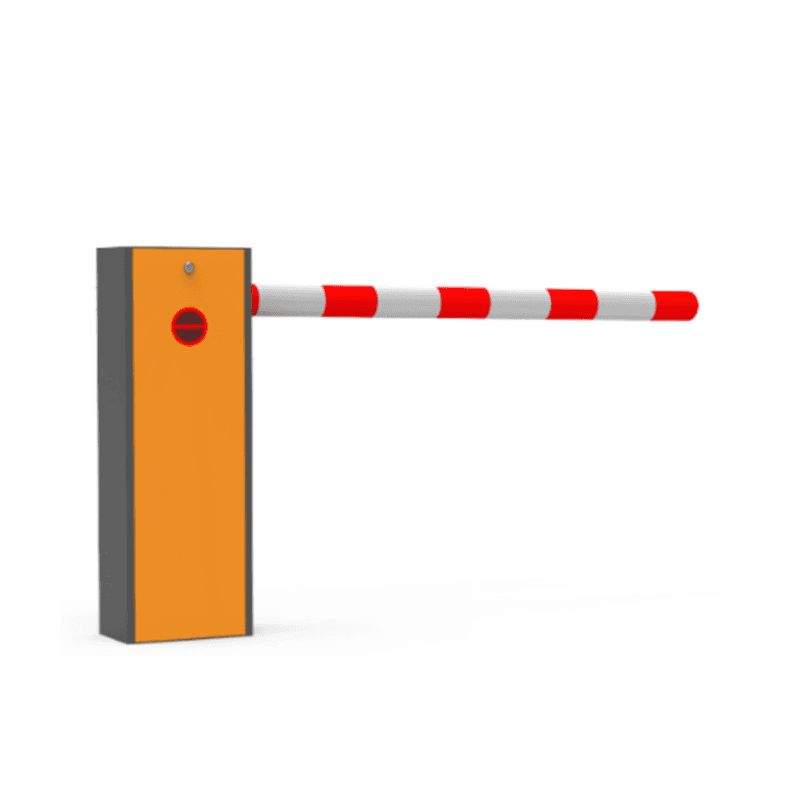
Record whether the lane is indoor or outdoor, straight or curved, exposed to wind, used continuously, subject to low clearance or shared with pedestrians. The public KEYPLUS LD-P2120 page lists a DC24V brushless motor, a published 8,000,000-operation duty figure, a field-reversible mechanism, boom options up to 6m for a straight arm and IP54 housing. The selected boom and actual traffic pattern still determine the suitable configuration and acceptance test.
Specify the controller boundary
Ask where lane sequencing, credential lookup, event logging, sensor polling and offline rules run. The public KEYPLUS FJC-CW200-W page describes an industrial ARM controller with CAN communication up to 1000m, TCP/IP and RS485 uplinks, AC 110V-240V input, IP54 protection and offline autonomous operation. These details are relevant when a multi-level garage needs local space guidance, but they do not automatically define the access-control server, payment platform or property-management integration.
Specify anti-smash and fallback behavior
Document loop, radar, infrared, rebound, barrier-position and emergency-release behavior. Test a vehicle stopping under the boom, a following vehicle, a pedestrian crossing, a power loss, a network loss, a failed sensor and a manual override. Require the supplier to show which condition is handled locally and which depends on a host system. A safe fallback should be explicit rather than hidden in a sales demonstration.
How should parking guidance and occupancy detection be evaluated?
Parking guidance solves a different problem from entrance authorization. A driver may be admitted correctly and still need reliable information about available spaces. The buyer should specify whether sensors support directional guidance, zone counts, reverse-car-finding, operational analysis or reservation. Payment, reservation and billing are separate scopes unless the proposal explicitly includes them.
Match the sensor to the physical garage
Map ceiling height, bay geometry, lighting, ventilation, concrete structure, cable routes, maintenance access and the number of spaces per controller. The public KEYPLUS WBP-T02F page describes a front-mounted ultrasonic sensor with a 2cm published ranging error, integrated multicolour LED, 10V-28V DC input, RS485 communication and a recommended 1.8m-3.0m mounting height. The integrator should verify mounting, false occupancy, vehicle types, bus addressing and the guidance display behavior in the actual garage.
Separate occupancy evidence from business claims
A sensor can report an occupied or available state while the guidance system may still have stale data, incorrect bay mapping or a communication gap. Acceptance should follow a bay state from the physical vehicle, through the sensor and controller, into the sign or platform. Ask for a method to identify stale, missing, duplicate or manually overridden states. Do not turn a published sensor accuracy statement into a universal guarantee of navigation, reservation or revenue accuracy.
| Guidance requirement | RFQ detail | Evidence to request |
|---|---|---|
| Bay status | Occupied, available, reserved, disabled, unknown and stale-state definitions. | State diagram and representative bay test. |
| Network topology | Sensor bus, controller location, cable distance, gateway, uplink and power budget. | As-built topology, addressing plan and recovery test. |
| Guidance output | Zone signs, LED indicators, floor counts, mobile view or operator console. | Mapping table and end-to-end update latency test. |
| Maintenance | Access method, replacement process, spare addressing, firmware and inspection schedule. | Maintenance procedure and replacement commissioning record. |
What integration questions should a smart parking system supplier answer?
Integration should be written as a data and responsibility map. “TCP/IP supported” or “API ready” is not enough to compare proposals. Identify which system owns the vehicle entitlement, which device issues the barrier command, where events are stored, who manages credentials, how time is synchronized and how the system behaves when a network or upstream service is unavailable.
| Integration layer | Buyer question | Supplier response should include | Acceptance evidence |
|---|---|---|---|
| Field device | How are the camera, reader, sensor, barrier and controller wired and addressed? | Connection drawing, power, protocol, terminal definition and device limits. | Commissioning record and representative lane test. |
| Authorization | Which system owns valid vehicles, users, visits, time windows and revocation? | Source of truth, lookup method, cache policy, roles and audit record. | Valid, expired, revoked and unknown vehicle tests. |
| Barrier safety | Which inputs remain local and what happens when the host is offline? | Safety sequence, interlocks, emergency release, feedback and failure states. | Obstacle, power-loss, sensor-loss and manual override tests. |
| Visitor process | How are appointments, tickets, QR codes, assistance and lost tickets handled? | Workflow owner, operator screen, status transitions and escalation path. | Complete visitor entry and exit scenario. |
| Platform and reporting | Which events are exported to property, security, analytics or service systems? | Event model, timestamps, identifiers, retention, permissions and API scope. | Sample event payloads, replay and permission review. |
| Support | Who diagnoses a failed read, failed authorization, failed relay or stale occupancy state? | RACI, logs, remote access boundary, escalation and replacement process. | Fault simulation and support handoff record. |
For connected properties, the KEYPLUS Integration & MCP page and Flexible Deployment page can be used as architectural references. They should not be read as a guarantee that every third-party parking, payment or property platform is already supported. The exact interface, version, credentials, data ownership and implementation work belong in the project annex.
What should the commercial RFQ include?
A comparable RFQ gives every bidder the same lane, device, interface, documentation and acceptance boundary. Ask for separate line items for hardware, configuration, software, integration, installation support, samples, training, packaging, freight and optional services. A supplier should also state assumptions instead of silently pricing a different scope.
Separate published facts from quotation-only facts
Public product pages can support model selection and initial engineering. They do not automatically disclose the MOQ, current price, project lead time, payment terms, destination duties, private-label cost, software license, support SLA or local compliance path for a particular order. Request these items in a dated quotation tied to the exact model, options, quantity, market and delivery term.
| Commercial field | Buyer should state | Supplier should return |
|---|---|---|
| Configuration | Exact device roles, model options, boom length, reader range, sensor count and accessories. | Part numbers, revision, included items, exclusions and substitution rules. |
| Samples and pilot | Lane or garage test quantity, target test dates, site conditions and acceptance owner. | Sample price, preparation time, test support, drawings and return or replacement terms. |
| Quantity and rollout | Initial site, future sites, phased delivery and spare ratio. | MOQ by configuration, batch price, mixed-model rule and capacity assumptions. |
| Customization | Branding, language, display, firmware, integration, RAL colour and packaging requirements. | Feasibility, NRE/tooling, approval sample, IP ownership and change control. |
| Delivery | Destination, Incoterm, requested window, inspection and documentation language. | Lead-time basis, packing list, carton dimensions, validity, freight assumptions and release evidence. |
| Warranty and support | Installation responsibility, local service model, replacement expectations and training. | Warranty scope, exclusions, RMA route, response owner, spares and software support terms. |
How should a smart parking system supplier pilot be accepted before rollout?
The pilot should prove the buyer's highest-risk operating decision, not simply show that a camera produces a plate number or a barrier moves. Use representative traffic and the intended upstream system. Record model, firmware, wiring, configuration, test date, conditions, expected result and observed result. A pilot without a written acceptance sheet creates a demonstration, not procurement evidence.
Test recognition and authorization separately
Test valid, invalid, expired, revoked, unknown, unreadable and ambiguous vehicles. Record the recognition result, confidence or read status, authorization response, operator notification and barrier action as separate events. Include a vehicle that follows another vehicle, a vehicle that stops early and a vehicle that approaches at the edge of the designed lane geometry.
Test safety and failure recovery
Test obstruction, safety-loop activation, photo-beam interruption, power cycling, controller restart, network loss, upstream-service loss and manual release. Confirm that a barrier cannot remain open because a stale authorization was replayed, and that operators can identify why a lane is blocked. For guidance, remove a sensor, occupy a bay, move a vehicle between bays and verify stale-state handling.
Test the complete event record
For each test, trace the event from the physical vehicle to the device, controller, authorization source, barrier feedback, operator view and exported record. Confirm timestamp, lane, device identity, result, reason and user role. This is especially important for integrators and channel partners who may support the project after the original installation team leaves.
Which KEYPLUS devices may belong in a commercial-property proposal?
The following matrix is a starting point for a supplier discussion. It is not a substitute for the site survey, electrical review or integration annex. Use the product pages for the published data sheet, then ask KEYPLUS to confirm the current revision, options, compatibility and commercial terms for the project.
| Published KEYPLUS role | Publicly stated details | Best evaluation question | Confirm before order |
|---|---|---|---|
| NF-LPR-LED-Y2 | 2MP starlight LPR, published ≥99.8% video-stream plate capture, P4 four-line LED, voice, TCP/IP and RS485, IP54, AC 220V with optional AC 110V. | Can the integrated terminal produce a reliable candidate plate and driver instruction at this lane? | Plate region, mounting, lighting, speed, local compliance, recognition test and authorization interface. |
| Long-Range UHF RFID Reader | ISO 18000-6C, published base/advanced/pro ranges of 20m/25m/30m, RS232, RS485, WG26, RJ45, relay and up to IP68 by model. | Can registered vehicles be read in a controlled zone without cross-lane or unauthorized reads? | Model, tag type, read-zone survey, interference, power, frequency rules and revoked-tag behavior. |
| LD-P2120 | DC24V brushless motor, published 8,000,000 operations, 1.8s-6s adjustable speed, straight boom up to 6m, IP54, dry contact and RS485. | Does the barrier fit the lane, traffic, boom and safety design? | Boom selection, duty cycle, anti-smash devices, emergency release, power and local safety acceptance. |
| FJC-CW200-W | Industrial ARM controller, published CAN transmission up to 1000m, 64-128 sensor capacity, TCP/IP, RS485, offline operation, IP54 and AC 110V-240V. | Can the garage maintain local guidance and controller behavior during an upstream outage? | Sensor topology, controller count, firmware, zone mapping, recovery and integration ownership. |
| WBP-T02F | Front-mounted ultrasonic sensor, published ≤2cm ranging error, multicolour LED, 10V-28V DC, RS485 and 1.8m-3.0m recommended mounting. | Can the sensor and indicator provide useful bay status in the actual garage? | Ceiling height, bay geometry, cable length, address plan, false-state handling and maintenance access. |
| TGWRFID-01 | RFID and barcode/QR handling, TCP/IP PC control, display prompts, intercom substation and heavy-duty iron enclosure. | Can transient visitors receive and validate a credential with the required assistance path? | Ticket stock, payment boundary, database, lost-ticket policy, weather exposure and software responsibility. |
What should different B2B buyers ask a smart parking system supplier?
| Buyer | Primary procurement concern | Evidence to prioritize |
|---|---|---|
| Parking system integrator | Can the equipment be commissioned and supported without undocumented interface assumptions? | Drawings, protocols, register/event map, firmware, test tools, failure behavior and RACI. |
| Property project owner | Will the system improve the intended arrival or parking operation within the site constraints? | Lane survey, workflow map, pilot acceptance, lifecycle assumptions and operator process. |
| Engineering contractor | Can the equipment be installed safely with predictable power, network, mounting and cable work? | Dimensions, wiring, environmental limits, foundation, boom, sensor layout and installation method. |
| Channel partner | Can the product family be quoted, configured, branded and supported across several customer types? | Model matrix, configuration rules, sample path, documentation, packaging, warranty and escalation. |
What should buyers send to KEYPLUS for a parking quotation?
A focused package lets the product, solution and engineering teams evaluate the same scope. Send the following information even when some values are provisional:
Smart parking system RFQ checklist
- Property type, country and destination market
- Site plan, lane drawing and traffic direction
- Number of entrances, exits and parking levels
- Peak arrival, departure and queue assumptions
- Vehicle populations and credential methods
- Plate regions, formats and recognition conditions
- UHF tag type, card, QR or barcode requirements
- Visitor, delivery and emergency workflows
- Existing barriers, loops, radar, intercom and signs
- Boom type, length, speed and duty cycle
- Power, grounding, network and cable constraints
- Indoor/outdoor exposure and environmental range
- Authorization source and credential lifecycle
- Offline, manual release and outage behavior
- Payment, tariff or ticketing boundary
- Space guidance, bay count and sensor layout
- Required protocols, APIs and event records
- Sample quantity and pilot acceptance plan
- Quantity, rollout phases and spare ratio
- Branding, language, firmware and packaging needs
- Required documents, certifications and inspection scope
- Requested Incoterm, destination and delivery window
- Warranty, training and local support expectations
- Responsible project, engineering and commercial contacts
Use the KEYPLUS RFQ route for a model-specific quotation or project review. A complete parking proposal should reference both the Parking Devices family and the Parking system boundary so that equipment and operating responsibilities remain connected.
Frequently asked questions about smart parking system suppliers
What does a smart parking system supplier need before quoting?
The supplier needs the property type, site and lane drawings, vehicle populations, recognition method, barrier details, safety inputs, visitor process, existing systems, network and power constraints, quantity, rollout phases, destination market and acceptance plan. A request for “a complete parking system” is not enough to produce a comparable quotation.
Is an LPR camera the same as a parking access-control system?
No. LPR produces a candidate plate result. Authorization checks whether that result is permitted for the site, lane and time. The controller and barrier then execute a safe action, while operators handle low-confidence or exceptional events. The buyer should compare the complete responsibility chain.
Should a commercial property choose LPR or UHF RFID?
Choose based on vehicle population and operating policy. LPR can support mixed or visitor traffic when the scene is suitable. UHF can suit registered vehicles when tags are issued, maintained and controlled. Many commercial properties use a mixed workflow so residents, visitors, deliveries and exceptions have an appropriate path.
Can a barrier open directly from a recognition result?
It should not be treated as a universal rule. Recognition, authorization, safety inputs, controller sequencing and barrier feedback should be specified separately. The project must verify what happens when recognition is uncertain, authorization is unavailable, a safety input is active or the upstream network is offline.
Does a published 30m UHF range guarantee a 30m parking read?
No. The published range belongs to a specific model and test context. Field performance depends on tag type, mounting angle, lane separation, interference, vehicle speed, reader power rules and the physical environment. Request a read-zone survey and representative vehicle test before final selection.
Can a parking guidance sensor be used for billing or reservation?
Not automatically. A sensor can provide an occupancy state for a compatible guidance or monitoring workflow. Billing and reservation require additional rules, data quality, identity, timestamps, exception handling and local business requirements. Those functions need a separate scope and acceptance test.
What should be checked during a parking-system pilot?
Check valid, invalid, revoked and unknown vehicles; low-confidence recognition; UHF read zones; visitor tickets; barrier timing; anti-smash behavior; manual release; power and network loss; controller recovery; occupancy transitions; event timestamps and operator permissions. Record the approved model and configuration so production units can be compared with the sample.
Does TCP/IP or RS485 guarantee integration?
No. A physical interface or protocol name does not define the event model, register map, data types, addressing, credentials, polling, command permissions or failure behavior. Ask for a versioned interface document and test representative events with the actual platform or controller.
What MOQ and lead time does KEYPLUS offer for parking devices?
No universal MOQ or lead time should be assumed across LPR terminals, readers, barriers, controllers, sensors and visitor terminals. Request terms for the exact model, option, branding, firmware, packaging, quantity, destination and inspection scope. The quotation should state its assumptions and validity.
Can KEYPLUS supply a complete commercial-property parking project?
KEYPLUS publicly presents parking devices and a Parking system scope covering recognition, authorization, lane equipment and exceptions. The project team should provide the site, operating responsibility, existing equipment, interfaces, traffic pattern and acceptance target so the applicable product and integration boundary can be evaluated.
Conclusion
A commercial property should choose a smart parking system supplier by comparing a complete, testable vehicle journey rather than a single camera, reader or barrier specification. Define the vehicle populations, authorization rules, lane geometry, safety boundary, visitor process, occupancy requirement, integration ownership and pilot evidence before comparing commercial offers.
KEYPLUS provides a public path from Parking Devices to the Parking system scope. Use the device family to shortlist LPR terminals, UHF readers, ticketing terminals, barrier gates, controllers and space sensors; then send the lane drawing, traffic pattern, existing equipment, interfaces and acceptance plan for a model-specific review. Prices, MOQ, lead time, payment, local compliance, compatibility and project outcomes should remain written quotation terms rather than assumptions from a catalogue page.