Why hotel lock selection matters more than many buyers expect
A hotel lock is not just a piece of door hardware; it is part of the guest experience, the building’s access control, and the maintenance team’s daily workload. When it works well, nobody notices. When it fails, the front desk hears about it immediately. For hotels, serviced apartments, dormitories, and other managed properties, the choice between a basic mechanical setup and a modern electronic door lock affects convenience, security, and how smoothly rooms turn over.
If you are comparing a lock hotel solution for a renovation or new build, the real decision is rarely about appearance alone. You are balancing guest usability, staff workflow, installation effort, and the level of access control you need. A keycard hotel lock may be the obvious answer for many properties, but not every door or operating model calls for the same hardware.
What the lock is doing, from a buyer’s point of view
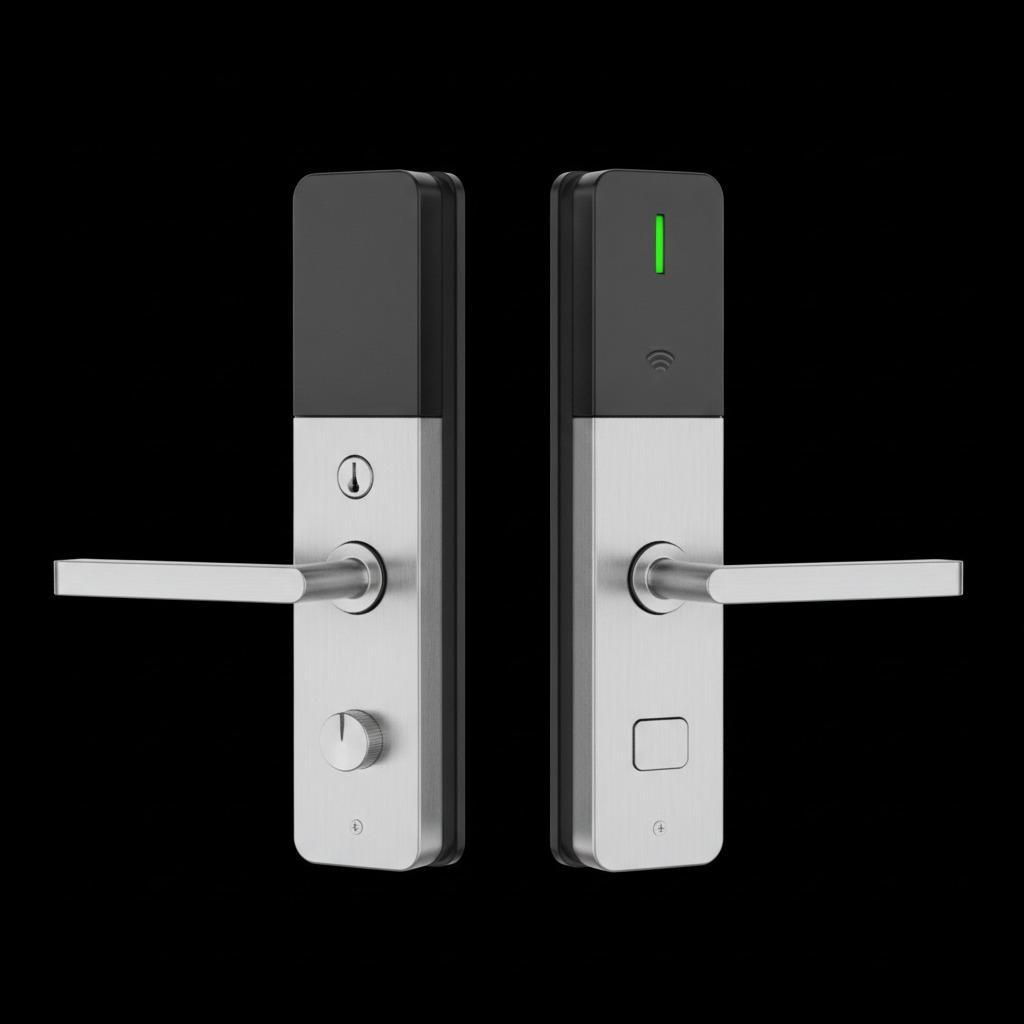
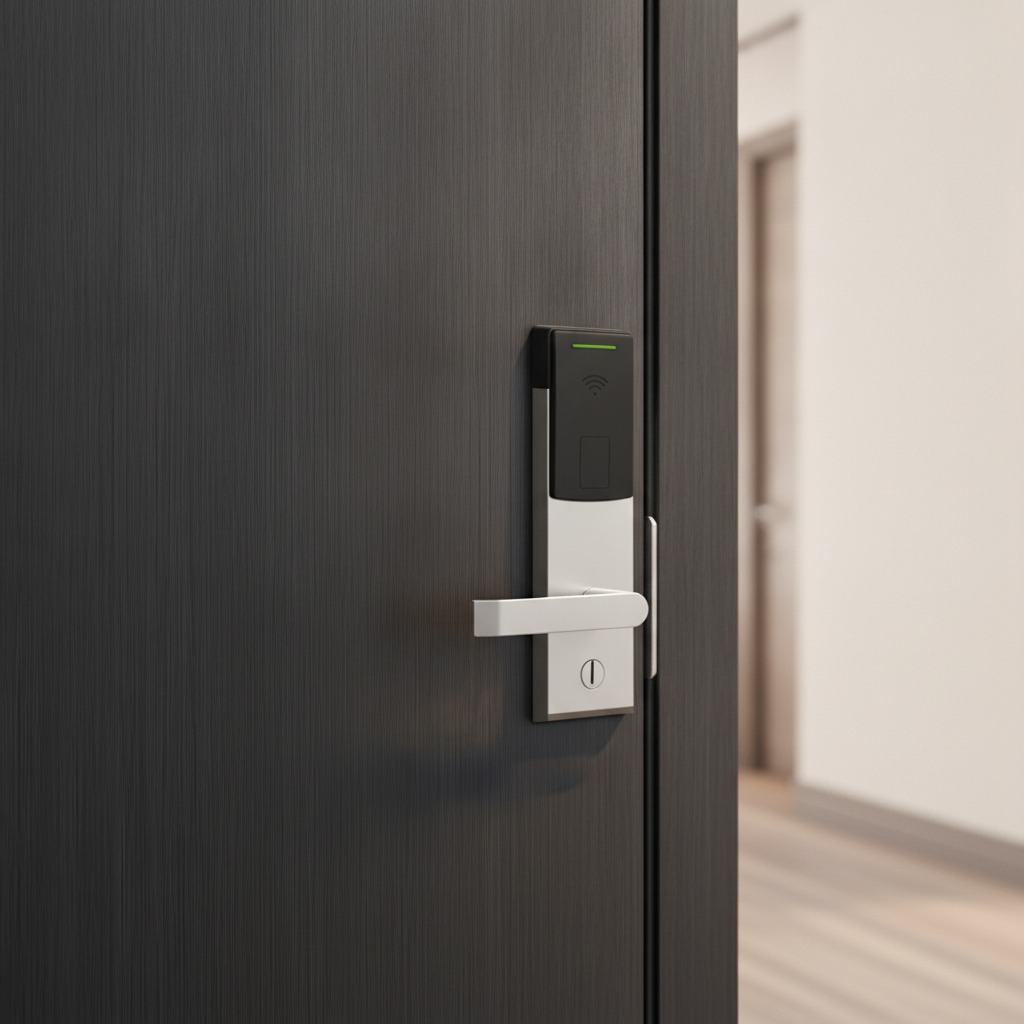
The lock set described here is a smart lever-style electronic door lock with a tall rectangular escutcheon, brushed silver metal-look hardware, and a black upper reader module. The visible contactless symbol, indicator light strip, and card-presenting action point to a card-based or other wireless access method. It is the kind of hotel door lock that fits the needs of controlled-access interiors where guests or residents need fast entry without a traditional metal key.
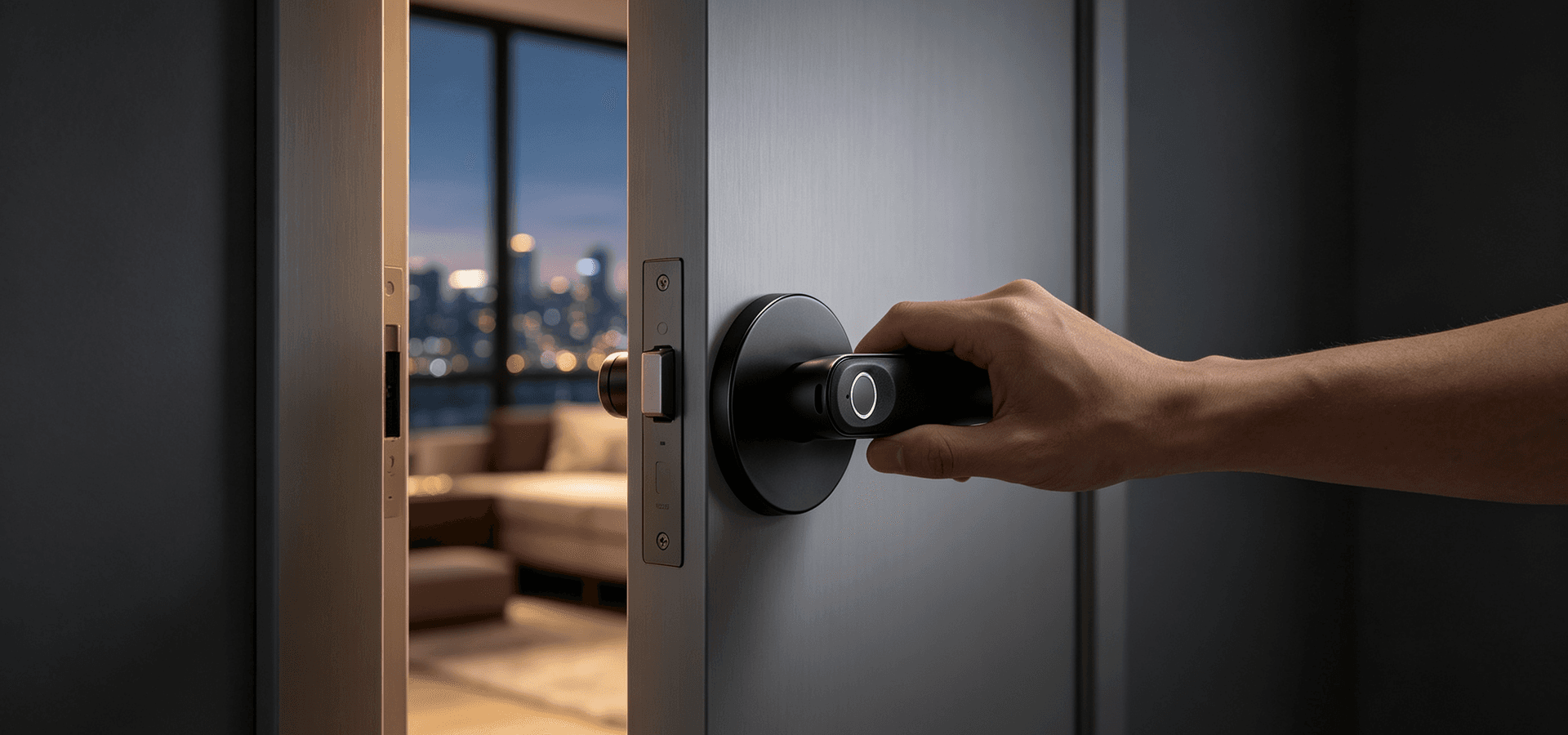
The lever handle matters too. In hospitality, lever-style operation is easier to use than a knob, especially when guests are carrying luggage or when accessibility is a concern. The matching strike hardware on the frame side also suggests a complete door-side locking setup rather than a purely decorative handle assembly.
Quick comparison: where this type of hotel security lock fits best
For hotels and serviced apartments, an electronic hotel lock usually serves a different purpose than a heavy perimeter lock. It is designed for controlled access, not high-force perimeter defense. That distinction matters. If the door is part of a guest room corridor, card access and audit-friendly operation are often more important than brute mechanical complexity.
Visible features on this style of hotel security lock make it suitable for:
• Guest room doors
• Serviced apartment entries
• Dormitory and managed rental access points
• Office or light commercial interior doors
What is not visible is just as important: exact power source, connectivity, security certification, fire rating, and whether the lock supports only cards or other credentials as well. Buyers should not assume those details from the exterior alone.
Why hotels keep moving toward keycard hotel lock systems
A keycard hotel lock simplifies room turnover. Front desk staff issue or deactivate credentials without changing a physical cylinder every time a guest leaves. Housekeeping and maintenance access can also be segmented more cleanly. That is one reason RFID-style locks have become a standard reference point in hospitality procurement.
There is also a practical guest-side reason. A contactless or card-based system reduces the friction of arrival. Guests arrive tired, put the card near the reader area, and move on. For a hotel door lock, that is the basic promise: less waiting, less confusion, fewer keys to track.
Buyer caution
Do not over-spec the electronics if your operational model is simple. A property may need reliable card access and clear status indication more than app integration or a long list of features that will never be used. Every extra feature is another item to support later.
Construction and manufacturing clues that matter
From the visible structure, this lock appears to combine metal-faced outer plates with a black electronic module and a lever handle in a brushed finish. That suggests a typical assembled electronic access-control product: stamped or machined metal components, surface finishing, and a separate electronics housing. In purchasing terms, that usually means the buyer should ask about the lock body, mounting compatibility, and the finish process rather than assuming a standard off-the-shelf residential latch.
The rectangular form factor can be an advantage during retrofits because it presents a clean, modern look on the door. But the installation fit still depends on the door thickness, backset, handing, and frame preparation. Those details are not visible in the image and should be confirmed before ordering a batch.
Common mistakes when sourcing hotel locks
The biggest mistake is treating every electronic door lock as interchangeable. A hotel security lock for one property may not suit another because the door construction, access policy, and daily traffic level differ. Another common issue is focusing on the reader and ignoring the lever hardware, latch geometry, and strike plate. If the mechanical side is weak, the electronics will not save the user experience.
Buyers also sometimes forget about staff operations. Can housekeeping override access? What happens if credentials are lost? How is the status displayed on the lock? These are ordinary operational questions, but they matter more than glossy product photos.
Practical questions to ask before you order
Ask whether the hotel lock supports the credential type your property actually uses. Confirm whether the lock is intended for interior doors, guest rooms, or other light commercial applications. Request the exact mounting requirements, finish options, and door preparation details. If you need a replacement program for an existing property, make sure the new lock will not force a costly change to the door cutout or frame hardware.
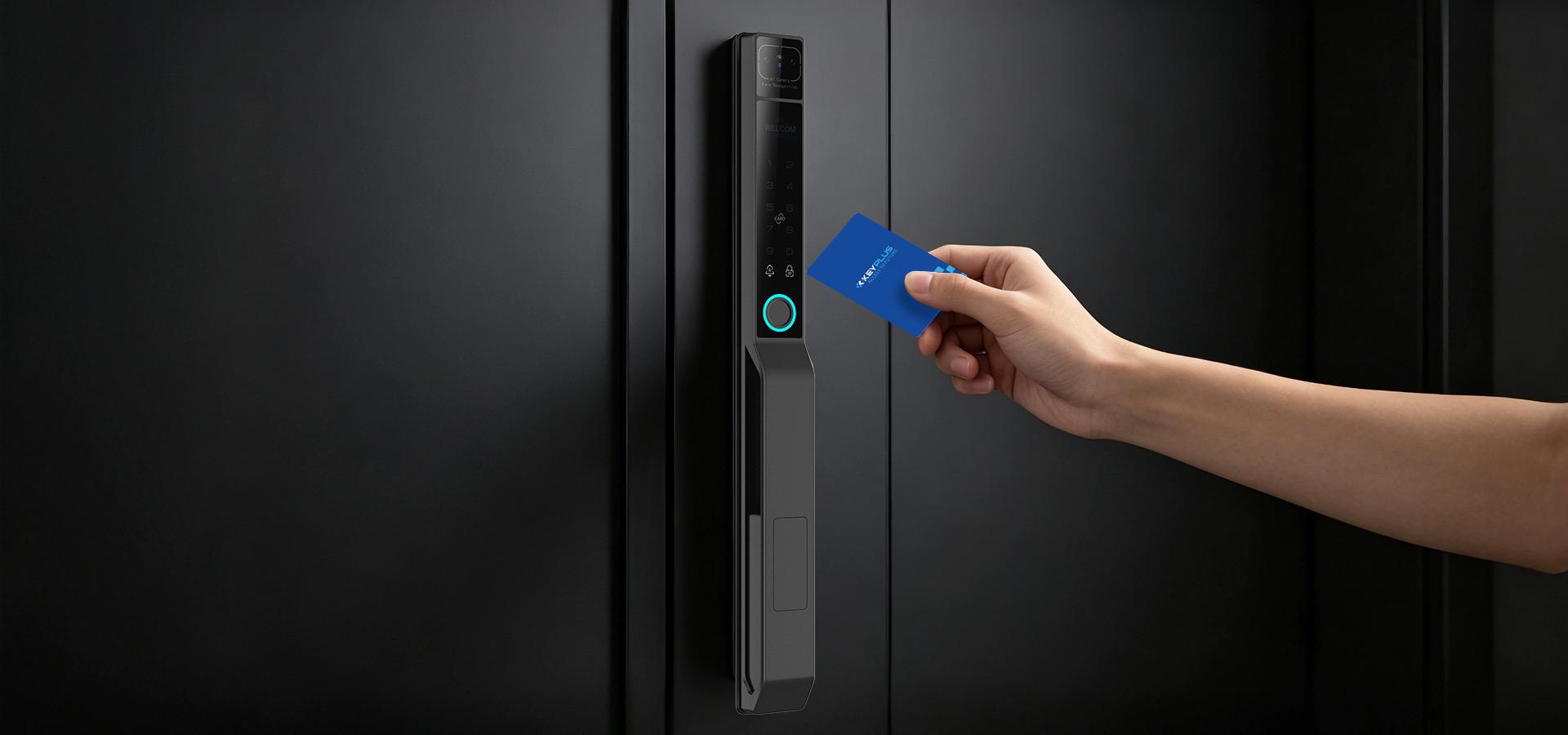
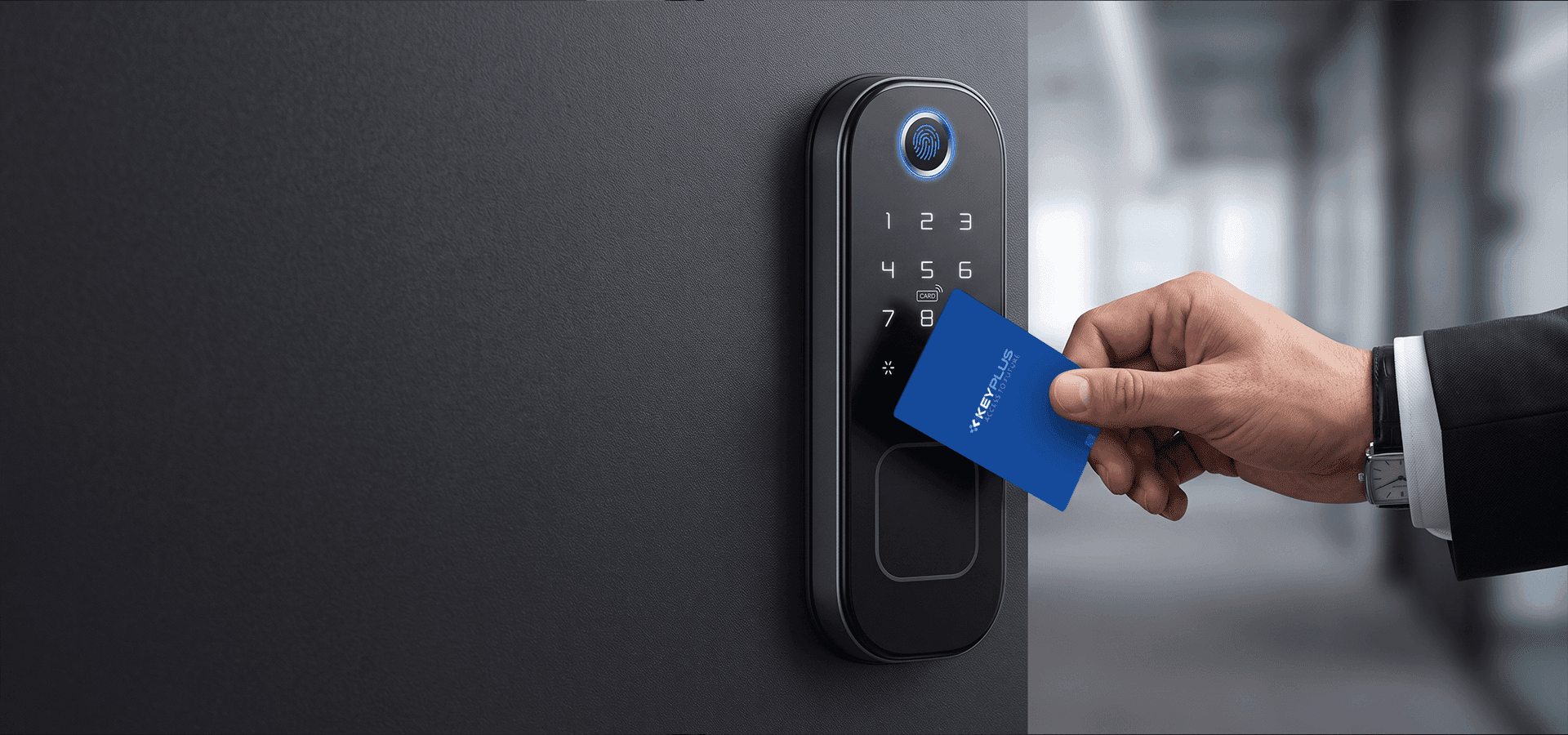
For procurement teams, it also helps to ask about the reader zone, status indicator behavior, and whether the card system is proprietary or standardized. The visible KEYPLUS branding may help identify the product line, but the lock’s actual operating method still needs confirmation from the supplier.
FAQ: short answers buyers usually need
Is this the same as a mechanical hotel door lock?
No. It is an electronic access-control lock with lever hardware, meant to reduce reliance on traditional keys.
Can it be used for more than hotels?
Yes, the visible design also fits serviced apartments, offices, dormitories, and other managed-access doors.
Does the visible card reader mean it only works with one type of card?
Not necessarily. The image shows contactless use, but the exact credential type is not confirmable from appearance alone.
What to do next
If you are evaluating a hotel lock for a project, start with the door, not the brochure. Confirm the access method, door preparation, and daily operating needs first. Then compare the lock hotel options that match those requirements without adding unnecessary complexity. A well-chosen hotel door lock should make the property easier to run, not harder.
For sourcing teams, the next step is usually a technical sheet request: mounting dimensions, power details, credential compatibility, and frame-side hardware. That is where the real comparison begins.