
Capture usable visual evidence
Camera form, lens, position, lighting response and environmental rating are matched to the monitored scene. The design balances the detail needed for the task with the space’s privacy boundaries.
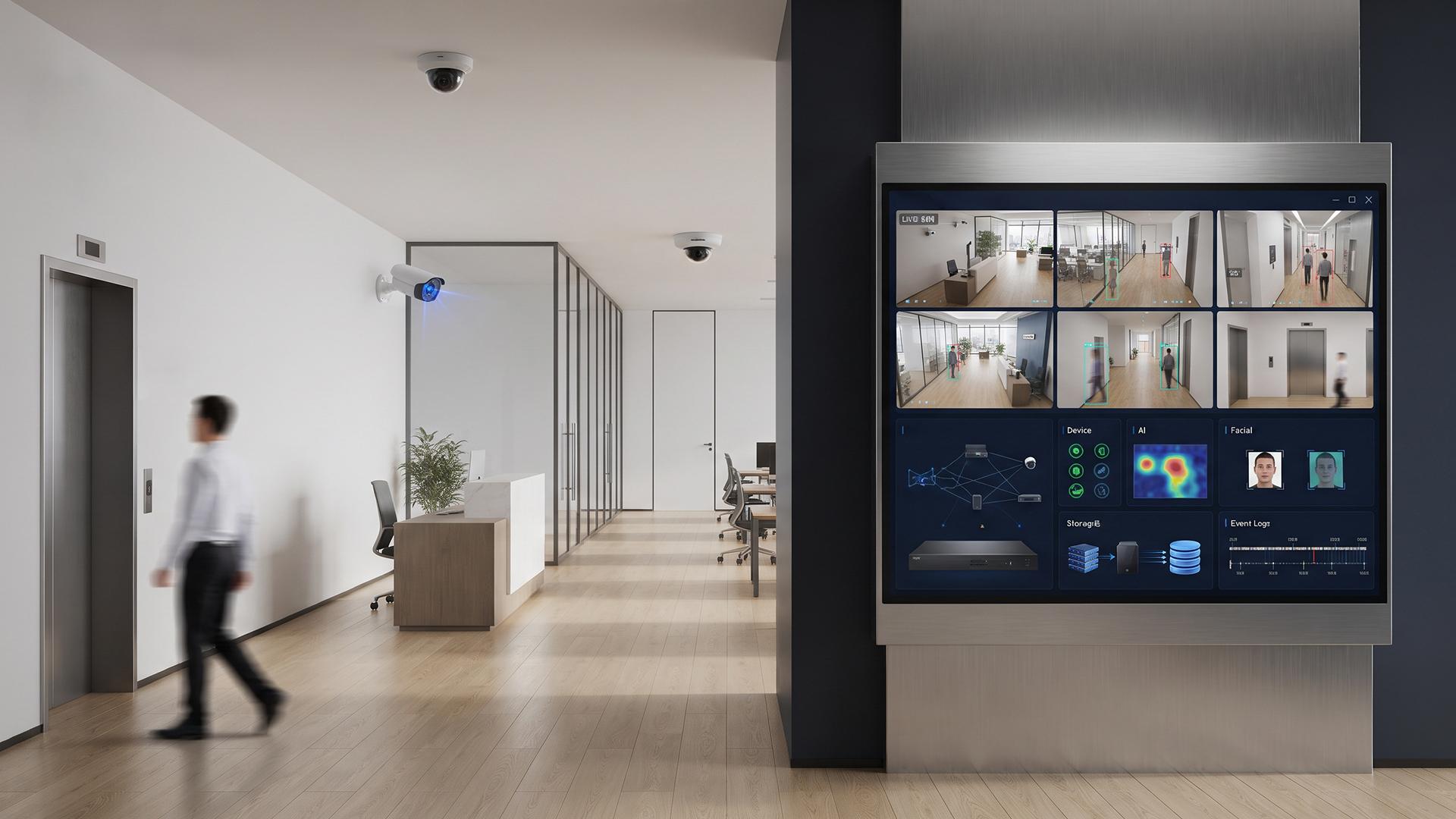
KEYPLUS · الأنظمة
صمم سلسلة أمان بصري موثوقة من تغطية وتسجيل المشاهد إلى الذكاء الاصطناعي المرئي المختار ومراجعة الفعاليات المعتمدة. يربط KEYPLUS البنية التحتية للفيديو المتوافقة مع الوصول والتنبيهات والسياق التشغيلي مع الحفاظ على الخصوصية والأدلة ومسؤولية النظام واضحة.
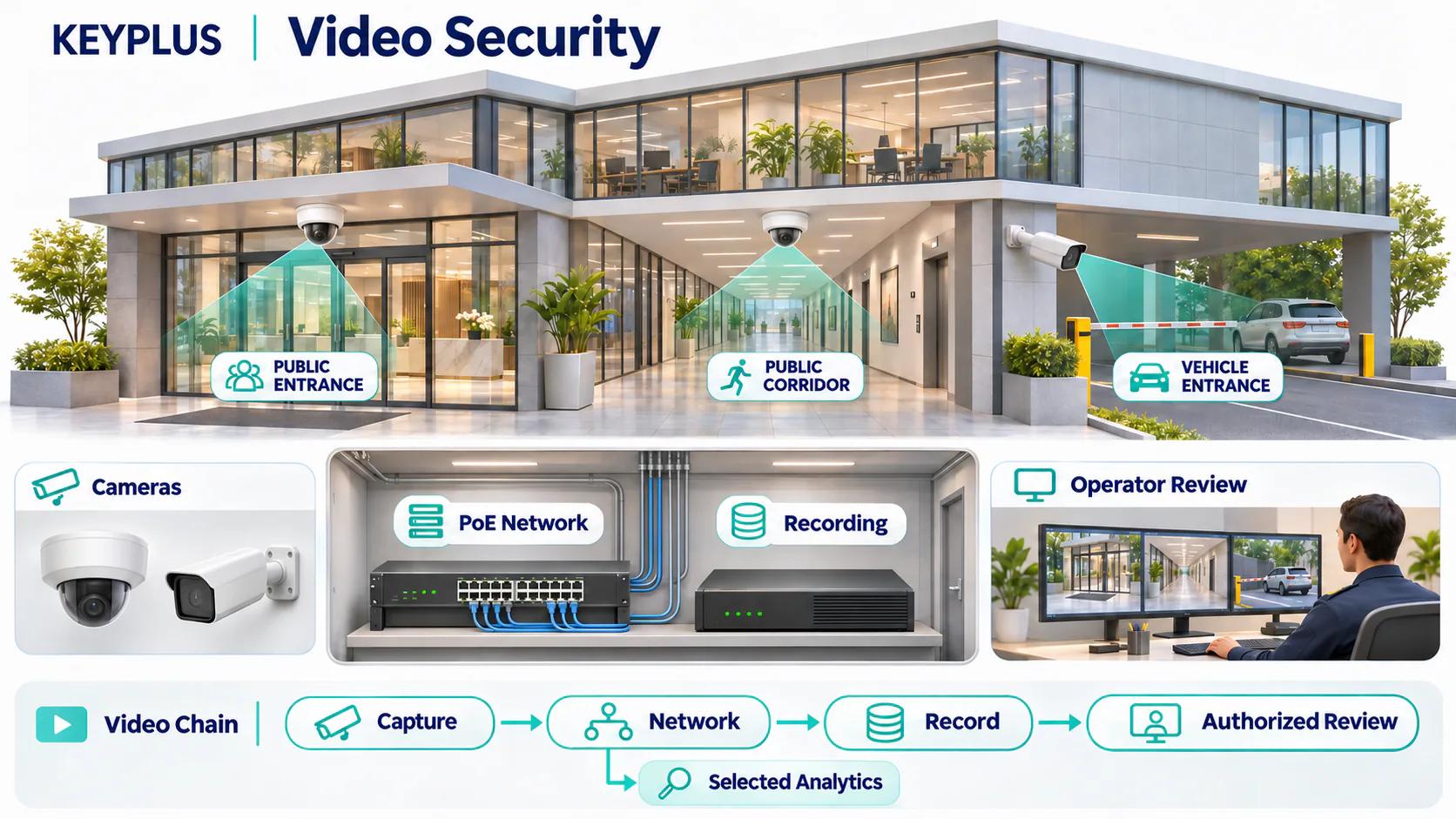
Video quality is shaped by the scene: lighting, field of view, image detail and recording context. Those elements connect the picture on screen with the evidence an operator needs.
Live streams, recorded footage and analytics events serve different parts of the security journey. Cameras and network infrastructure bring the scene into the system; recording and approved interfaces connect it with later review.
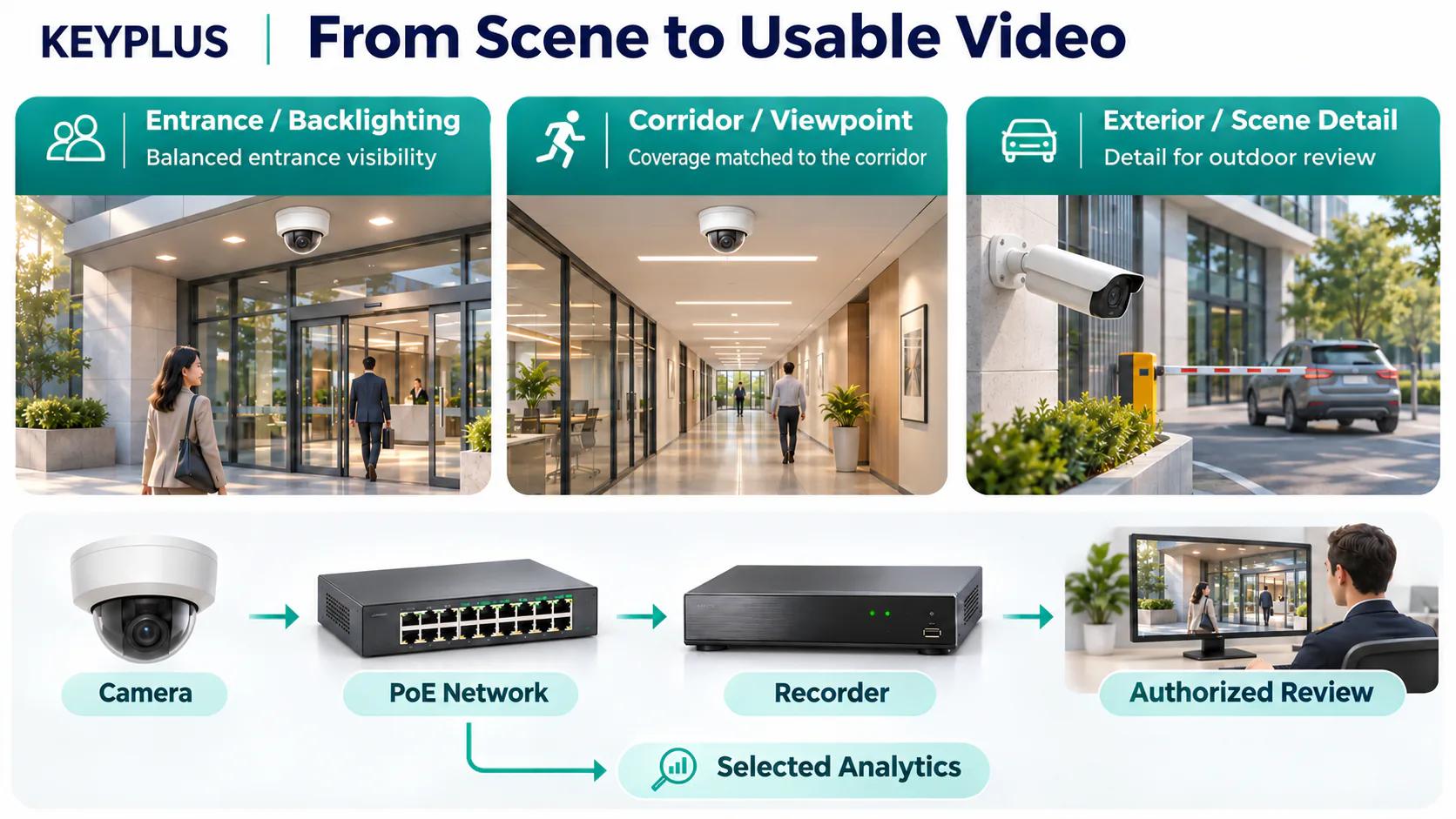
Camera form, lens, position, lighting response and environmental rating are matched to the monitored scene. The design balances the detail needed for the task with the space’s privacy boundaries.
Stream profiles, storage location, retention, time synchronization and permissions shape the recording system. Live viewing, recorded playback and export provide distinct ways to access authorized video.
Supported camera and edge analytics identify defined conditions for review. Available models, scene conditions, compute and licensed functions determine the processing scope and results.
Authorized operators receive available video context alongside review and handling records. AI indications remain distinguishable from incidents confirmed by the team.
Dome, bullet, PTZ and specialist cameras provide the view; PoE switching and the network carry it; NVR, VMS or private services record it. Edge AI, monitors and workstations add analysis and review. Stream access, metadata, playback, export and control are distinct functions—ONVIF or RTSP support alone does not make them interchangeable.
Video AI can detect a defined object, zone event, queue condition or other supported pattern and contribute a structured event to the platform. Aggregated events can reveal recurring conditions. Many useful tasks do not require facial identification; availability and results depend on the model and scene.

Useful evidence connects the scene with time, location and permitted access. Camera mapping, retrieval and export give operators a route from the event to the relevant video, while human review separates an AI indication from a confirmed incident.
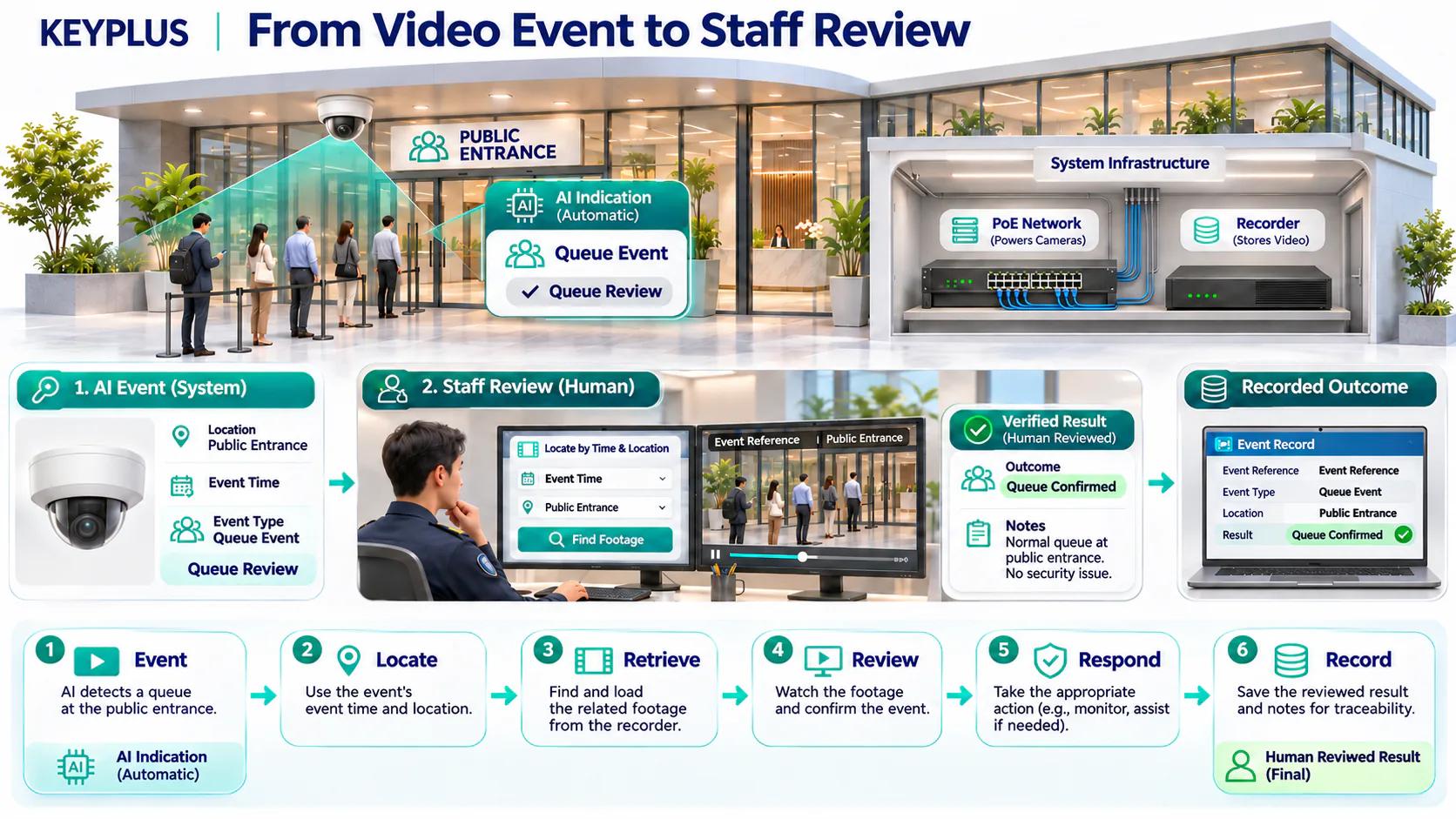
Video engineering covers the real scene: viewpoints and lighting, bandwidth and retention, cybersecurity and user roles. Commissioning links image quality and event delivery with search, playback, export, accurate time and interruption handling, so the video record serves the intended review.
Video coverage serves different public and operational areas across hotels, campuses, offices and mixed-use sites. Privacy boundaries remain part of the scene design; private guest rooms and residential interiors are outside routine surveillance use.
Explore camera and recorder roles, selected Video AI tasks, event handling and the deployment options behind the video workflow.
Yes, where image quality, security, streams and interfaces satisfy the required functions.
No. Local, private and hybrid patterns can be evaluated separately from event sharing.
No. It is a reviewable indication until the required evidence confirms the condition.
Camera mapping and time alignment are part of commissioning and the review following equipment or integration changes. They keep the event, view and recording reference connected.
A useful video design links scene detail with recording, retrieval and authorized review. Camera, storage and processing choices follow the conditions of the monitored space.