
Defined visual detection
Evaluate a selected object, boundary event, queue condition or other approved task in representative scenes rather than claim general abnormal-behavior detection.
KEYPLUS · AIoT Platform
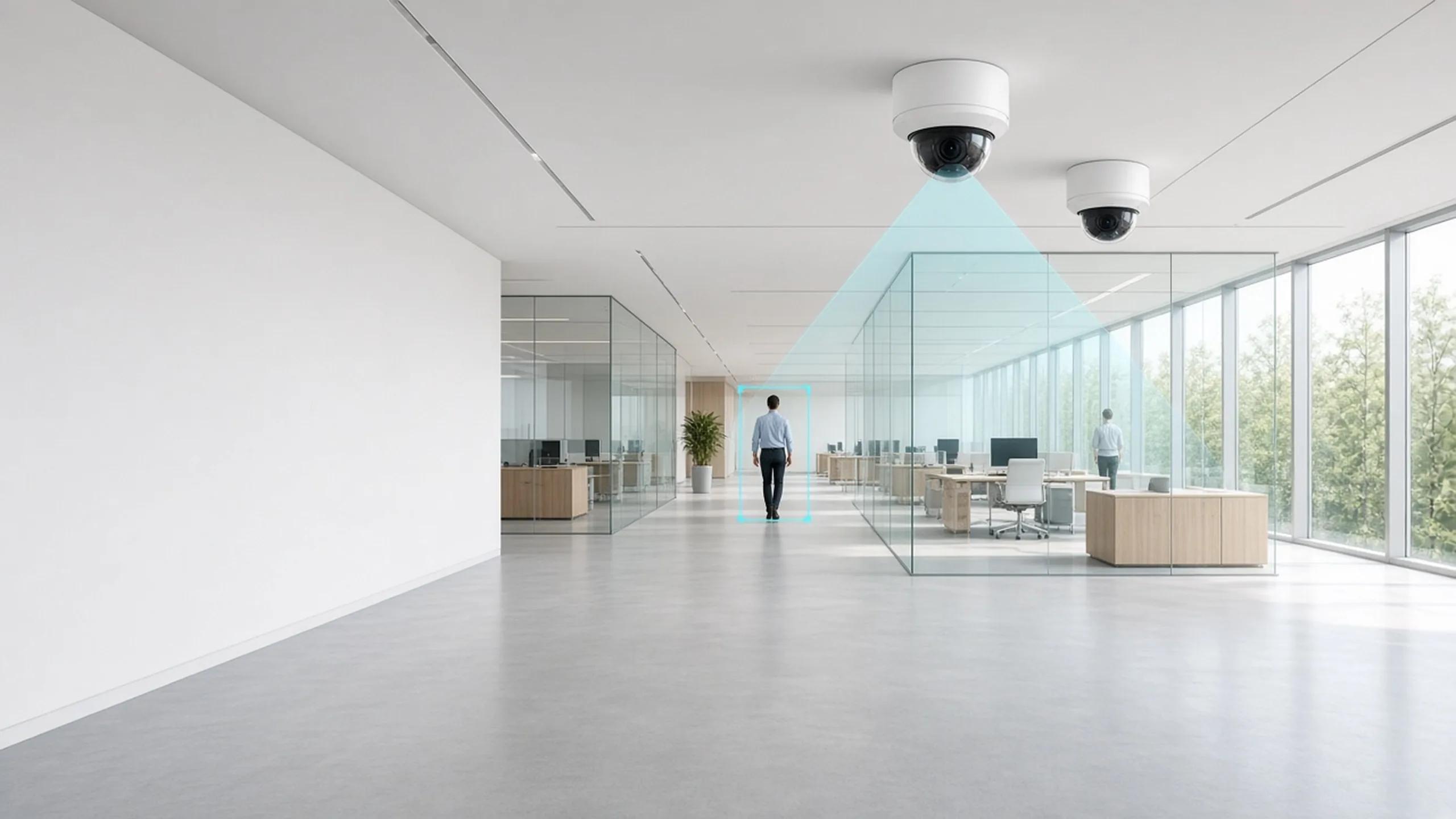
Turn selected visual conditions into structured, reviewable information for authorized operations. Video AI is a perception capability within the platform; cameras, recording and the physical video chain remain within the Video Security system.
Large volumes of video are difficult to monitor and search consistently. A model can focus attention on a defined condition, but performance changes with viewpoint, lighting, density, weather and scene behavior. The project must state exactly what the model should identify and how people will review the result.
Evaluate a selected object, boundary event, queue condition or other approved task in representative scenes rather than claim general abnormal-behavior detection.
Associate the AI result with available location, time and operating context so an authorized user can judge relevance.
Use structured visual events to assist retrieval and examine recurring conditions where privacy and data quality permit.
Place selected inference at the edge, on private infrastructure or in an approved cloud according to latency, bandwidth, compute and policy.
An approved stream reaches the selected inference service
the model produces a task-specific result and confidence
the platform applies the relevant event threshold and context
an authorized user reviews evidence
the event enters the agreed response or reporting process. Storage and inference may use different architectures.
Start with one clearly defined event and representative footage. Validate precision, missed events and review effort. Add contextual routing and reporting after the detection is useful. Use aggregated analysis only when retention, privacy and sample quality support it.
Campuses may evaluate restricted-boundary events, retail teams may assess queue awareness, offices may review selected after-hours conditions and hospital facilities may monitor suitable public or operational areas. Private hotel rooms and residential interiors are not routine video-AI environments.
Video Security defines the capture, recording and evidence system. The platform handles approved AI events and wider context. Facial identification is not required for many useful tasks. Model design, training details and internal event-correlation methods are not published.
Select representative day, night, weather, density and obstruction conditions. Measure relevant detections, false alerts, missed events, delivery time and operator handling. Revalidate after material camera, scene or model changes.
No. Viewpoint, lighting and environment require scene-specific validation.
No. Many useful tasks do not identify a person.
Only through an approved workflow with suitable permissions and verification.
Share the question your team needs to answer, the information currently available, the responsible users, deployment constraints and the evidence required before action.