
Centralized cloud services
Cloud deployment supports remote administration, elastic resources and multi-site intelligence within connectivity, data-policy and service constraints.
KEYPLUS · منصة AIoT
ضع قدرات المنصة والذكاء الاصطناعي في المكان الذي تلبي فيه أفضل متطلبات البيانات، والاستمرارية، والكمون، والحجم، والحوسبة، وملكية الخدمة. يقوم KEYPLUS بتقييم أنماط السحابة والخاصة والهجينة والحافة كجزء من بنية التشغيل الكاملة.
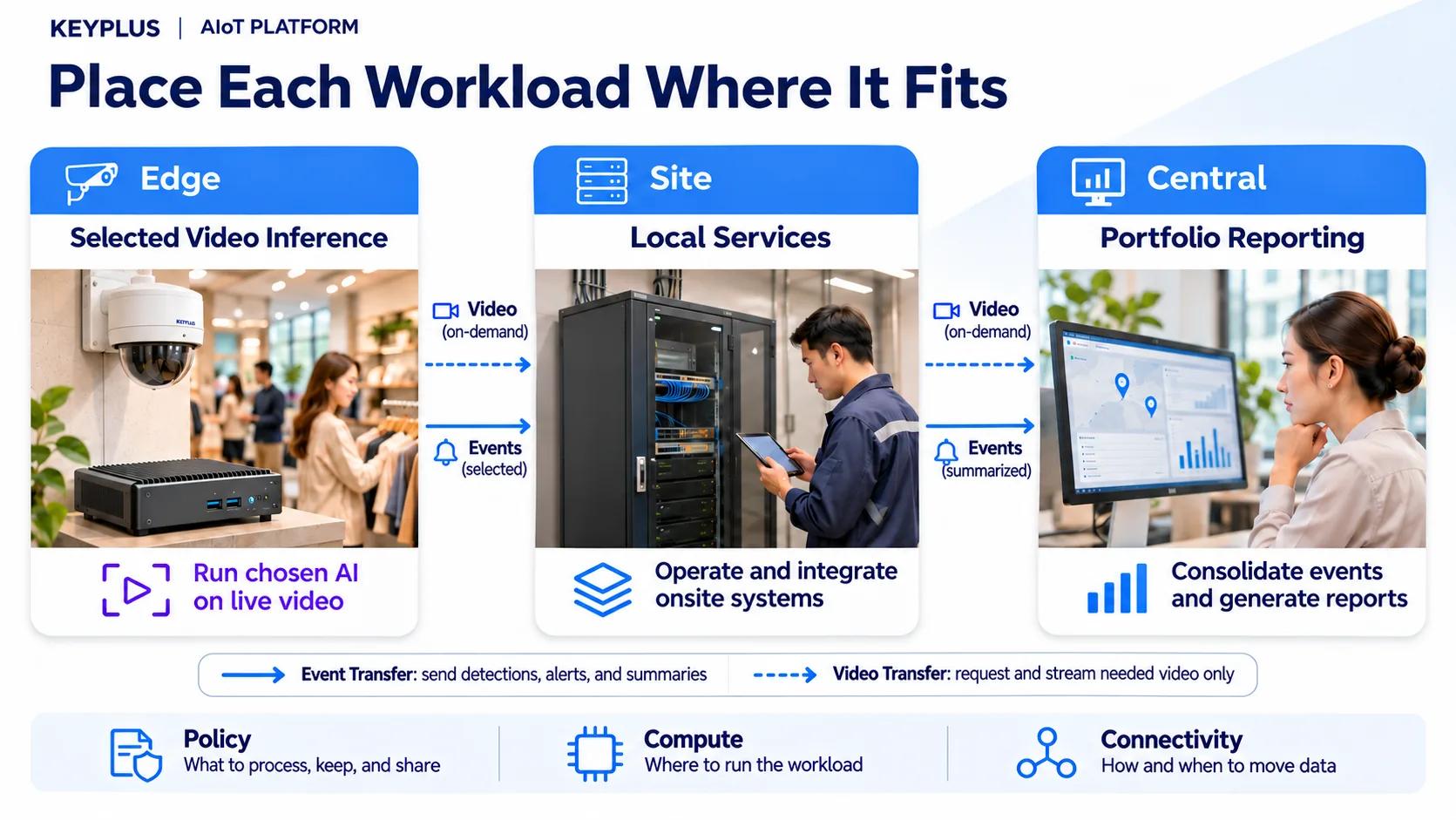
Deployment is more than a choice between cloud and local. Video inference can have different compute and latency needs from portfolio reporting, while data location and local continuity carry their own responsibilities. The architecture places each workload where those requirements meet.
A workload-led design connects each function with a suitable processing location. Data policy, bandwidth and service ownership bring practical context to cloud, private, hybrid and edge choices.
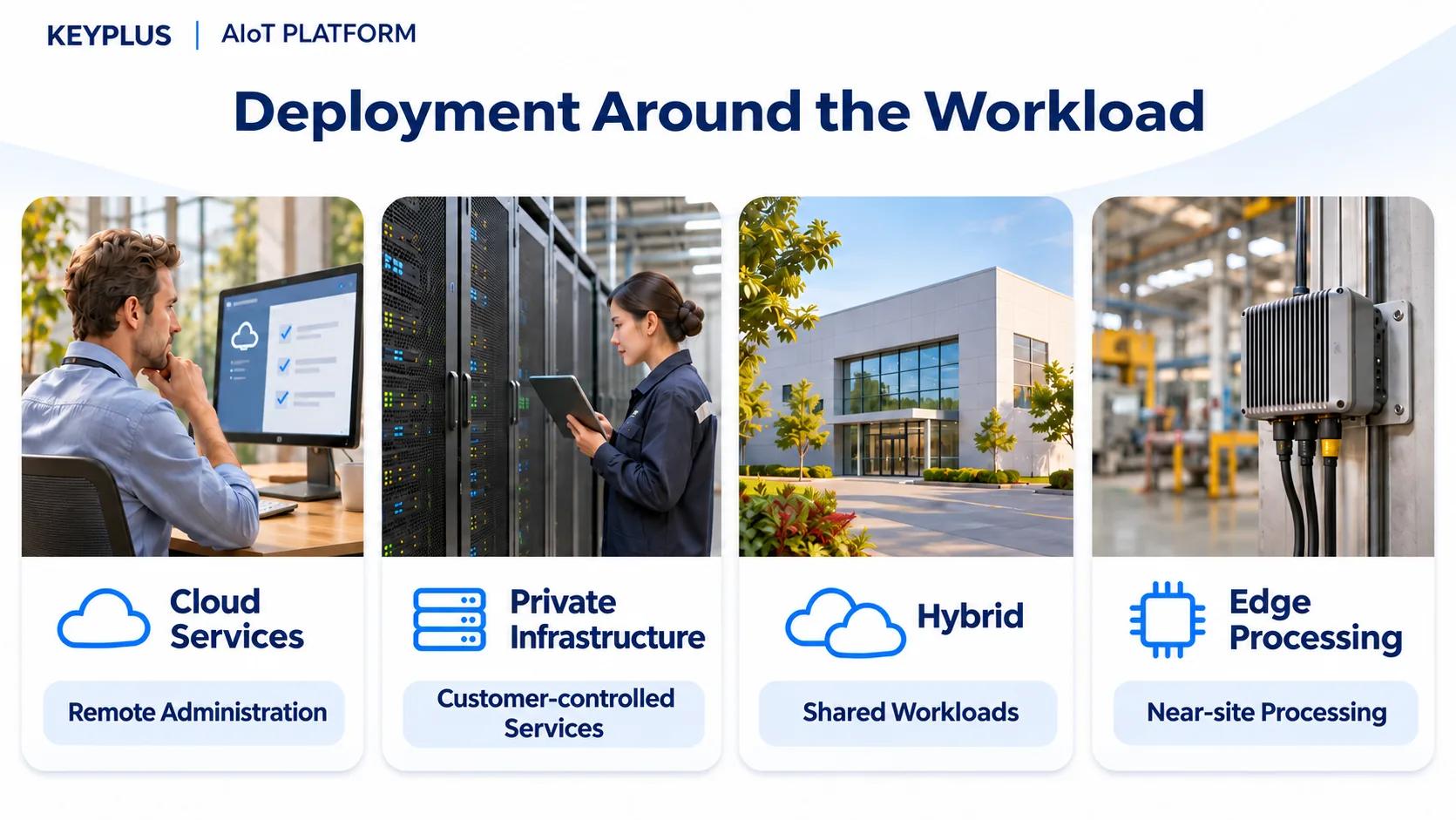
Cloud deployment supports remote administration, elastic resources and multi-site intelligence within connectivity, data-policy and service constraints.
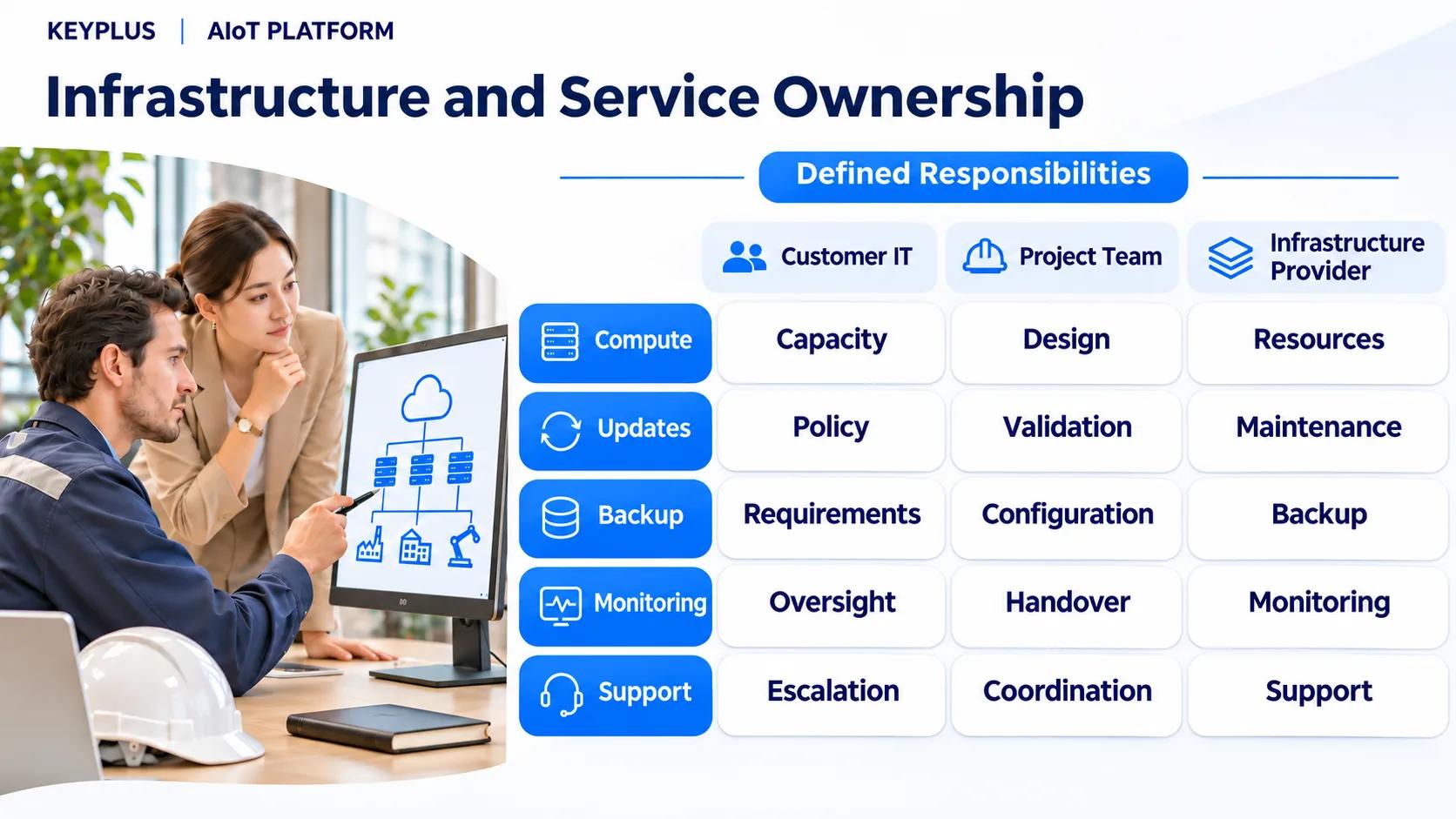
Customer-controlled infrastructure supports internal-network access and defined data-location or operating-ownership needs, with compute and lifecycle responsibilities assigned to the project parties.
Hybrid deployment keeps selected data, processing and continuity close to the site while central services support broader analysis and portfolio management.
Edge deployment places suitable perception, rules and processing near field systems for applications shaped by latency, bandwidth, privacy or local continuity.
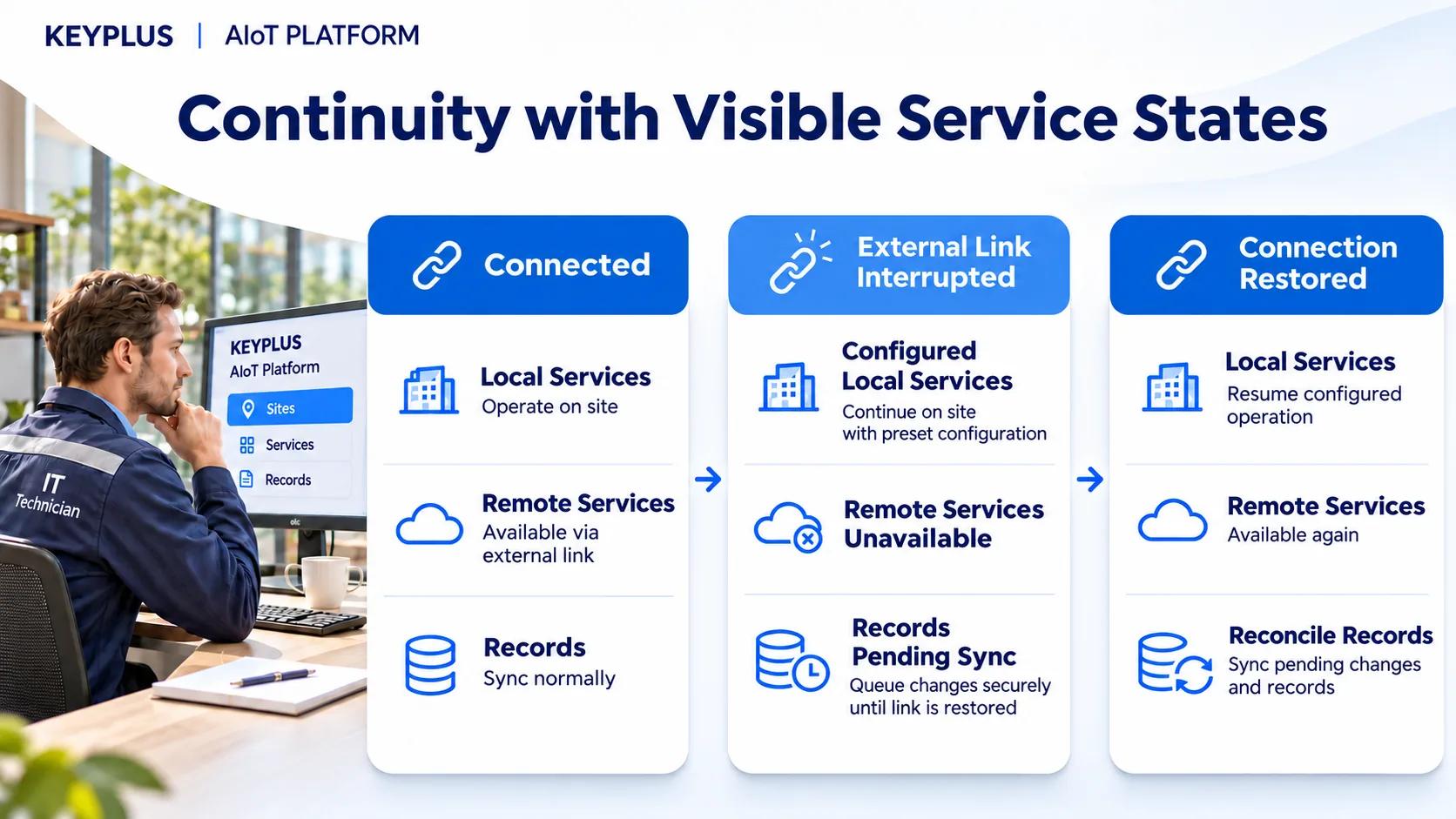
Continuity is part of the deployment experience. Local availability, pending records and later synchronization connect the site through an interruption, while compute, licensing and support form part of the ongoing service footprint.
Deployment can grow with the project. A focused first phase provides the operating foundation, with interfaces and resources supporting later expansion where it adds value.
A retail portfolio can combine central insight with local recording; a campus can combine private services with selected edge processing; a hotel group can link property continuity with group management. Hospital facility deployment adds its own non-clinical data and operating boundaries. Available combinations follow the chosen functions and infrastructure.
Deployment options follow the selected functions and service dependencies. Capacity, data location and recovery behaviour connect the architecture with the resources and support behind it.
The deployment design connects workloads, infrastructure and service responsibilities. Availability, recovery and data synchronization describe how the system continues through normal operation and interruptions.
Explore architecture, system workloads and integration responsibilities across cloud, customer-controlled, hybrid and edge deployment.
No. Requirements and ownership differ by site and workload.
Feasibility depends on model, compute and support resources.
A governed hybrid design can be evaluated when it provides clear value.
Not automatically. Reassess compute, service dependencies, data policy and support when adding a function or changing its operating requirements.
Workload, data location, connectivity and continuity determine where platform functions can operate. Cloud, private, hybrid and edge options bring different responsibilities for infrastructure and support.