
Identity and permission across the campus
Approved institutional identities connect with role-specific access groups, locations and time periods. Temporary events, visitors and contractors have distinct permission-issuance and expiry workflows.
KEYPLUS · الحلول
اربط بين الهوية، والوصول، وأمن المناطق العامة، والمرافق، وسير العمل في الطاقة والاستجابة عبر المساحات الأكاديمية والسكنية والمساحات المشتركة في الحرم الجامعي. يساعد KEYPLUS المؤسسات على تحقيق توازن بين بيئة ترحيبية ووصول متحكم فيه وعمليات أكثر تنسيقا.
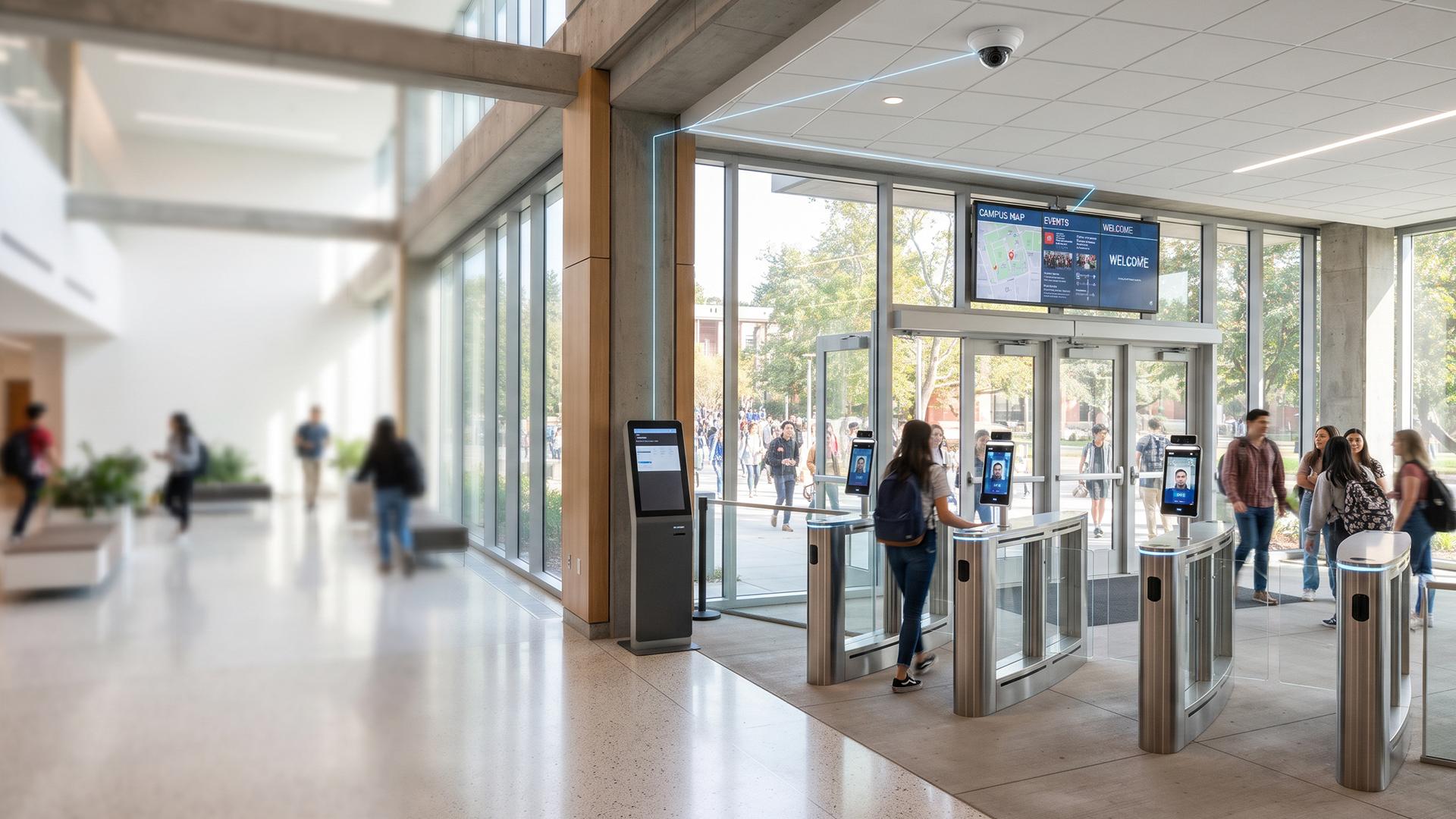
Teaching spaces, residences, laboratories, libraries and sports facilities can operate under different rules on the same day. Campus-wide coordination brings identities and events together without removing the responsibilities of the teams running each building or public activity.
Campus access connects institutional identities with buildings, timetables and responsibilities. Students, faculty, visitors and contractors follow distinct permission journeys, while local maintenance remains a separate operational role.
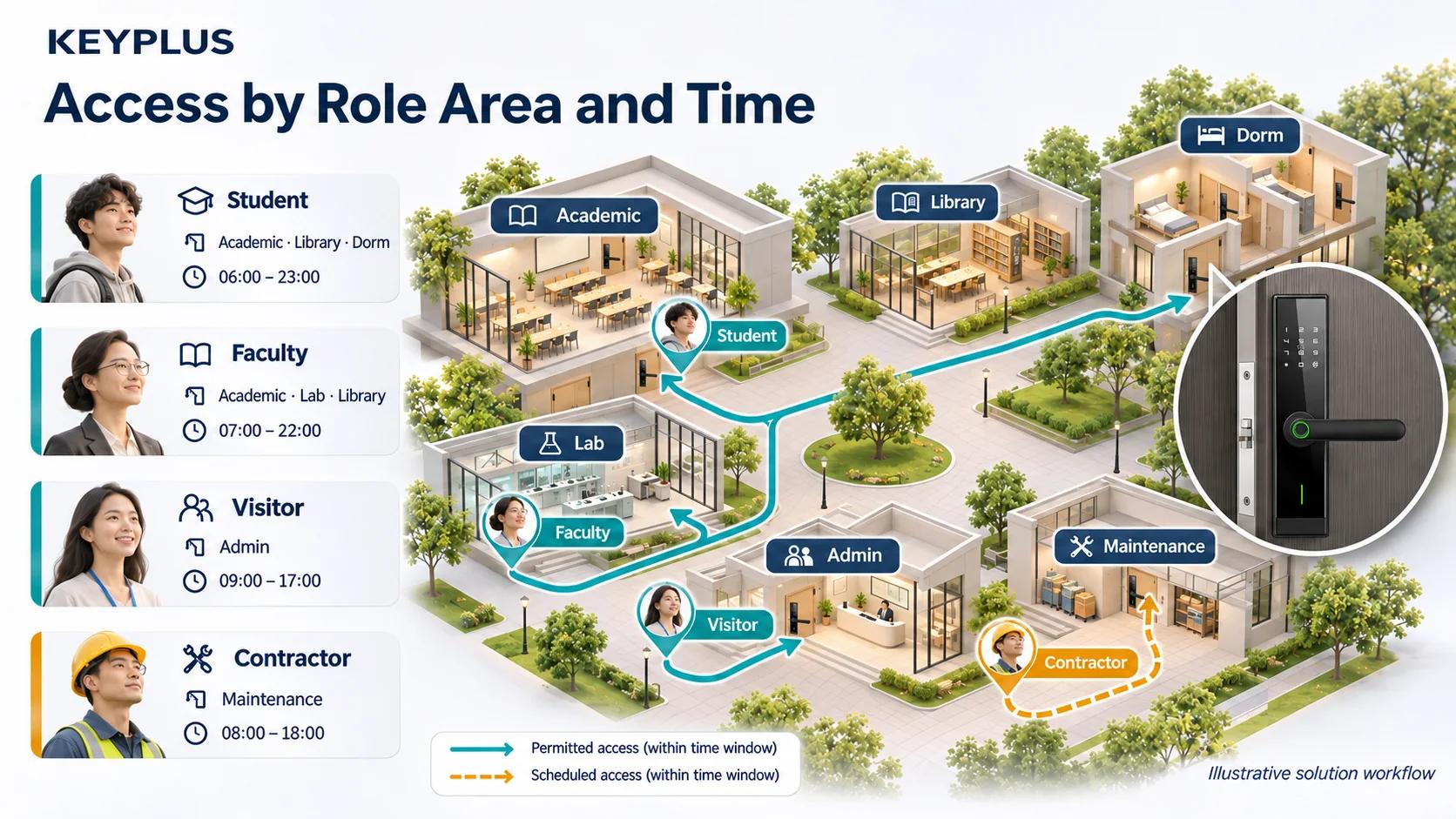
Approved institutional identities connect with role-specific access groups, locations and time periods. Temporary events, visitors and contractors have distinct permission-issuance and expiry workflows.
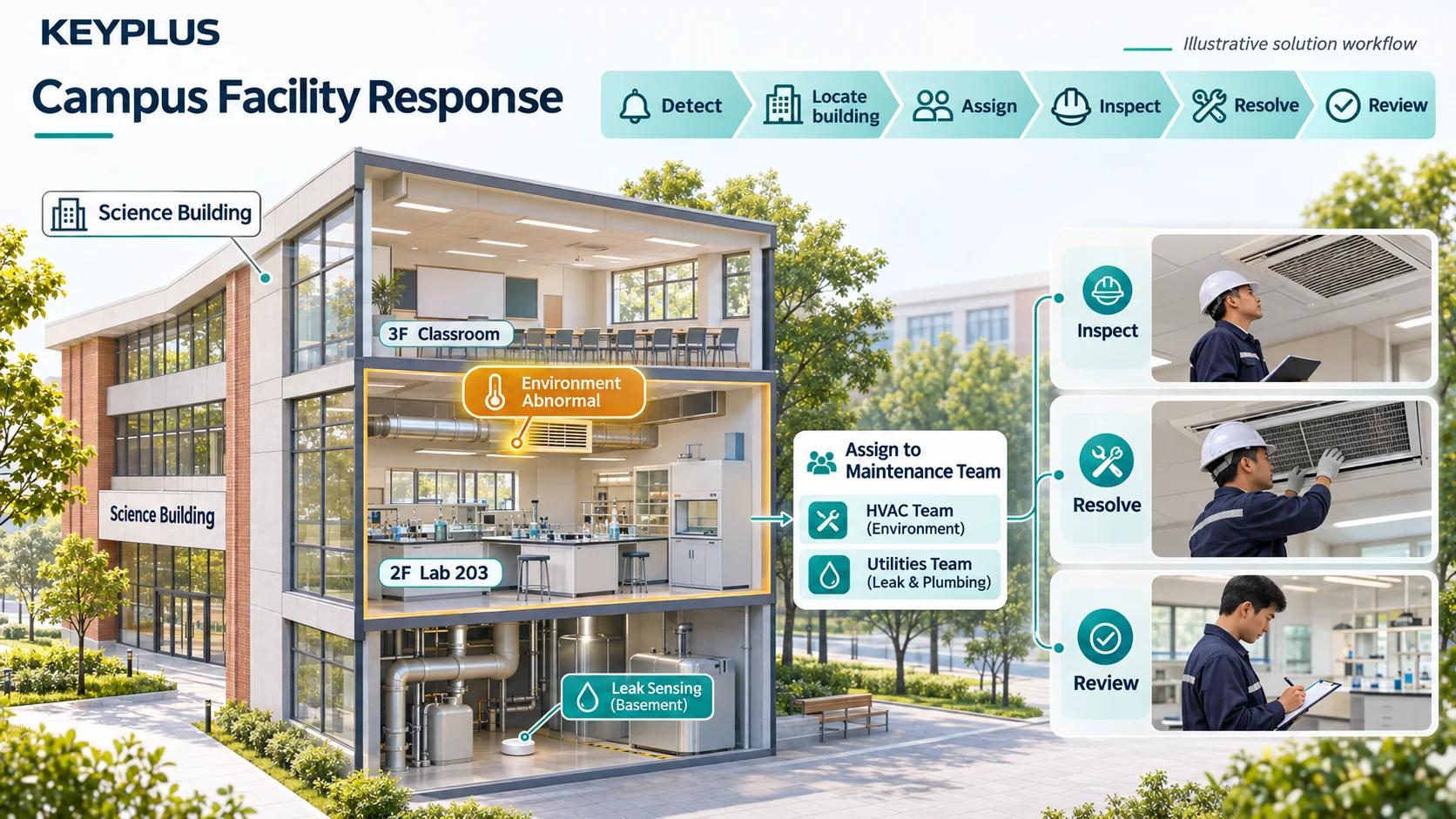
Selected video AI, access exceptions and alarm sources bring relevant conditions to authorized teams with location and operating context. The institution retains its emergency authority and validated procedures.
Building and team views bring supported sensor readings, device conditions and maintenance information together. Recurring exceptions become visible without treating an isolated signal as proof of misuse or equipment failure.
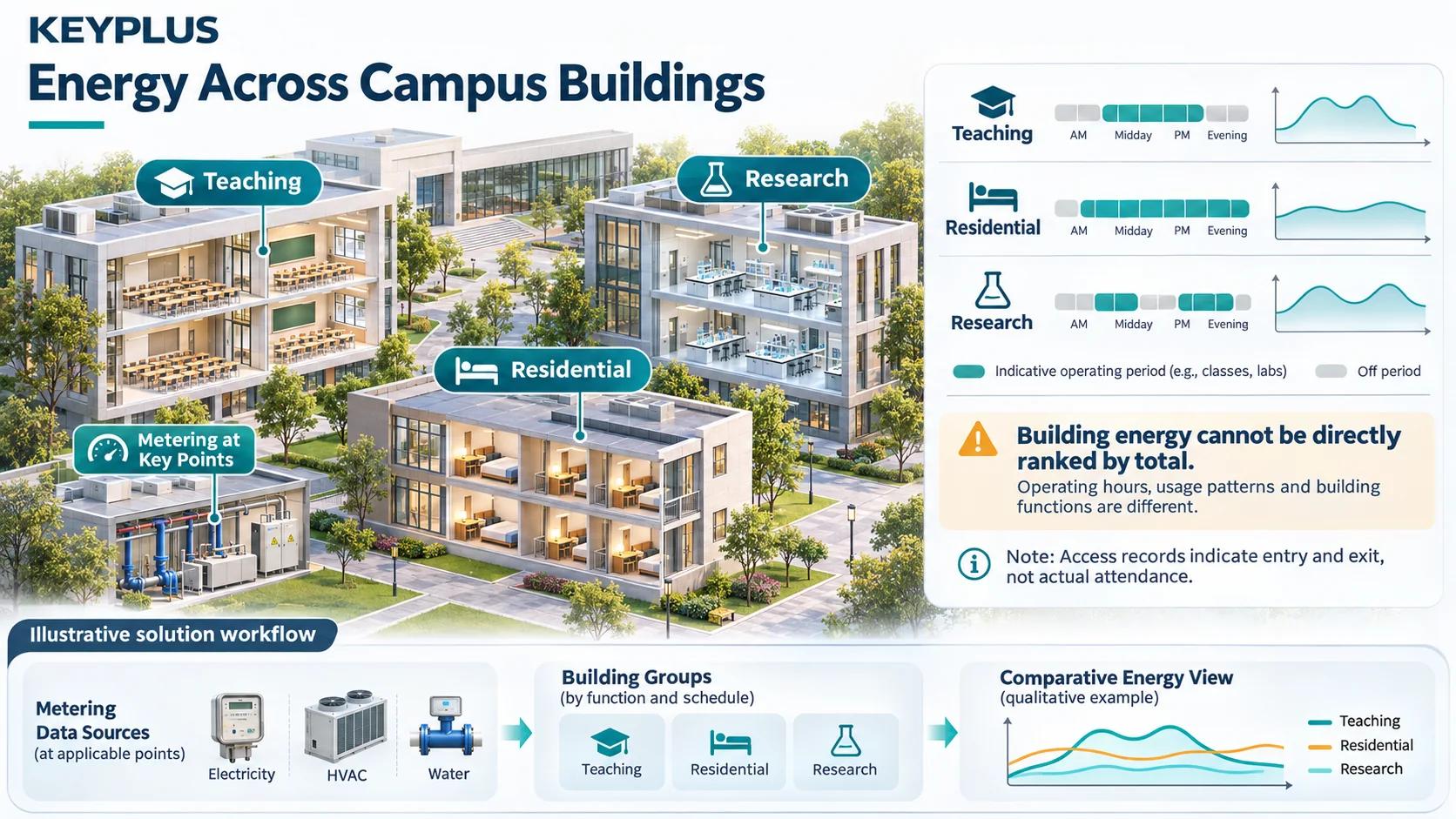
Consumption and operating information support comparisons across building types using suitable baselines. Teaching, research, residential comfort and safety remain part of the energy-review context.
Wired access, smart locks, visitor and vehicle entry cover different campus journeys. Public-area video, environmental sensing and utility information add context for facilities and security teams. Role-specific interfaces connect that information with institutional systems through the interfaces approved for the project. Existing institutional systems retain their designated authority.
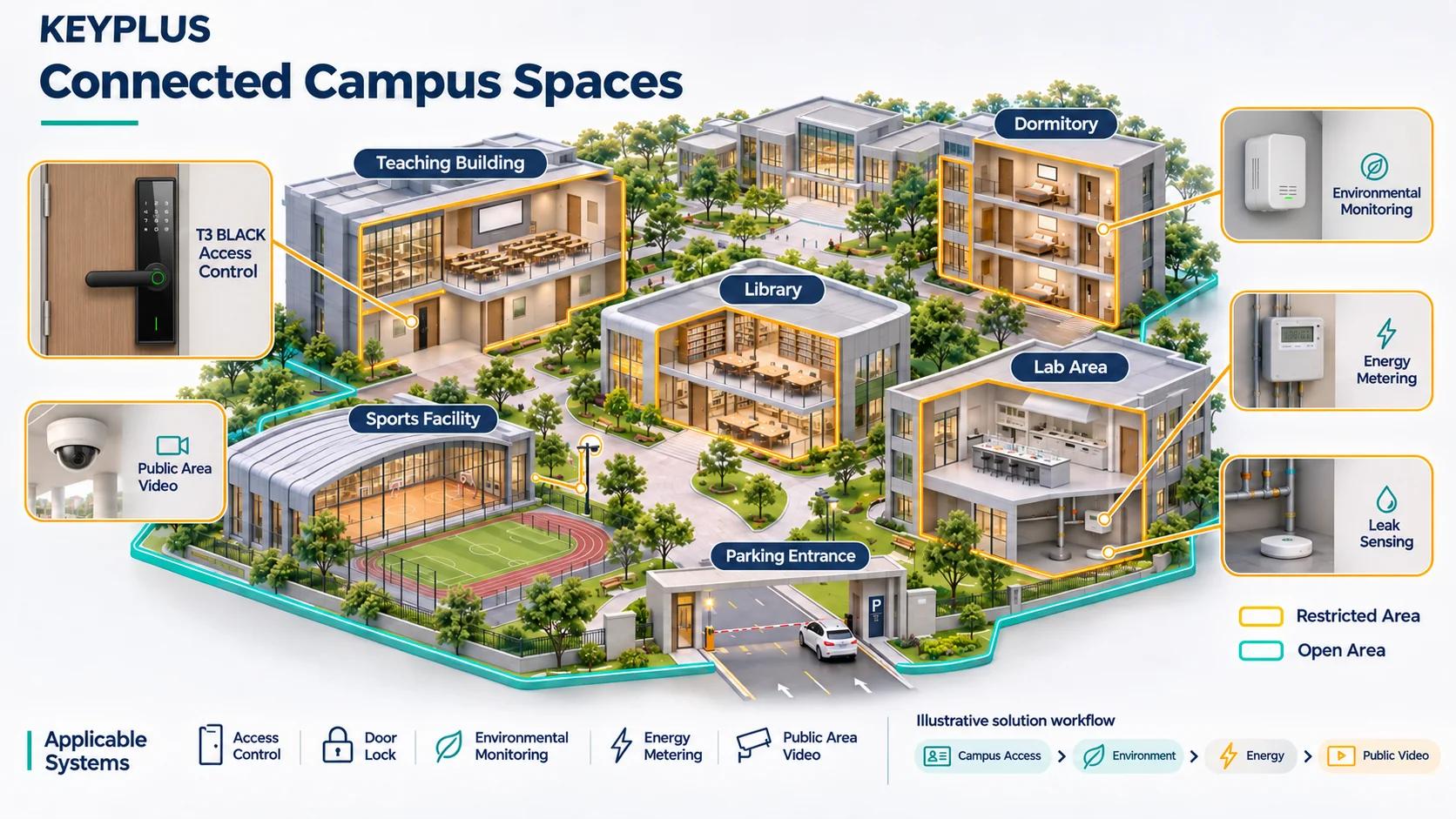
Enrolment, employment changes and temporary events give campus permissions a continuing lifecycle. Building and role context helps teams understand exceptions without treating an entry record as proof of a person’s presence or intent.
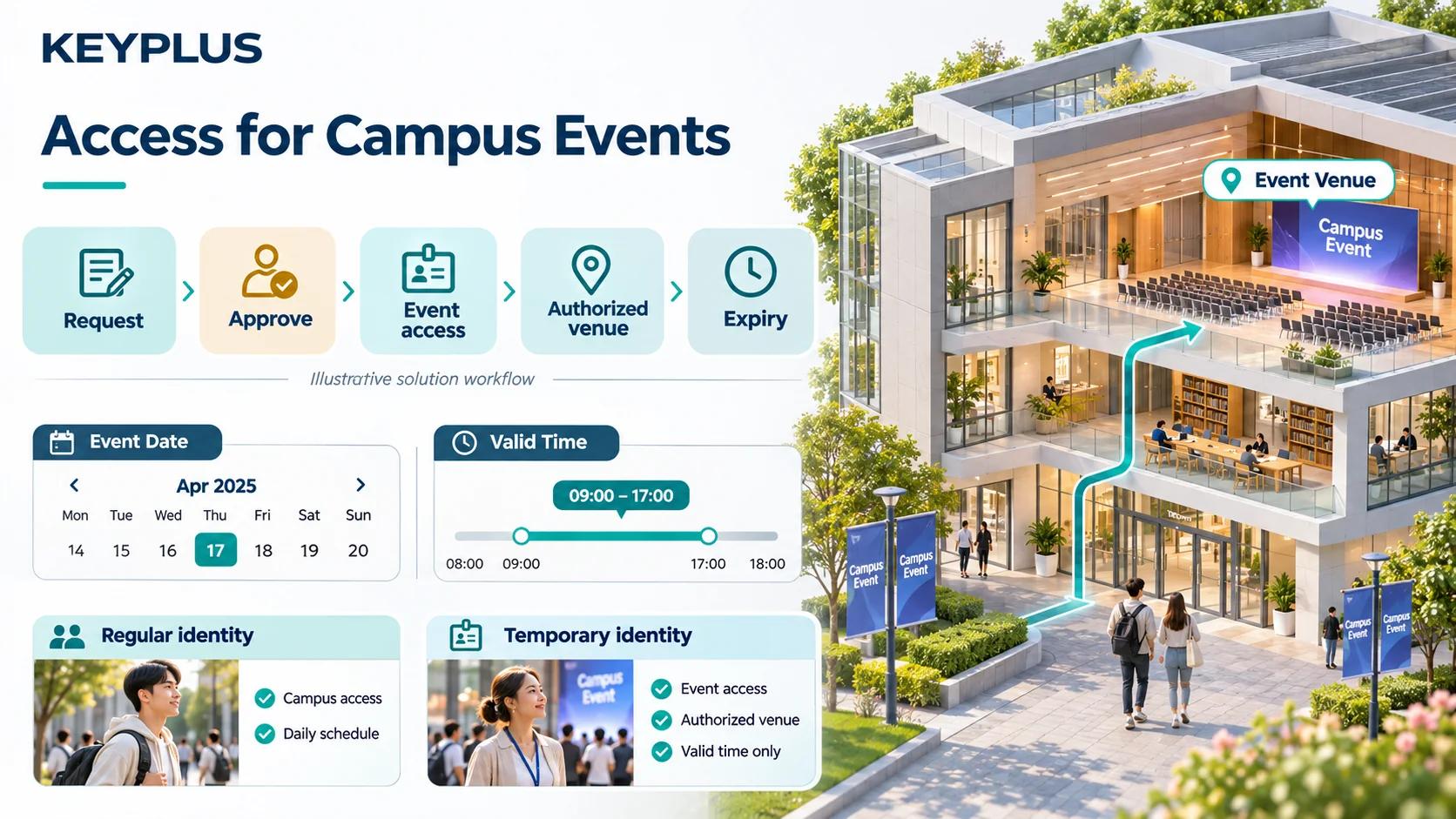
Universities, schools, student housing and research campuses bring different public, residential and restricted-space needs. A common architecture connects those differences with the institution’s own governance model.
Explore access, vehicle entry, public-area video, environmental sensing and energy information for campus facilities.
Only where credential technology, device support and institutional policy align across the intended route.
No. Entry records alone do not confirm presence, exit or room utilization.
No. It can support awareness and coordination while approved life-safety systems and procedures remain authoritative.
No. A consistent governance process can support different approval and time rules for each building and user group.
Campus roles, building types and academic schedules shape the access and facility workflow. KEYPLUS connects the relevant systems while keeping institutional responsibilities clear.