
Connect without removing authority
Source systems retain authoritative records and critical local functions, exposing only the information and actions approved for integration.

KEYPLUS · منصة AIoT
Create an AIoT architecture that can evolve while preserving system authority, information boundaries and operating responsibility. Plan the relationships between systems, platform services, intelligence and user experiences around clear ownership, approved data flows and controlled actions.
AIoT spans devices, software, networks and operating teams. Clear source ownership helps keep shared information from becoming a second, conflicting record, while defined control paths keep integration from exposing more authority than the workflow needs.
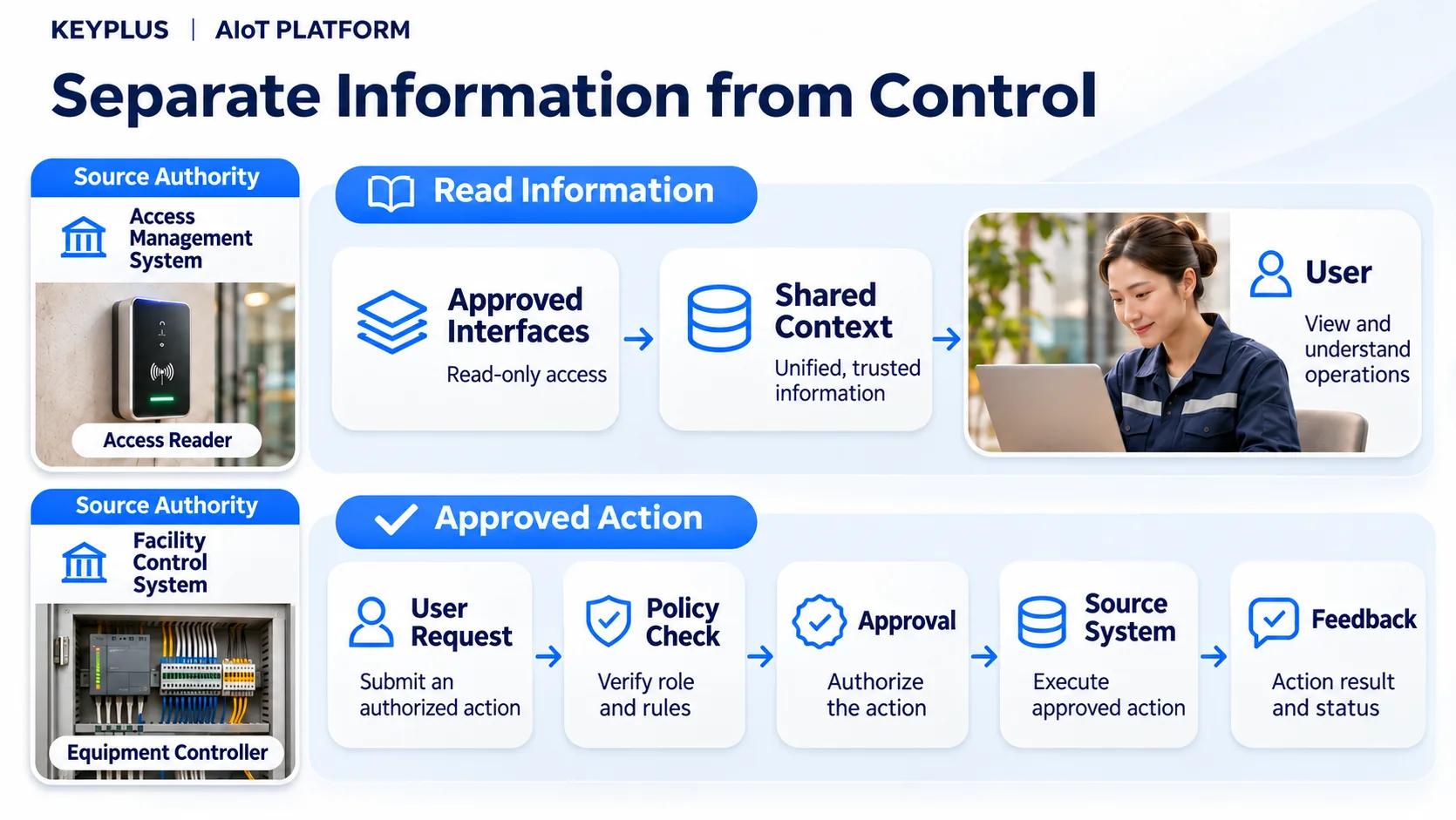
Official source records, permitted information flows and approved actions connect the platform with its participating systems. Separation by responsibility keeps shared insight from obscuring local control.
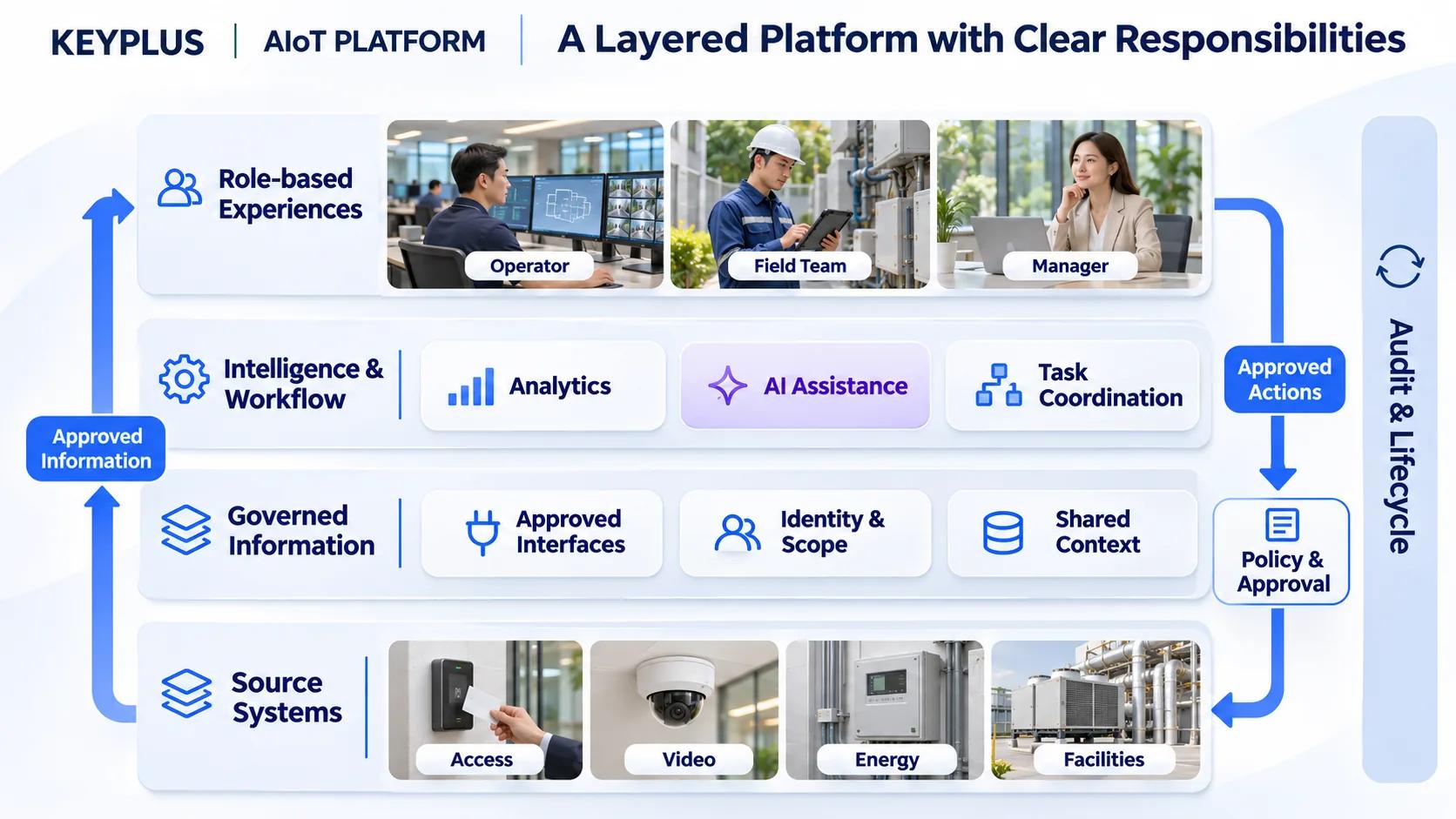
Source systems retain authoritative records and critical local functions, exposing only the information and actions approved for integration.
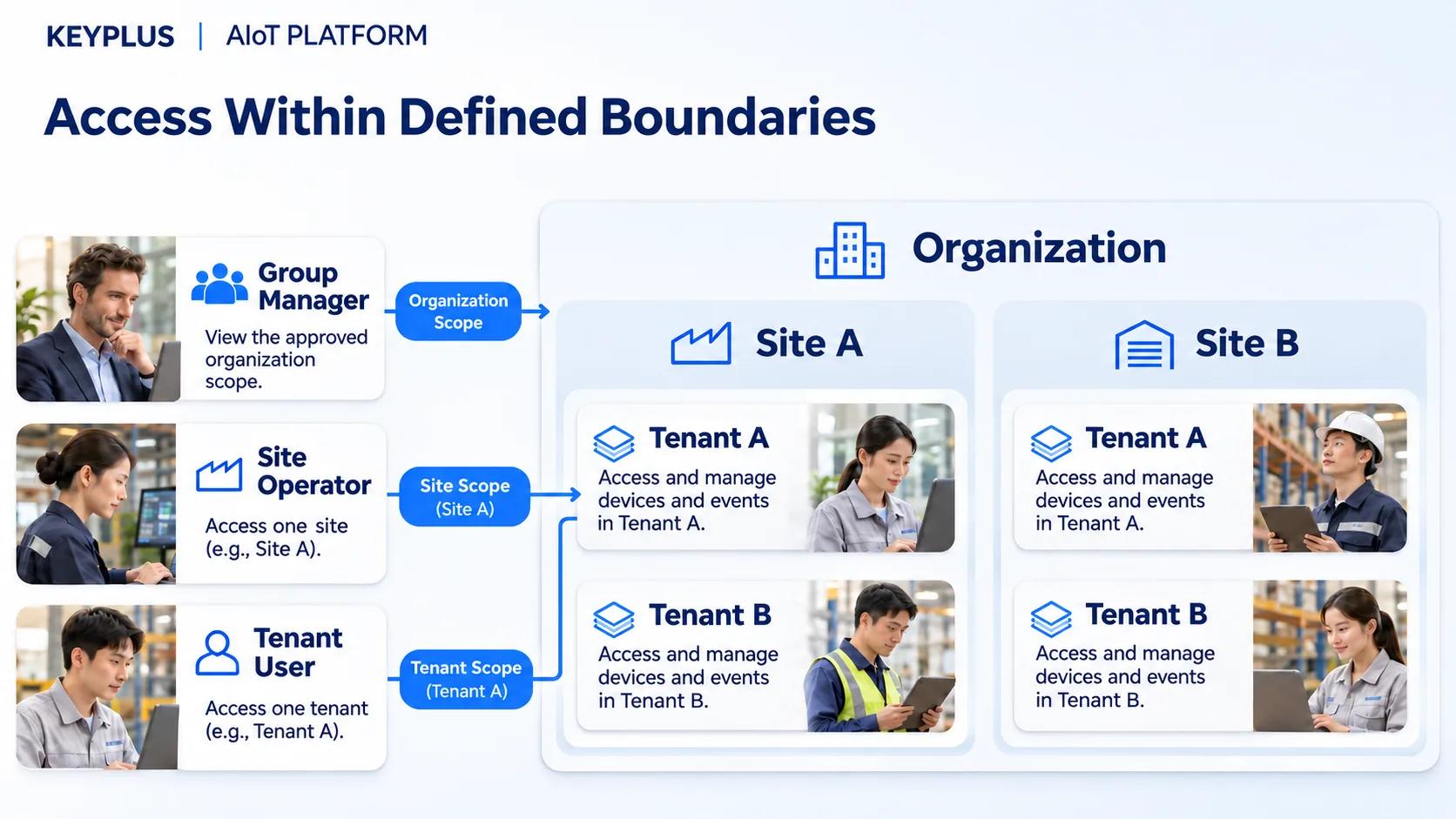
Identity, role, tenancy and retention rules govern the minimum information shared across system workflows.
Analytical and AI outputs remain distinct from policy checks, approvals, deterministic controls and verified actions.
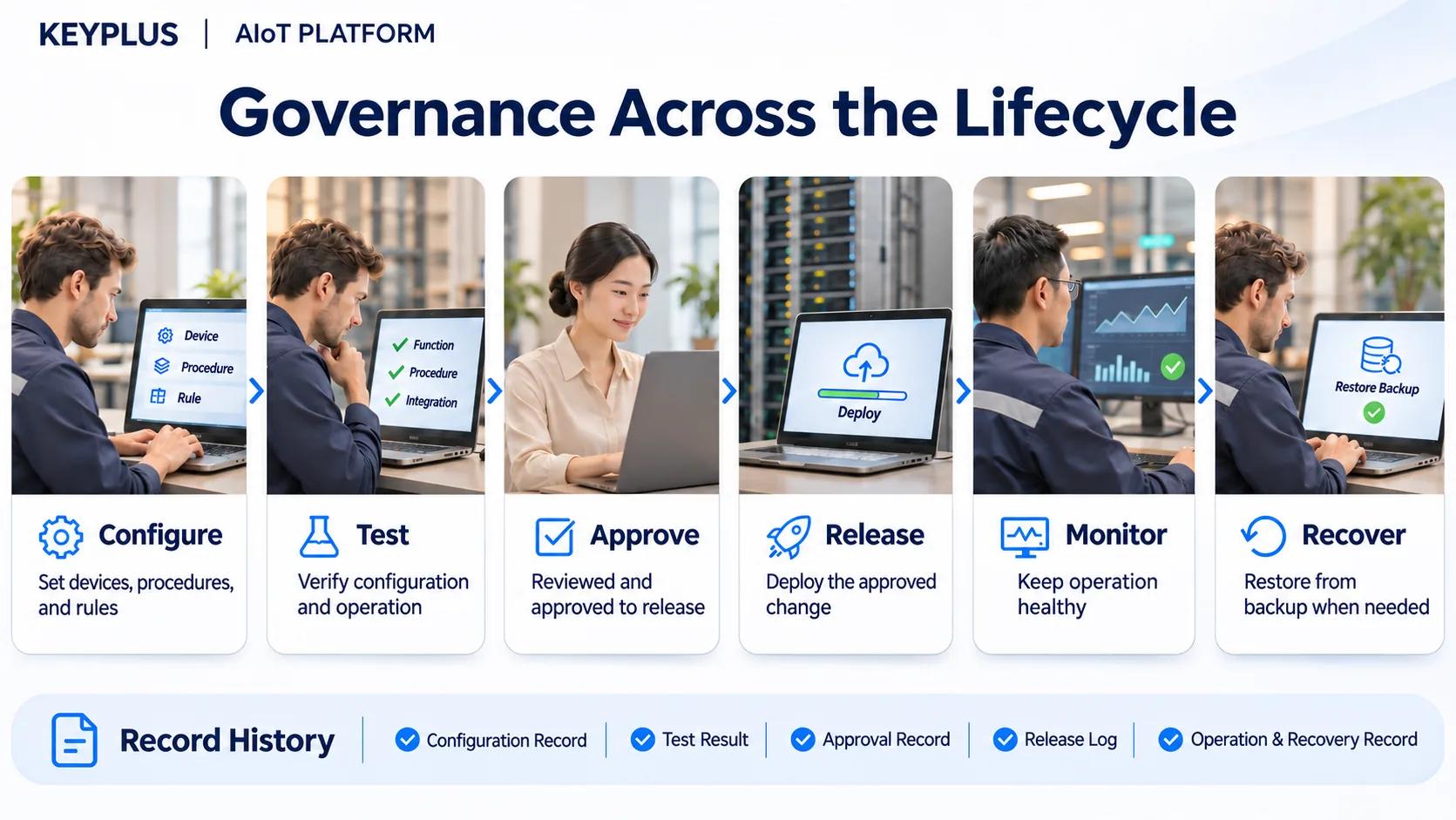
Version, configuration, monitoring, backup, recovery and evaluation processes support sites and capabilities as they evolve.
Approved interfaces bring system information into the platform
identity, scope and context are applied
intelligence supports the permitted task
workflow links the result with responsibility and approval
role-specific interfaces present the outcome
controlled, auditable paths carry any approved action back to the source system.
The architecture continues beyond commissioning. Versions, configuration and service responsibilities give changes a managed path as equipment, interfaces and user needs evolve.
Source ownership and identity provide the foundation for shared context and event handling. Analytics, deployment and tool connections build on those boundaries as the project evolves.
تحتاج الفنادق متعددة العقارات إلى حوكمة متسقة مع العمليات المحلية؛ تتطلب الحرم الجامعي حدودا مؤسسية ومبانية؛ تحتاج المكاتب إلى فصل بين المالك والمستأجر؛ تتطلب المستشفيات نطاق صارم واستمرارية غير سريرية. يبقى النموذج الطبقي متسقا بينما تختلف سياسات المشروع.
Project architecture connects systems of record, information flows and approval roles with the interfaces available to the workflow. Audit and acceptance requirements give the design a clear delivery boundary.
Architecture review brings data paths, permissions and service ownership into one view. Recovery and change responsibilities connect the design with ongoing operation, rather than ending at the initial integration.
Explore source ownership, shared context, controlled action and lifecycle management alongside platform capabilities, deployment and integration.
It explains system ownership, information and control paths, and the responsibilities that connect delivery with ongoing service.
Yes, where suitable interfaces and responsibilities are defined.
No. Identity, permissions, audit and lifecycle controls apply everywhere.
System ownership, shared information and control authority form the foundation of a connected architecture. Governance connects those boundaries with identities, workflows and lifecycle responsibilities.