
Descriptive operational analysis
Space, system, time and responsibility views organize what happened, helping teams see patterns beyond individual events.

KEYPLUS · منصة AIoT
الانتقال من الحالة المعزولة والتقارير إلى فهم أوضح للأنمطاط والظروف المتطورة وأولويات التشغيل. تساعد تحليلات منصة KEYPLUS الفرق المخولة على فحص المعلومات المعتمدة واتخاذ القرارات بسياق أفضل.
An operating dashboard becomes more useful when it answers a responsibility: which deviation needs investigation, which work takes priority or which sites are comparable. Intelligent Analytics connects the figures with that decision and its evidence, rather than treating more charts as the result.
Time, site and equipment context give a comparison meaning. Baselines, missing information and operating differences remain visible beside the analytical result, helping teams understand possible explanations.
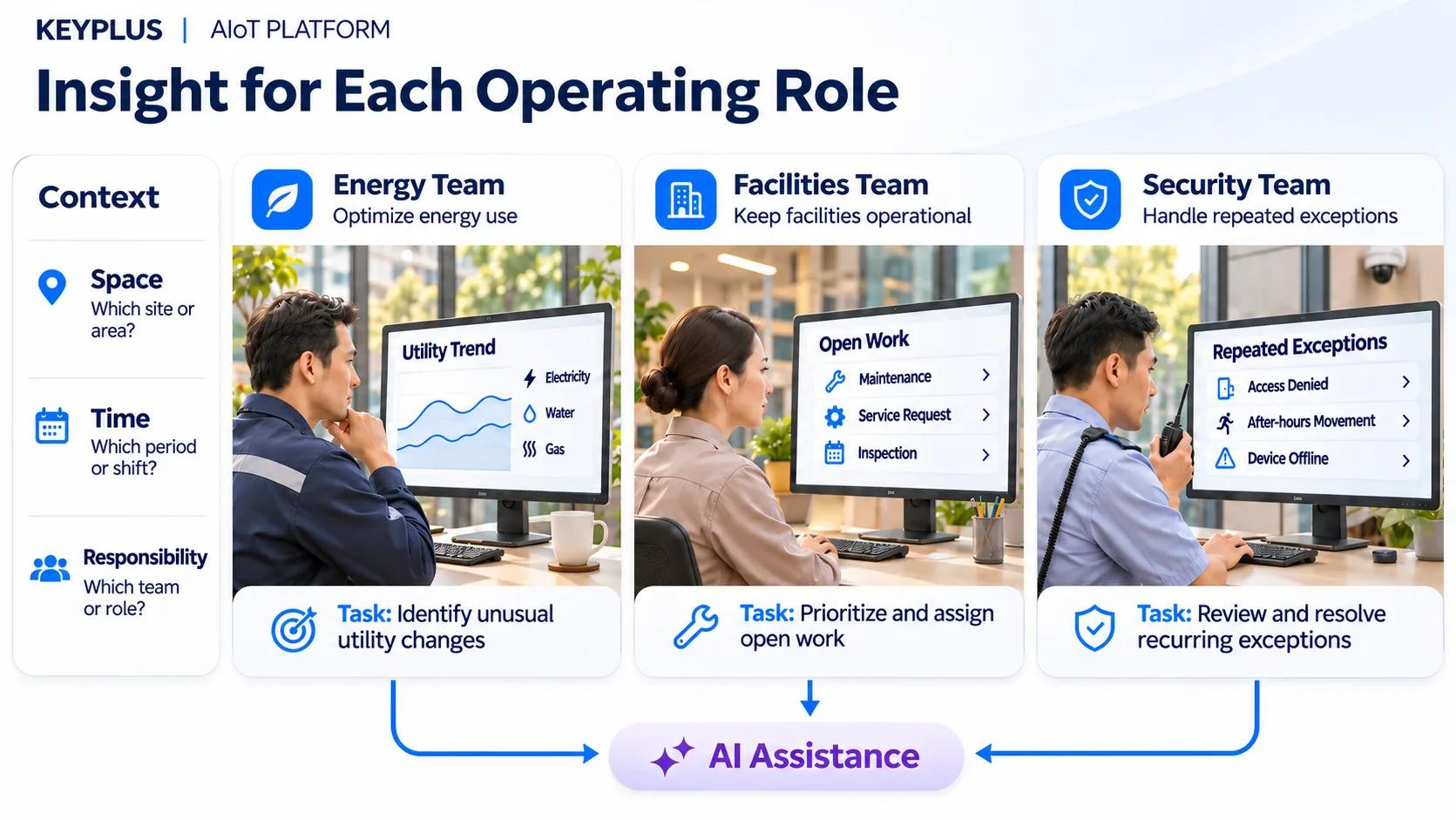
Space, system, time and responsibility views organize what happened, helping teams see patterns beyond individual events.
Relevant relationships and possible explanations sit alongside alternative interpretations, keeping analytical findings open to verification.
Selected deviation detection and future-condition estimates use representative history, baselines and validated methods where available.
Evidence and approved response options support decisions, with outcome tracking linking the chosen action to its subsequent result.
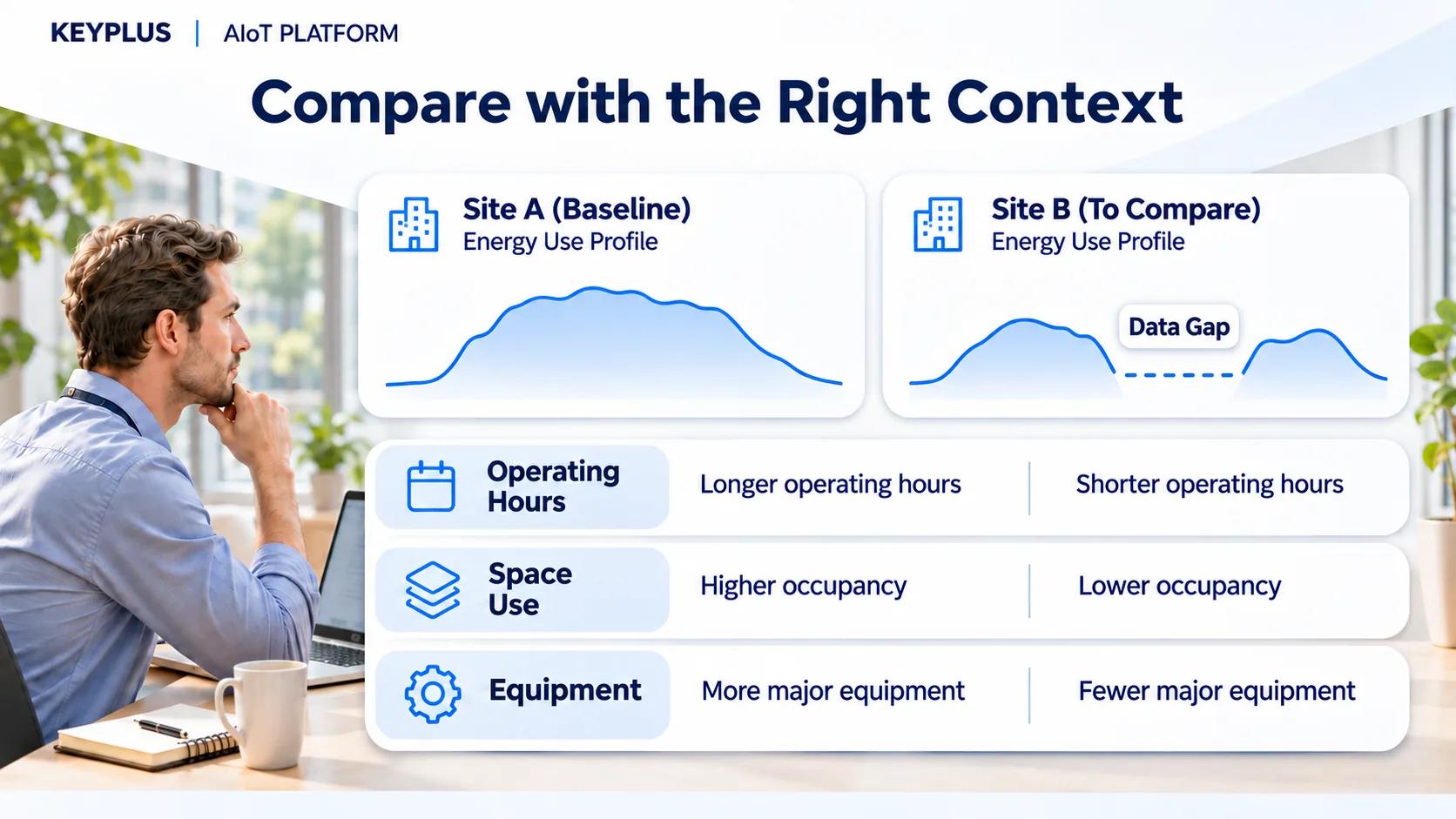
Analytics connects a finding with the role responsible for the decision. Available evidence and later outcomes keep that insight tied to the work it is intended to support.
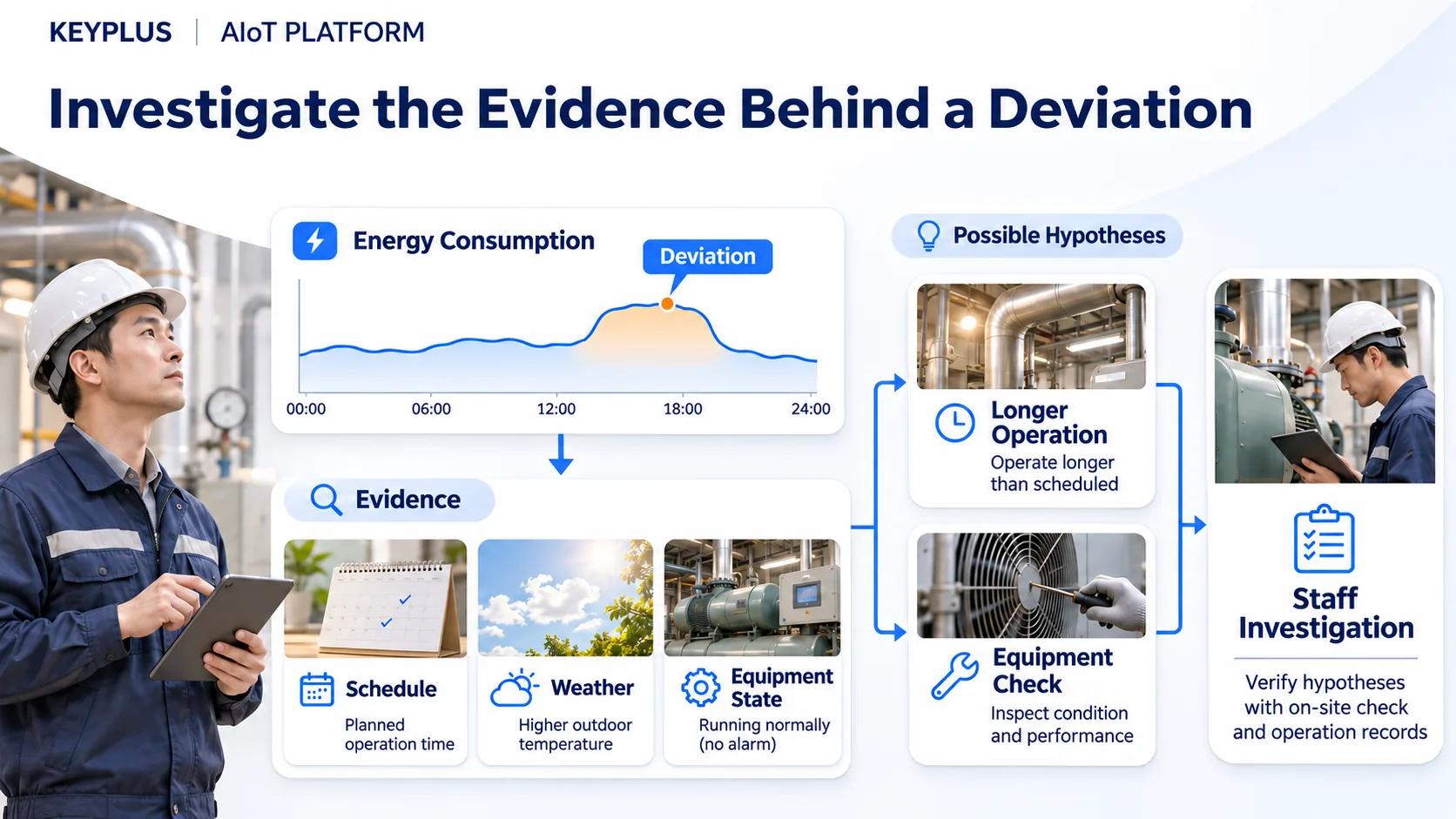
Unified visibility provides the foundation for descriptive and diagnostic insight. Earlier warning, prediction and recommendations represent further levels of assistance where the data and use case support them.
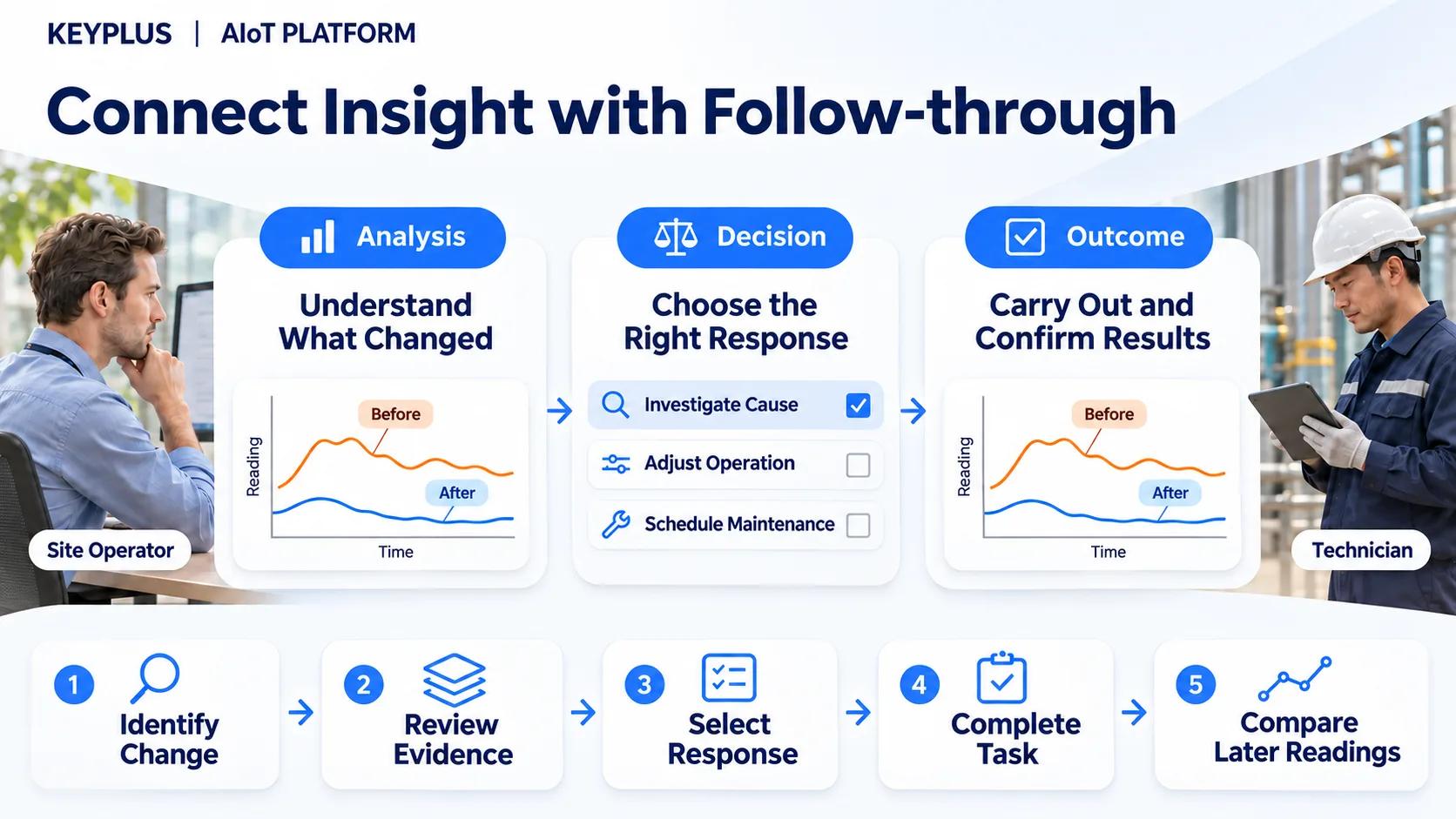
Energy teams review persistent deviations; property teams track unresolved service work; security teams examine repeated access exceptions; retail teams compare recurring store conditions. Each view has its own baseline, constraints and responsible role, giving shared analytics a specific operating purpose.
Shared analytics brings approved system information into a common operating context. Source ownership, data quality and role boundaries give comparisons a clear basis and keep the finding close to its evidence.
An analytical use case connects the operating question with its baseline, evidence and responsible user. Its value lies in the clarity and usefulness of the resulting decision, including the impact of false or missed findings.
Explore source-system signals, platform context and governance alongside the deployment and integration choices that shape usable analytics.
No. It identifies a condition requiring contextual review.
No. Performance depends on the data, question and validation.
Measure the decision or operating outcome against a defined baseline.
No. Correlation highlights a relationship worth understanding; operating evidence and alternative explanations remain part of the interpretation.
A useful analytical view connects a measure with a decision, its baseline and a responsible team. Cross-system context helps explain the pattern and follow the outcome of the chosen response.