
Monitor environmental quality
Temperature, humidity, CO₂, air-quality, light and noise sensors provide selected environmental readings within their measurement and installation limits.
KEYPLUS · Sistemas
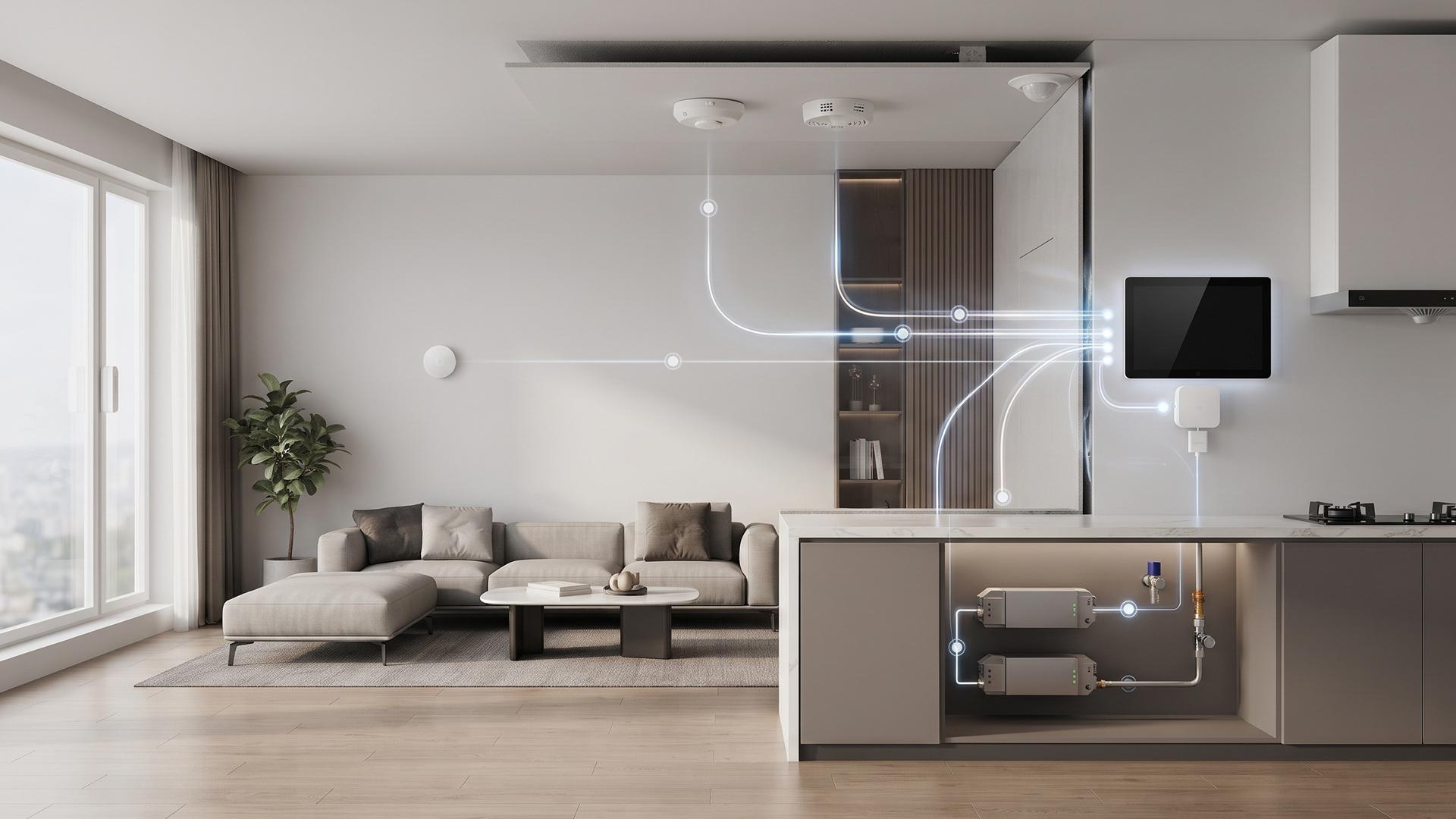
Detecta las condiciones en habitaciones, edificios y equipos, y luego conecta las respuestas aprobadas a través de pasarelas y controladores. KEYPLUS reúne la detección ambiental, la conciencia de ocupación, la detección relacionada con la seguridad, el estado del dispositivo y el control acotado en un solo sistema diseñado con un comportamiento local claro y un contexto de plataforma.
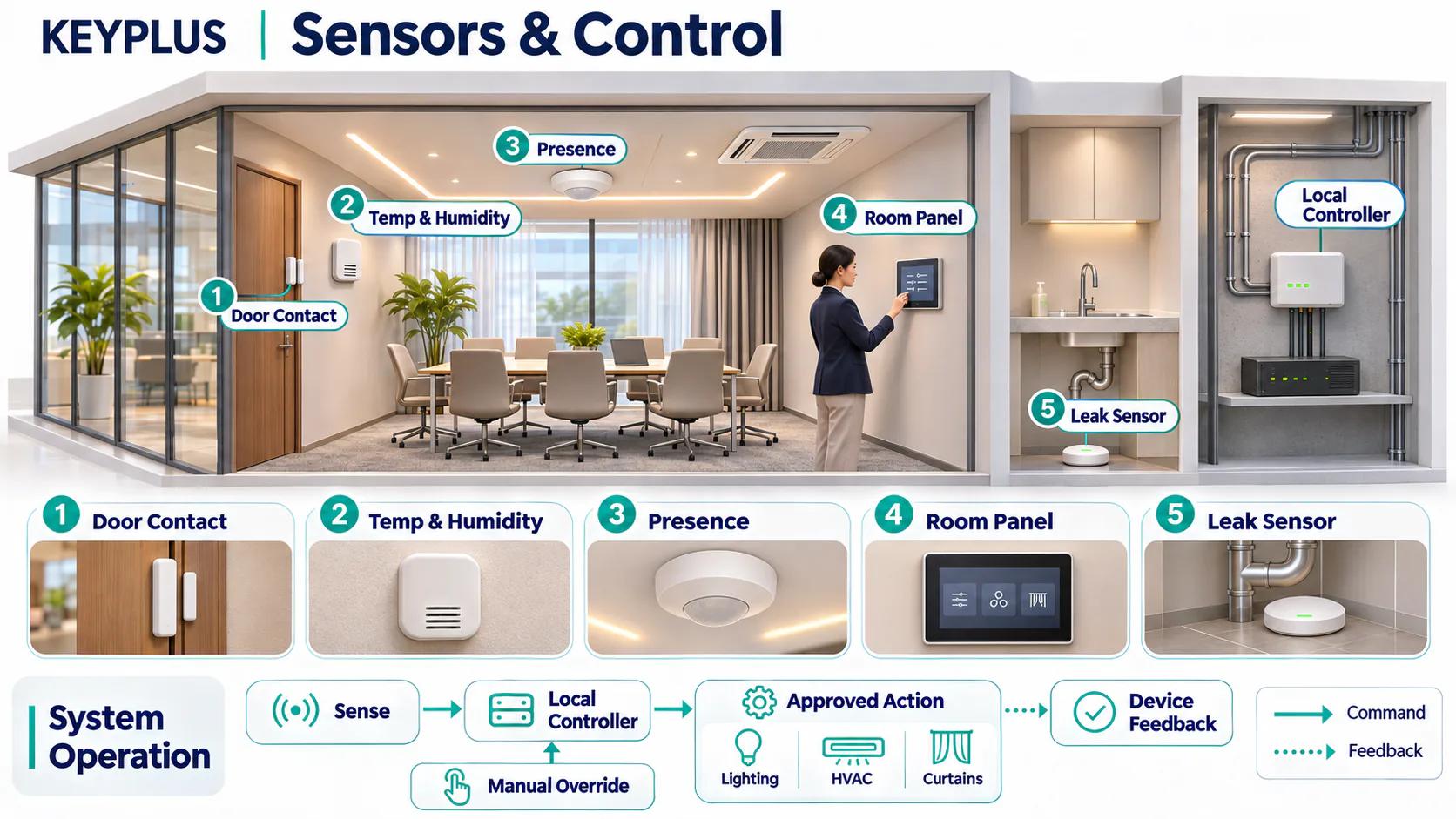
Sensing connects a physical condition with a useful signal. Placement, technology and local response give that signal its operating meaning, while critical protection keeps its independent local role.
Sensors bring conditions into view; gateways and controllers connect the signal; approved actuators provide the physical response. Those roles give monitoring and control a clear place in the field system.
Temperature, humidity, CO₂, air-quality, light and noise sensors provide selected environmental readings within their measurement and installation limits.
Occupancy, motion, human-presence, door, window and equipment-state sensors add context for room modes, services and space awareness. A signal does not necessarily identify an individual.
Water-leak, liquid-level, combustible-gas, smoke, heat and approved panel signals connect with defined notification and response workflows. Certified fire and gas systems retain their required local protection functions and authority.
Room and zone controllers, relays, dimmers, thermostats, fans, valves, curtain controls and equipment interfaces carry bounded commands, alongside the manual overrides and safety interlocks required by the application.
Local rules, offline behaviour and state reconciliation support continuity. Available battery, communication, calibration, tamper and fault information helps teams prioritize inspection and maintenance.
Wired and wireless sensors connect through local inputs, room or zone controllers and gateways. Actuators provide the approved physical response. Detection principle, range, accuracy, placement, power, interference and sampling determine the sensing role; actuator ratings and feedback define the control role. Response time, battery life, environmental ratings and firmware support complete the device profile. Monitoring access and control authority remain separate.
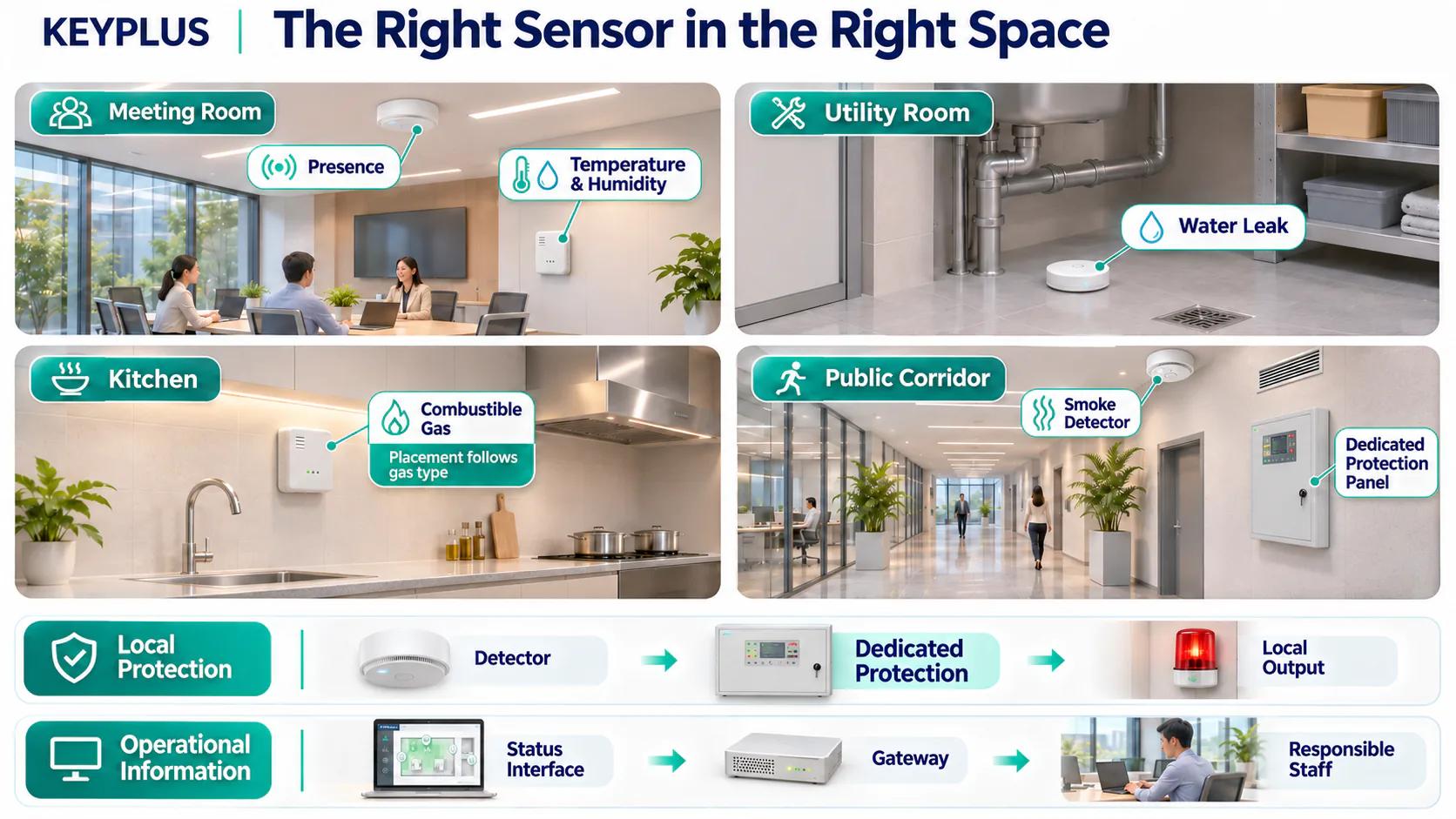
Las reglas pueden evaluar umbrales y combinaciones conocidas; Los análisis pueden revelar cambios ambientales recurrentes, alertas molestas o degradación de dispositivos; La asistencia de IA puede ayudar a priorizar la inspección cuando está respaldada por la historia representativa. Un resultado analítico sigue siendo una indicación para revisión y no prevalece sobre un detector certificado, panel de protección o persona responsable.
A supported sensor reports a leak, gas, presence or environmental condition
required local protection remains active
the gateway adds device and location context
the event reaches the appropriate priority and team
a permitted local action or service task follows
device feedback, a later reading or inspection provides completion evidence.
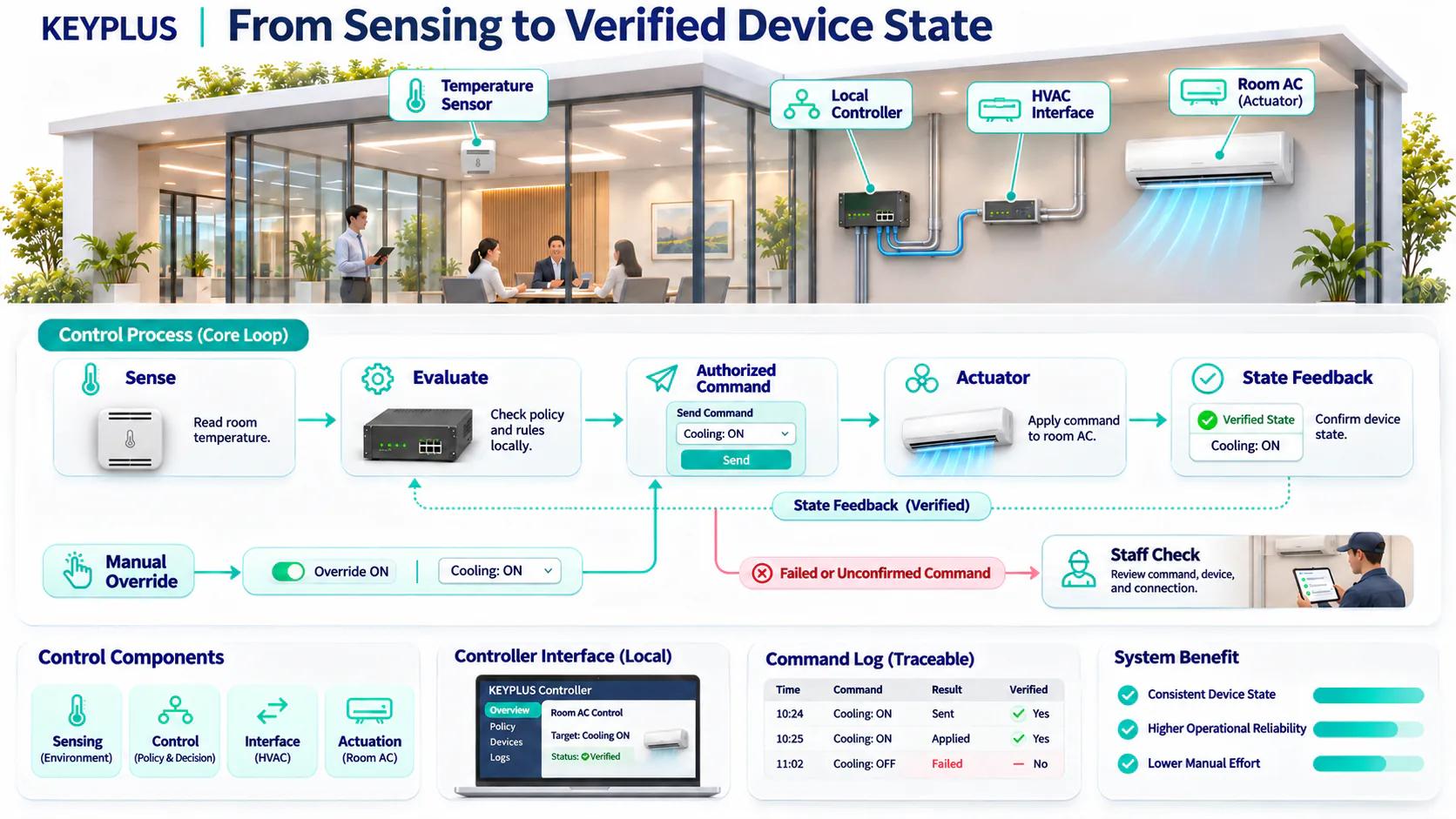
Local protection continues to have a dedicated role when the wider platform is unavailable. Device feedback and manual control connect the system with physical conditions, while safety-related equipment follows its own design and approval scope.
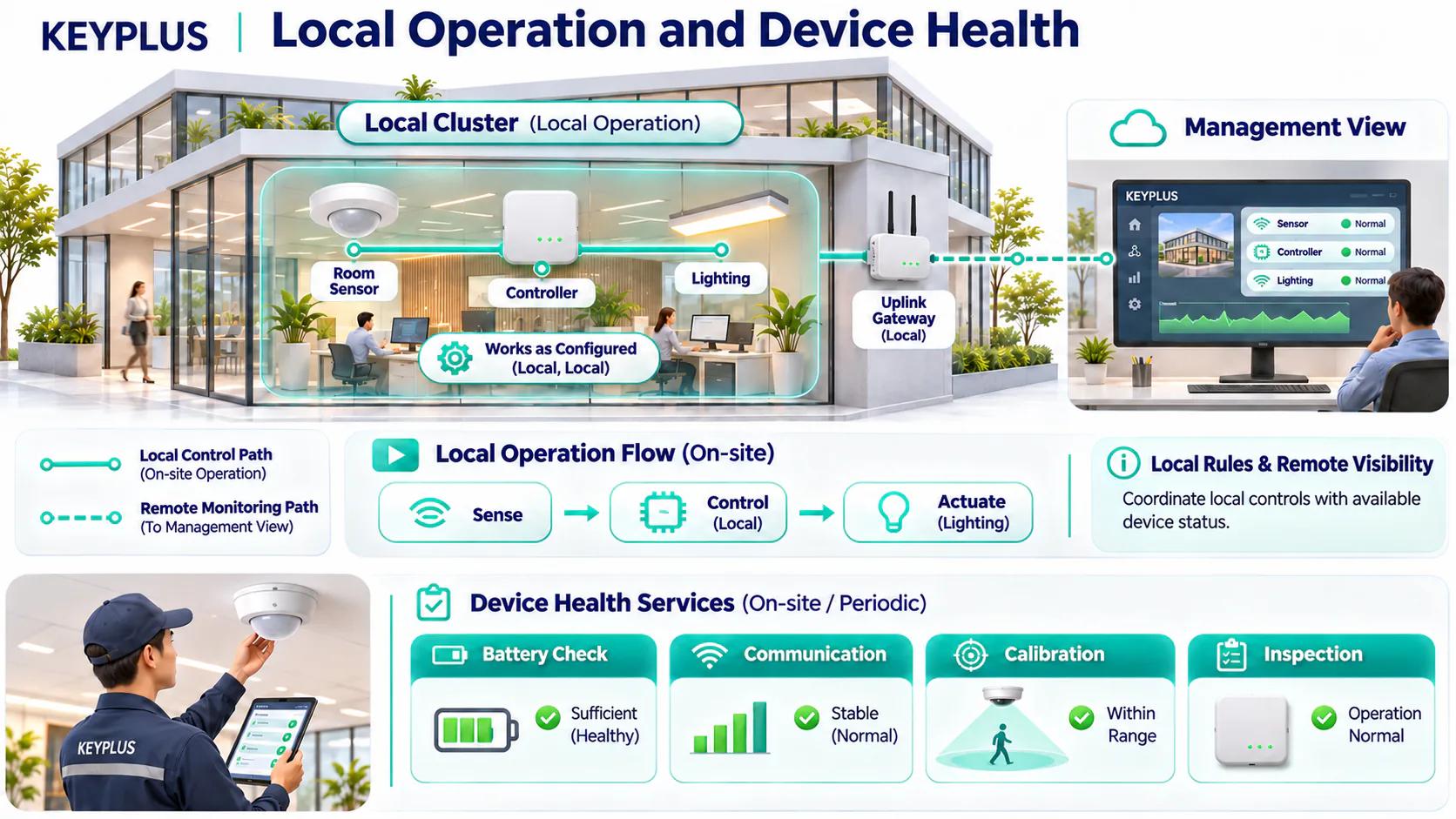
Sensor and control guide connects detection technology, placement, communication and the response at the actuator. Commissioning links normal operation, interruption and physical feedback, with life-safety devices handled through their separate design and acceptance process.
Las habitaciones de huéspedes, unidades de alquiler, aulas, salas de reuniones, espacios comerciales, cocinas, salas de plantas, áreas de servicios y espacios hospitalarios no clínicos aprobados requieren diferentes combinaciones de sensores, umbrales, controles de privacidad y procedimientos de respuesta diferentes.
Explore environmental and device-state sensing, room controllers, actuators and the event workflows that connect a reading with a response.
No. Required protection systems remain independently designed, certified and authoritative; an approved interface may share selected status for wider response.
Not necessarily. Many presence and occupancy technologies indicate state without identifying an individual.
No. Notification, human review and permitted control serve different conditions, with local safety logic retained for its required role.
Not necessarily. Actuator state, a follow-up reading or inspection provides evidence of the physical result, separate from the command acknowledgement.
A sensor reading becomes operationally useful when it has a location, a responsible team and a permitted response. Local controllers and actuators connect that information with the physical space.