
A controlled tenancy lifecycle
An approved tenancy gives each resident’s access a start, a scope and an end. Permission changes follow the supported lock or controller update path, including the timing required for intermittently connected devices.
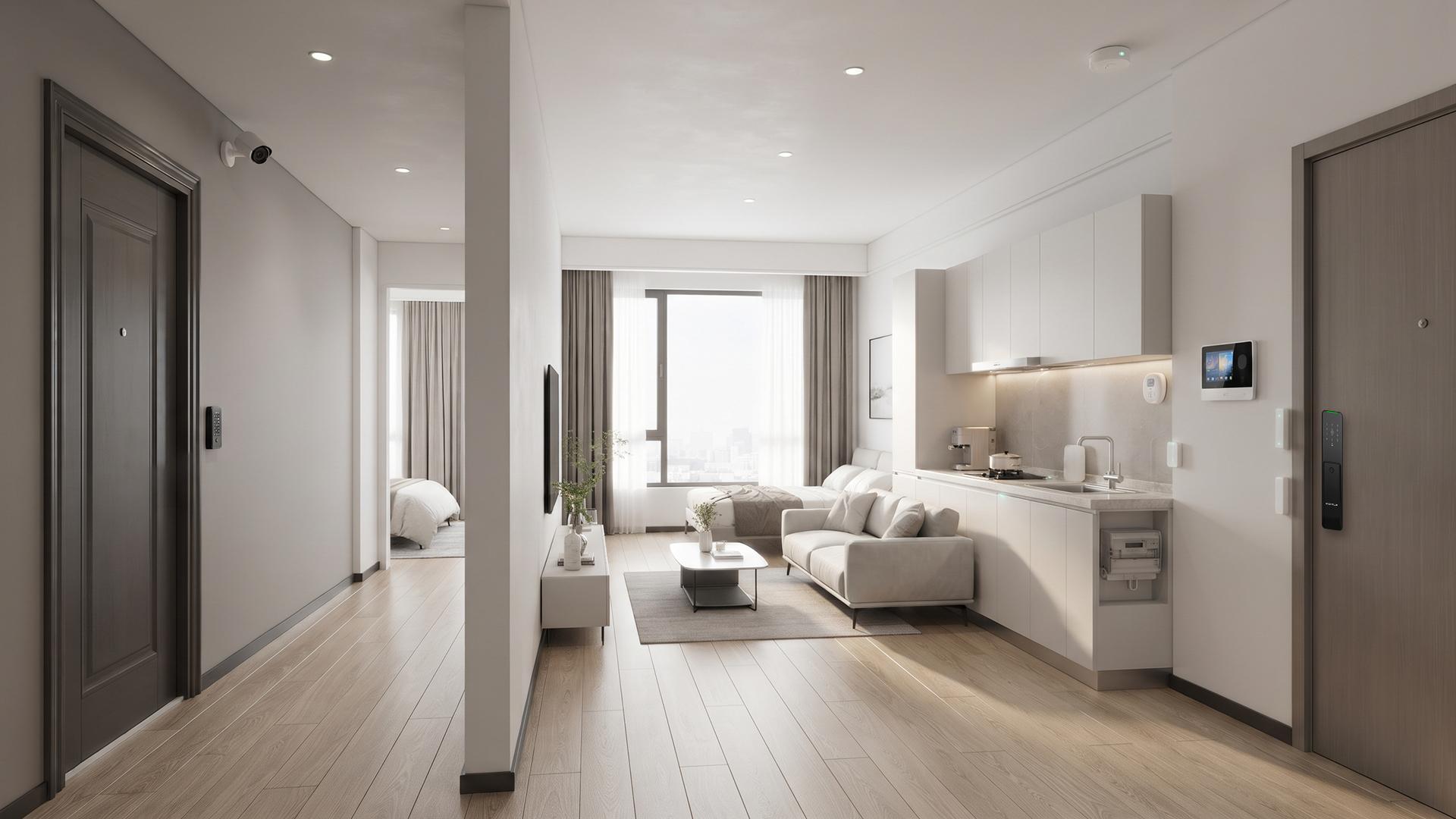
KEYPLUS · Soluciones
Coordina el acceso de los residentes, las visitas a los contratistas, el estado de las unidades, los eventos de seguridad y las operaciones de cartera en las propiedades de alquiler. KEYPLUS conecta sistemas de campo adecuados con un contexto operativo compartido para que los equipos puedan gestionar el ciclo de vida completo de la tenencia de forma más consistente.
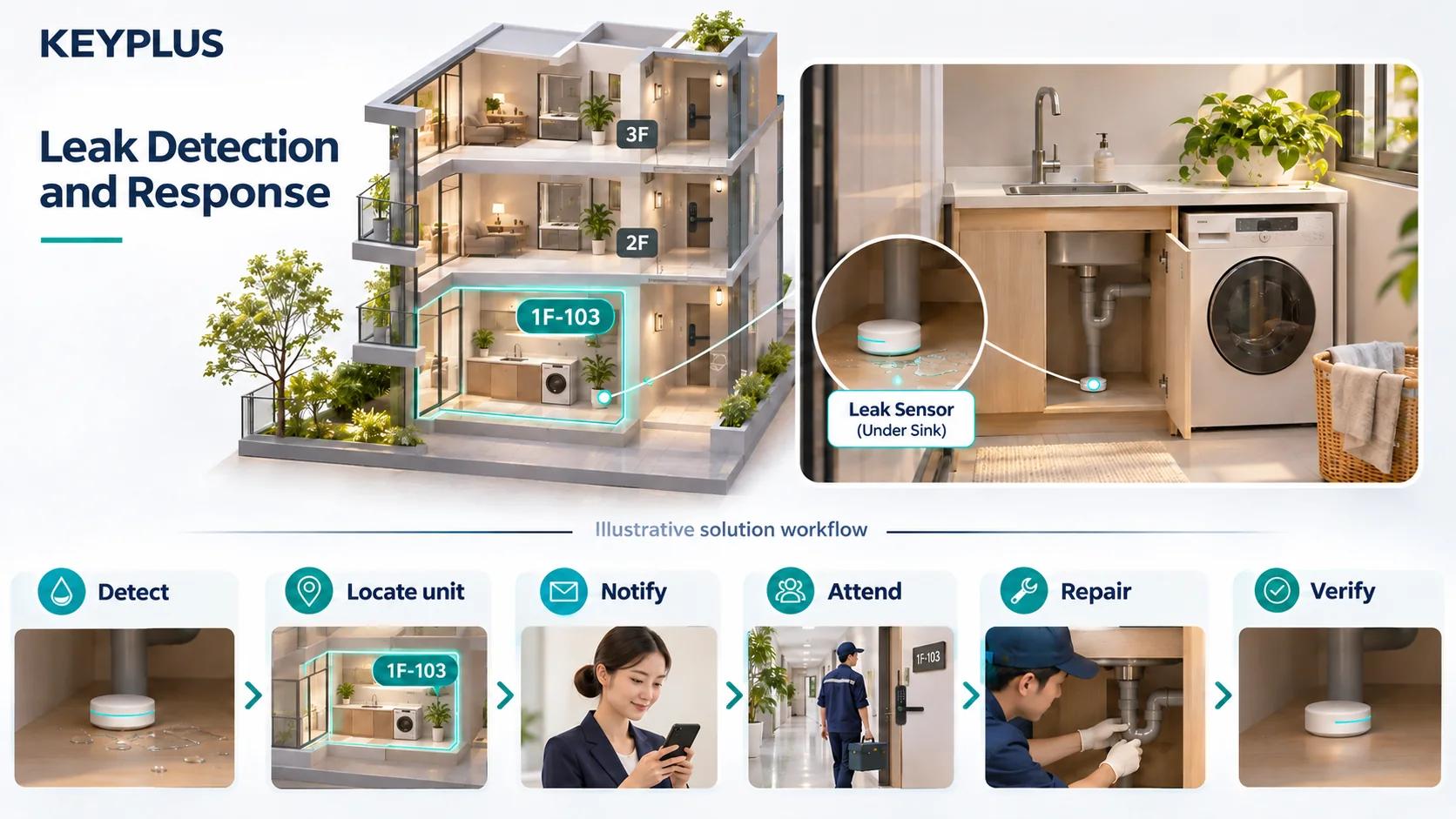
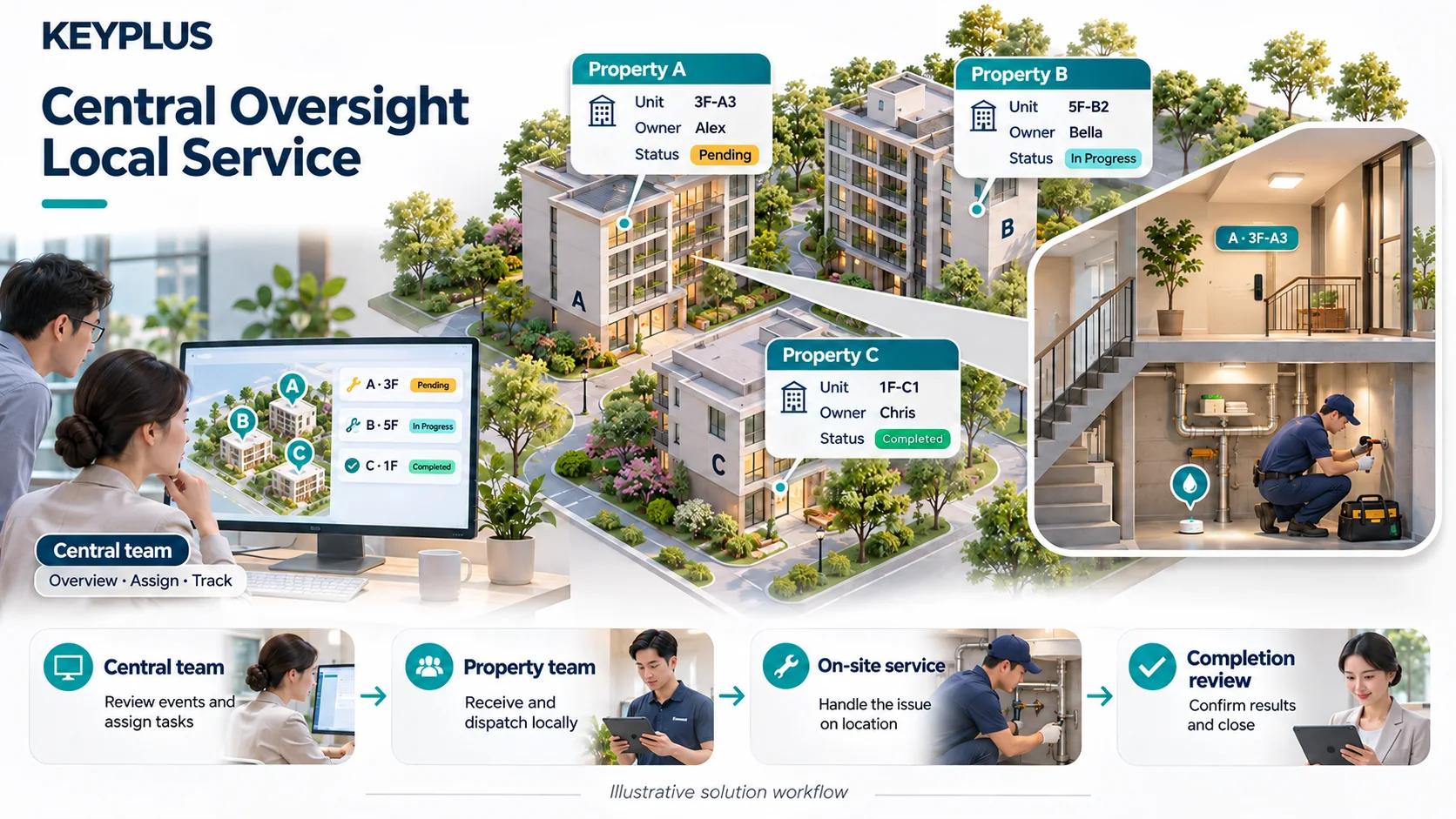
From leasing and move-in to maintenance, renewal and move-out, rental operations depend on permissions that match the tenancy. For distributed properties, central visibility connects local teams with the unit and service record, while physical repairs and handover remain on-site responsibilities.
Move-in, renewal, maintenance and move-out connect different people with the same unit. Resident and contractor permissions bring the appropriate space and time into that journey, while central and local teams keep their distinct service roles.
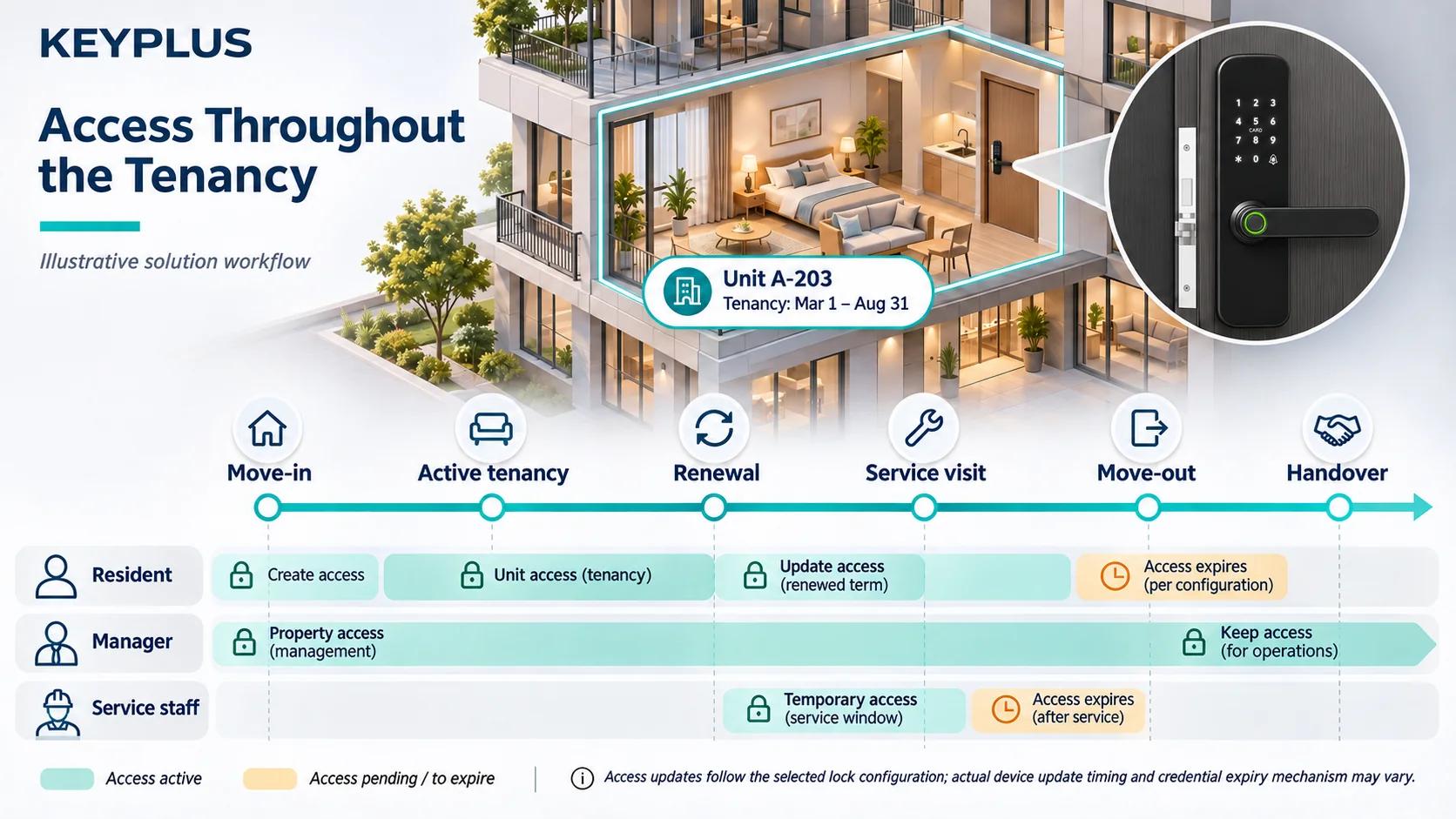
An approved tenancy gives each resident’s access a start, a scope and an end. Permission changes follow the supported lock or controller update path, including the timing required for intermittently connected devices.
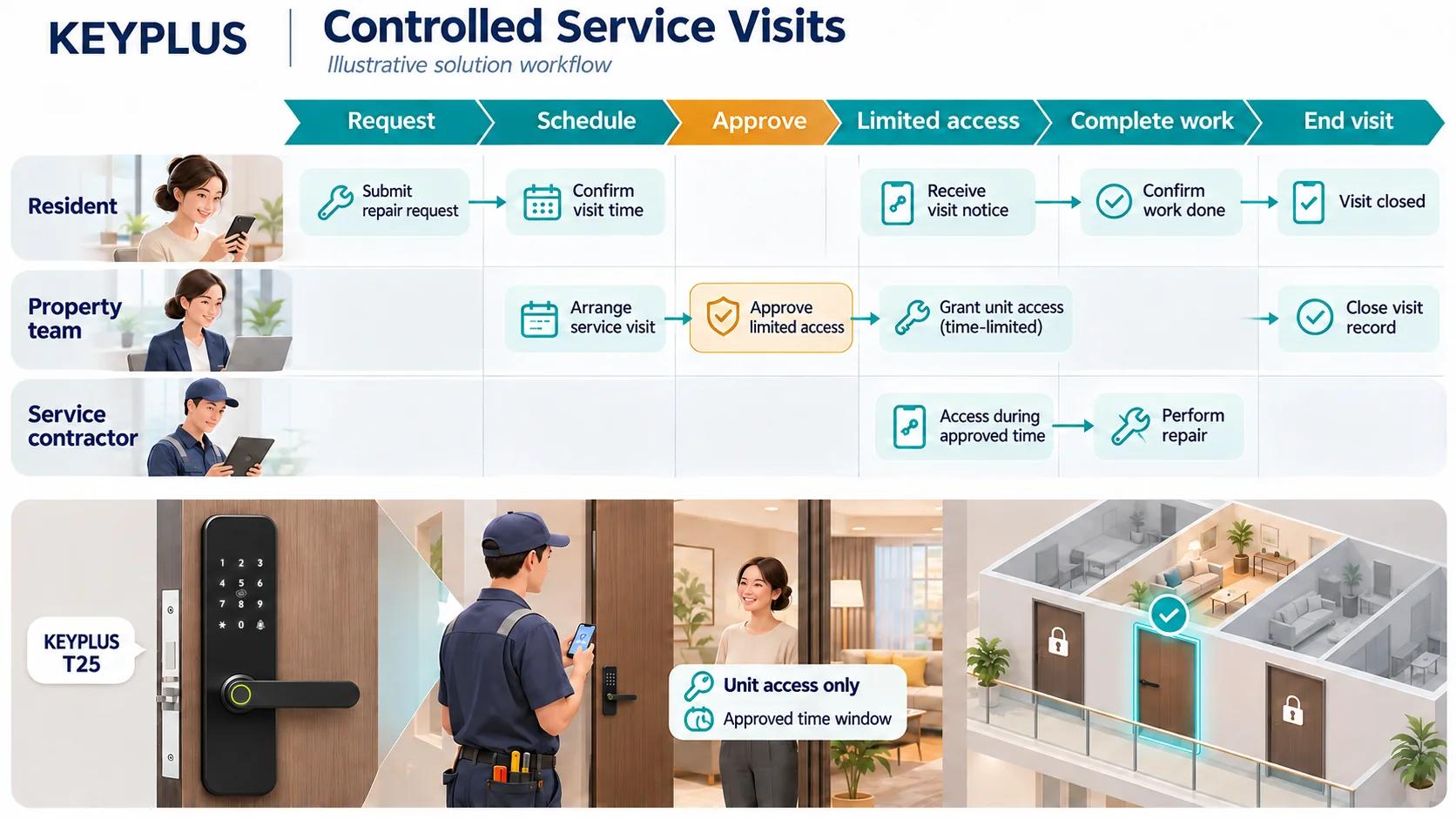
Time-bounded access supports maintenance, cleaning and inspections, with available activity records linked to the task. Visitor and contractor views are limited to the information their work requires.
Supported leak, environmental and device-health events reach the responsible team. Repeated conditions become visible for review, while on-site checks address situations that available signals cannot confirm.
Building, unit and team views organize open events, device concerns and recurring service patterns across the portfolio. Central teams gain priorities for action while local teams handle work that requires a site visit.
La solución puede incluir cerraduras inteligentes, acceso a áreas comunes, interfonos, vídeo seleccionado de áreas públicas, sensores de unidad, medición de agua o energía, pasarelas, alarmas e interfaces para residentes u operadores. Las integraciones con los sistemas de propiedad aprobados se centran en el alquiler, el servicio y los resultados de acceso.
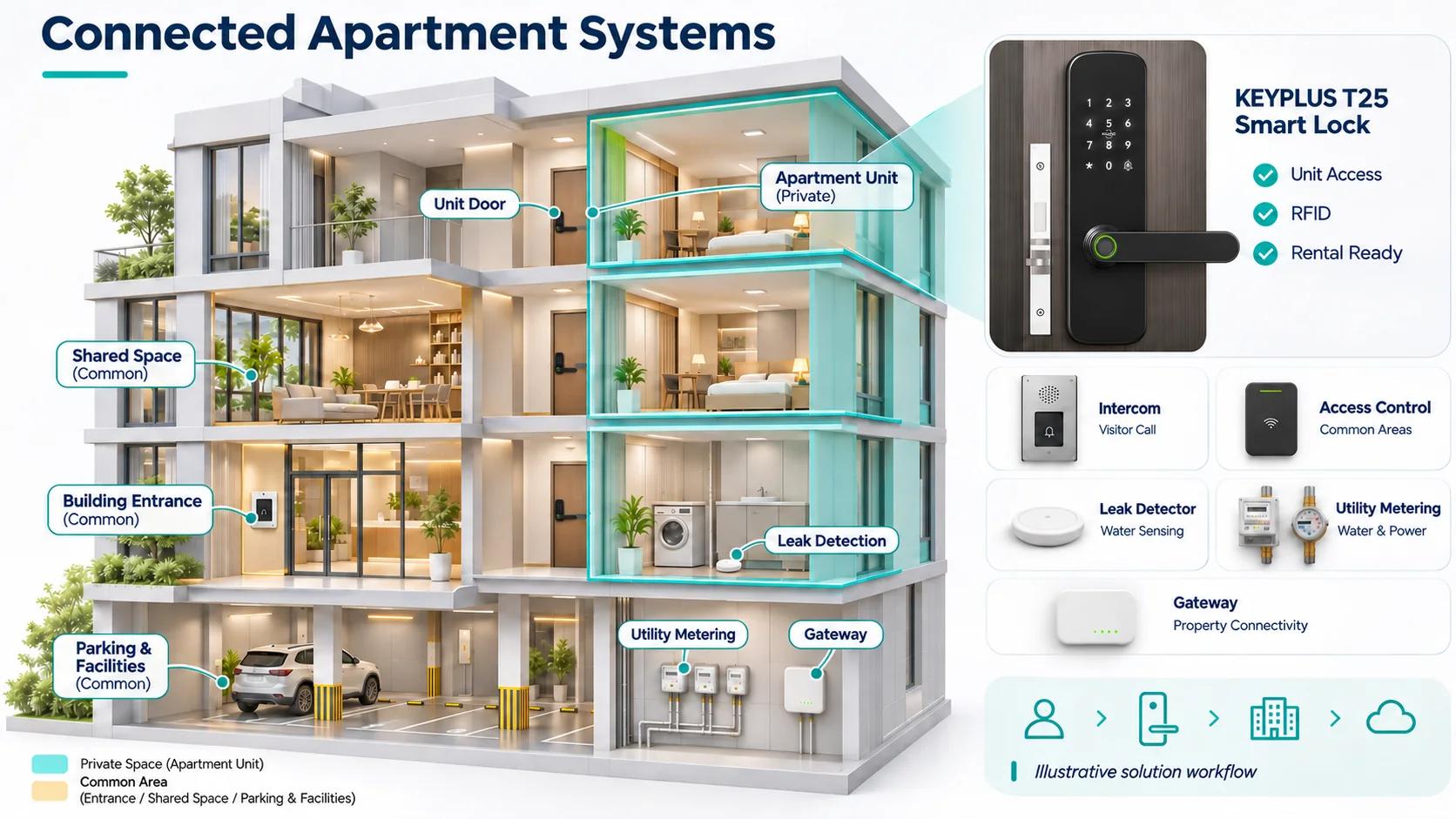
Remote oversight and local service play different roles. Permission updates connect central administration with the unit, while inspections, repairs and physical handover remain with the team on site. Together they bring the tenancy record and the real property into the same workflow.
Build-to-rent communities, multifamily portfolios, co-living and serviced residences have different turnover and shared-space needs. The solution brings access, service and unit information together around each operating model.
Explore access permissions, leak and environmental sensing, service events and portfolio information for rental-property operations.
Yes, where the model and interface support the required credential, event and update workflow.
No. Mechanical work, connectivity issues and physical verification may still require local service.
Property, identity and role boundaries form the basis of resident-data separation in the selected system design.
A tenancy end date and the state of the lock are different parts of the process. Device updates, credential expiry and physical handover connect the end of the agreement with the end of access.
The tenancy lifecycle connects resident permissions, temporary service access and unit conditions. A rental-property solution brings those functions together across the buildings your teams operate.