
Defined visual detection
Defined visual tasks address selected objects, boundary events, queue conditions and other approved scene requirements, with a distinct processing scope for each task.
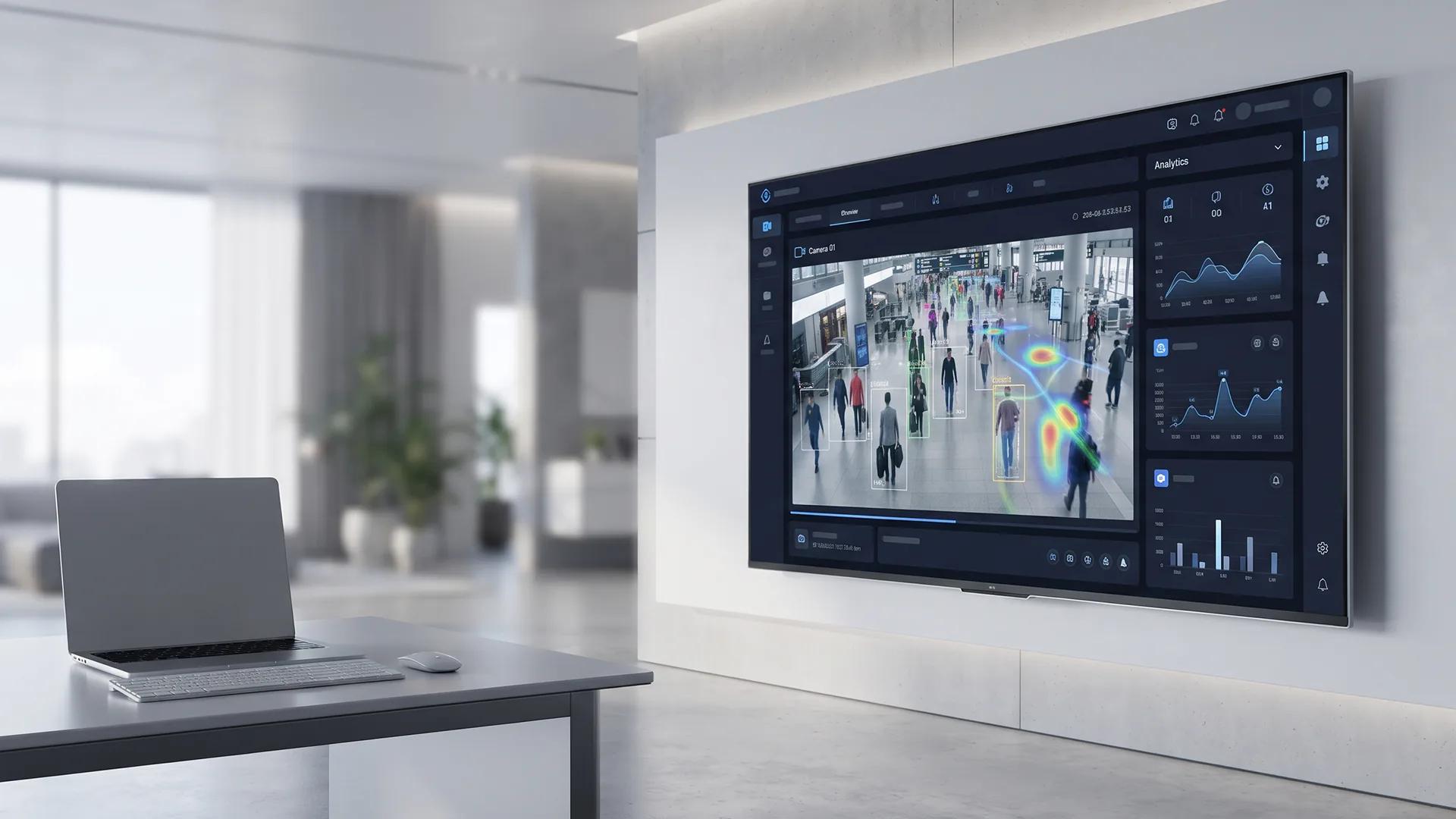
KEYPLUS · Plataforma AIoT
Convertir condiciones visuales seleccionadas en información estructurada y revisable para operaciones autorizadas. La IA de vídeo es una capacidad de percepción dentro de la plataforma; las cámaras, la grabación y la cadena física de vídeo permanecen dentro del sistema de Seguridad de Vídeo.
Video AI gives a defined visual condition a place in the operating workflow. Viewpoint, lighting, crowd density, weather and obstruction influence the result, while a clear task tells the team what the event does—and does not—mean.
A boundary event, object condition and queue pattern represent different visual tasks. The camera view and operating context connect the selected model with the question the team needs to answer.
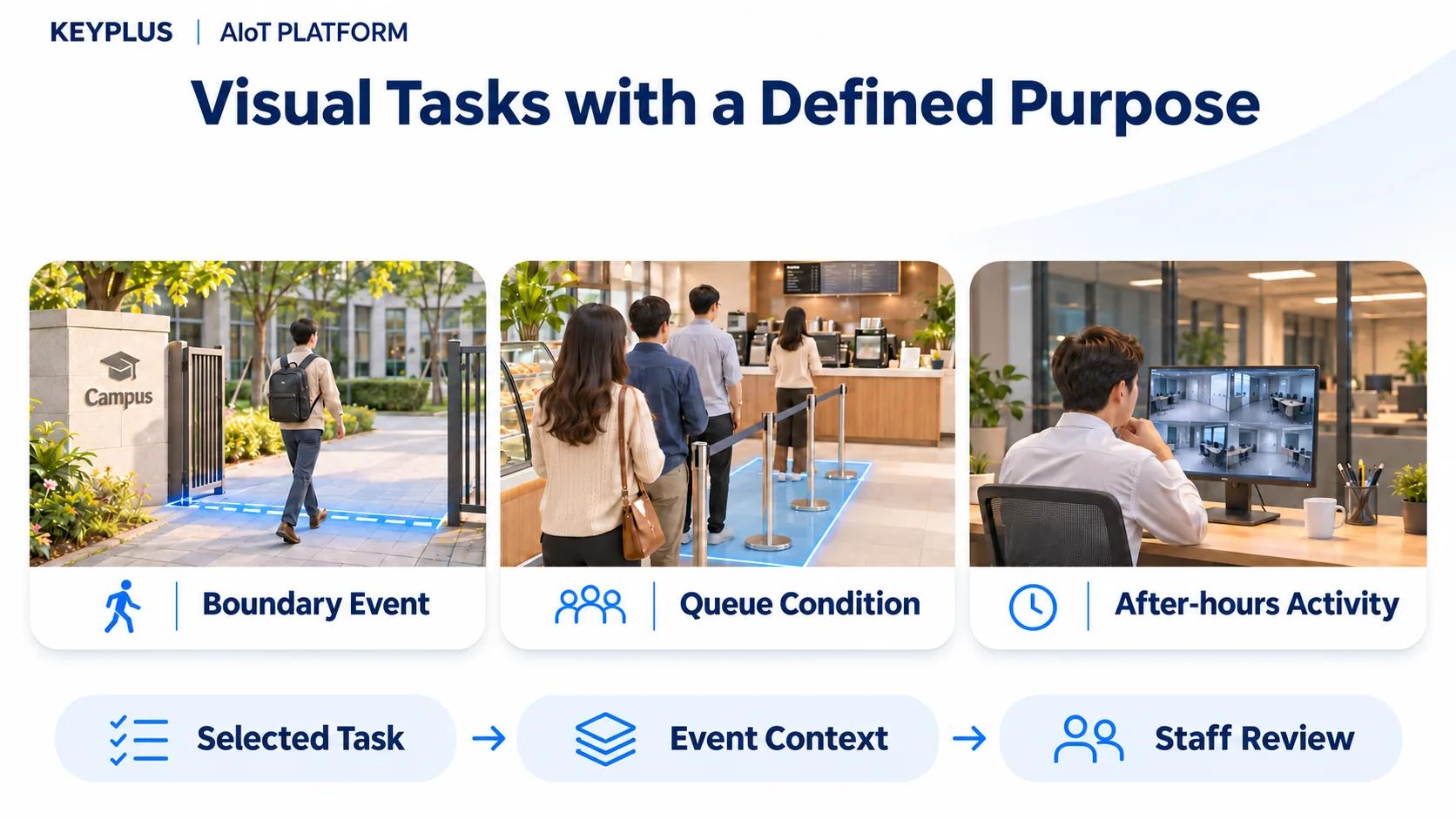
Defined visual tasks address selected objects, boundary events, queue conditions and other approved scene requirements, with a distinct processing scope for each task.
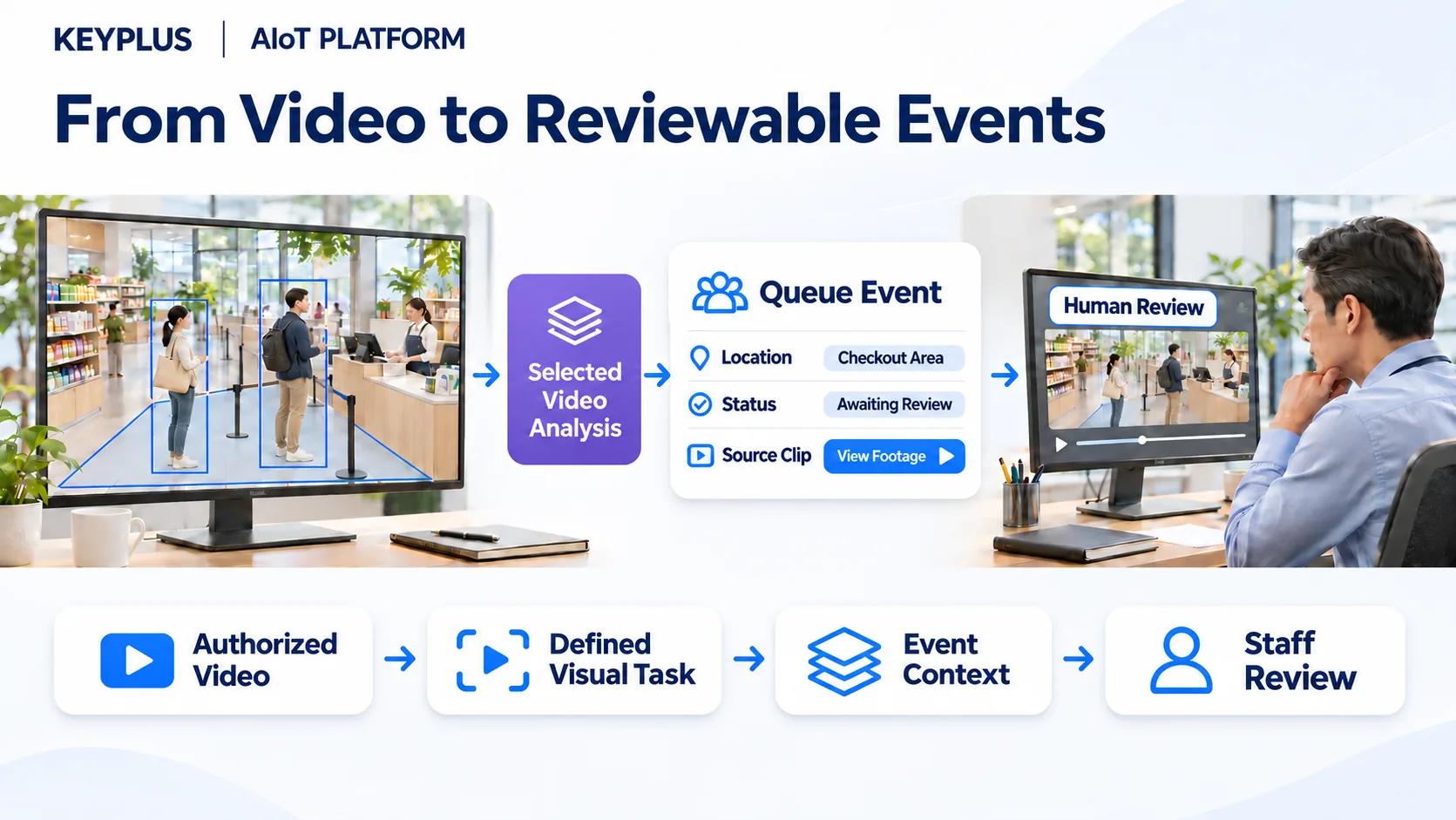
Location, time and operating context accompany available AI results, helping authorized users assess their relevance.
Structured visual events support retrieval and recurring-condition review within the applicable privacy and data-quality boundaries.
Edge, private-infrastructure and approved-cloud options place selected inference according to latency, bandwidth, compute and data policy.
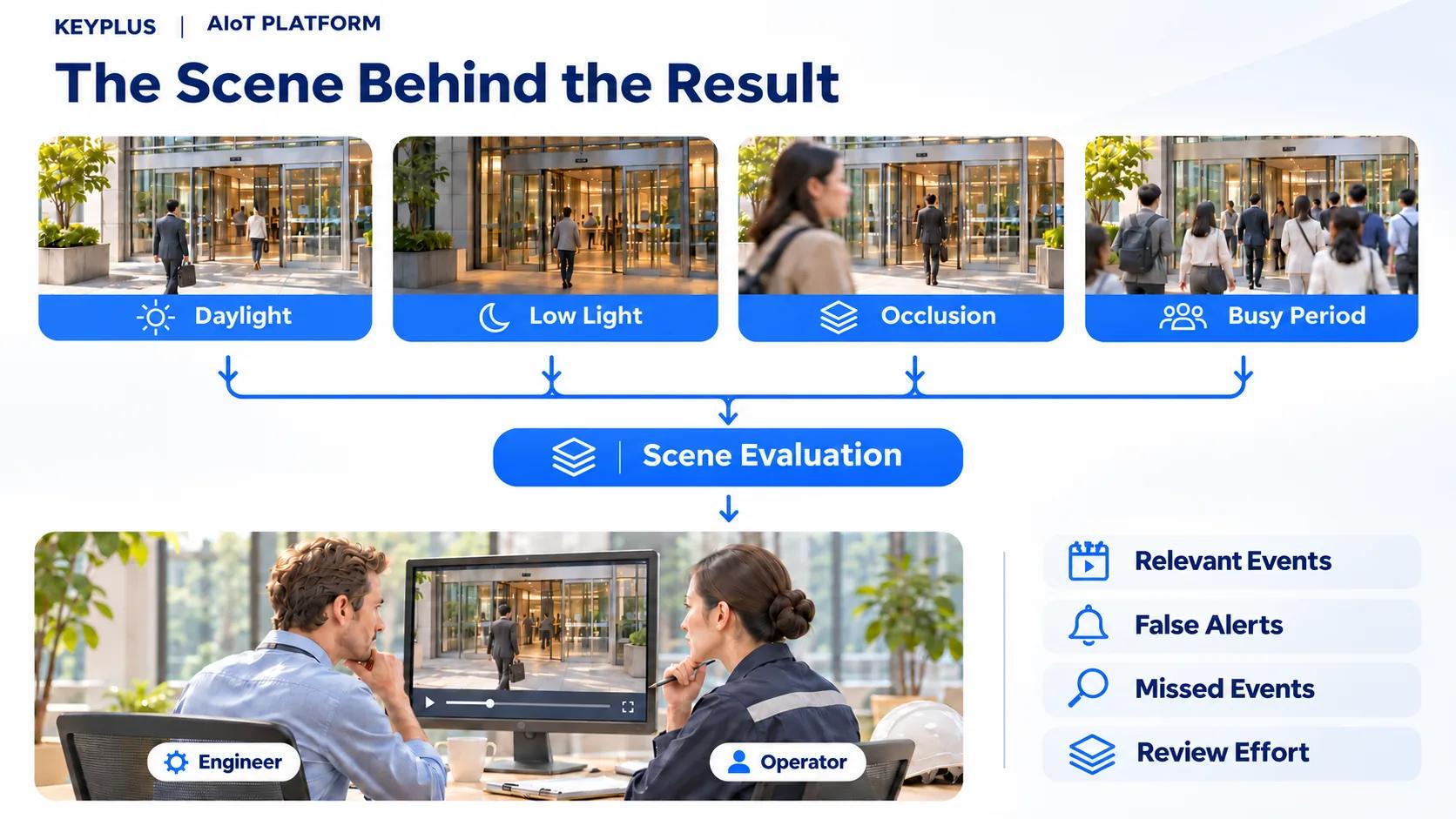
Visual results depend on the scene as it is used: light, density, obstruction and layout all matter. False alerts, missed events and review effort describe the operating experience beyond a demonstration.
A focused visual use case connects representative footage with a useful event. Contextual routing and reporting extend that event into the operating workflow, while aggregation depends on the relevant privacy and data boundaries.
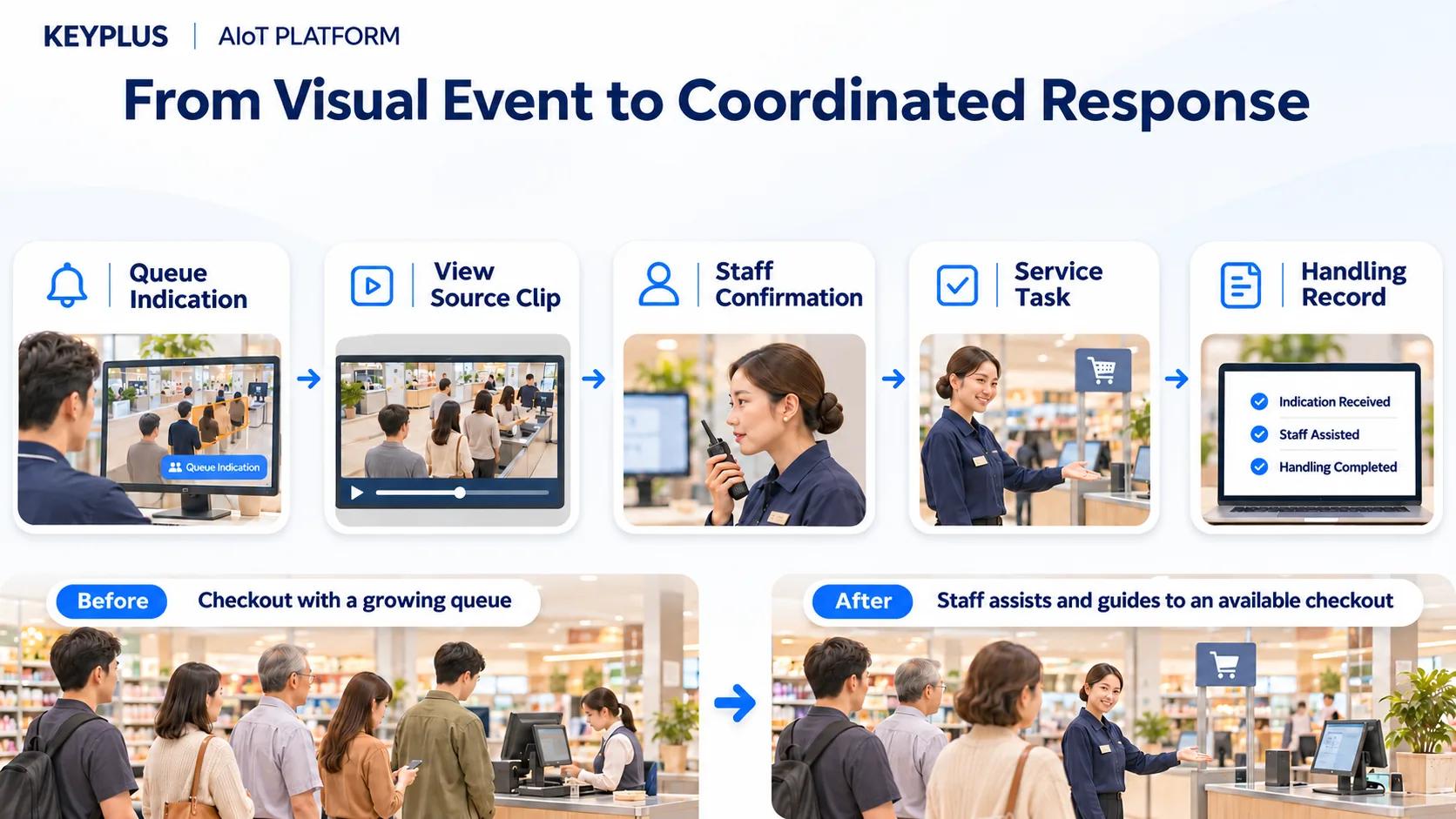
Restricted campus boundaries, store queues, office after-hours conditions and suitable hospital public areas represent different visual use cases. The task and scene determine the processing scope; private hotel rooms and residential interiors are outside routine Video AI use.
Capture and recording provide the video evidence chain. Platform processing connects approved AI events with wider operating context, with human review and privacy boundaries retained.
Scene-based evaluation connects detection results with day, night and changing operating conditions. The operating picture includes relevant events, false alerts, missed events and the time required for authorized review.
Explore the Video Security capture and recording chain, event response, cross-system analytics and deployment options for selected visual tasks.
No. Viewpoint, lighting and environment require scene-specific validation.
No. Many useful tasks do not identify a person.
Only through an approved workflow with suitable permissions and verification.
A changed camera position, scene layout or model changes the basis of the visual result. Revalidation connects the updated configuration with representative footage and the operator’s experience.
A defined visual condition connects the camera scene with an operational review. Video AI brings the selected event into the workflow alongside location, timing and the evidence available to the team.