
Capture usable visual evidence
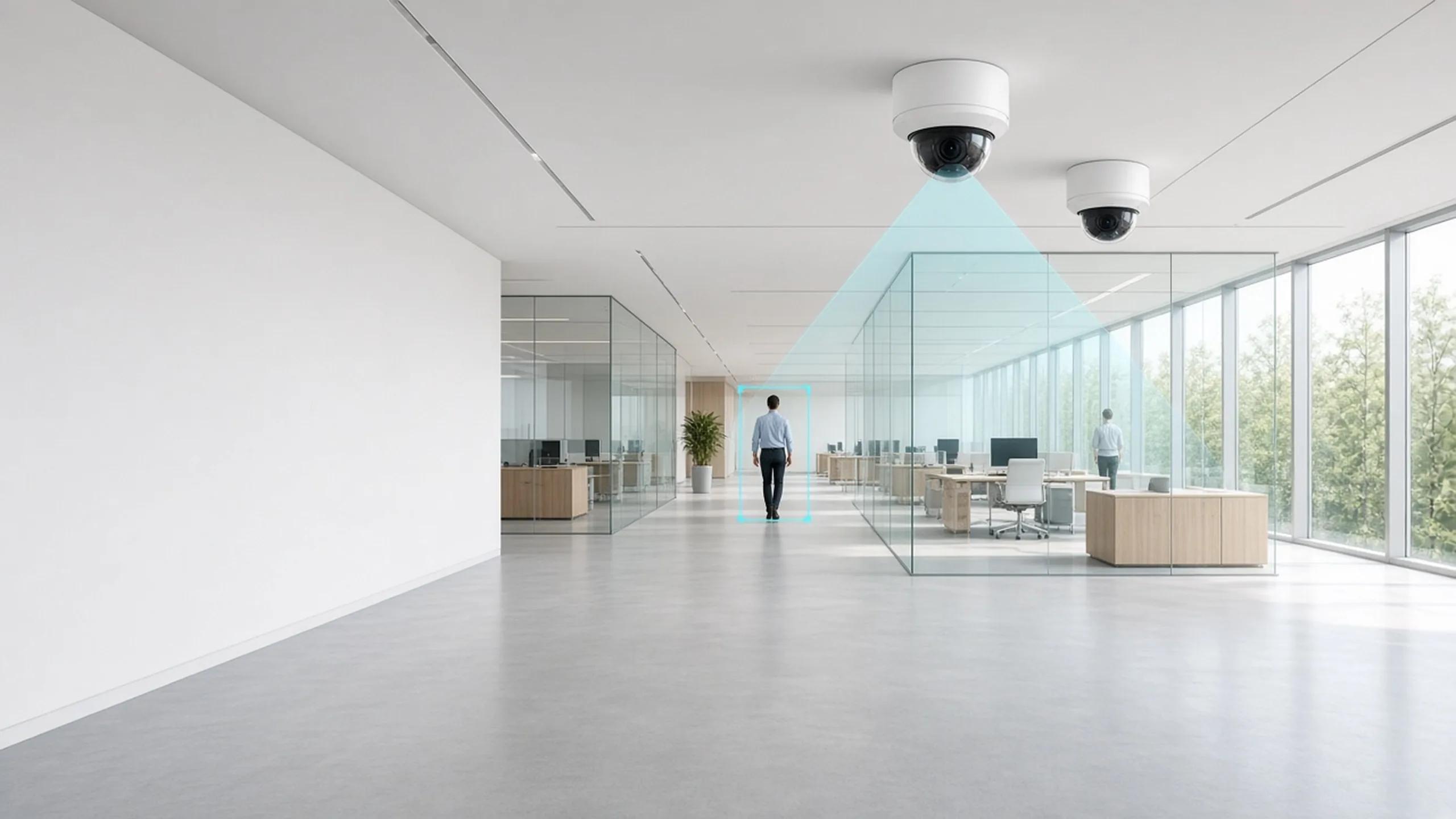
Select camera form, lens, placement, lighting response and environmental rating around the target scene. Coverage should respect privacy boundaries and the detail needed for the approved task.
KEYPLUS · Systems
Design a dependable visual-security chain from scene coverage and recording to selected Video AI and authorized event review. KEYPLUS connects compatible video infrastructure with access, alarm and operational context while keeping privacy, evidence and system responsibility clear.
Useful video begins with the scene and the decision it must support. Lighting, field of view, image detail, network capacity, retention and operator workload determine whether the system can provide suitable evidence. Analytics should be selected for defined tasks and representative conditions.
Select camera form, lens, placement, lighting response and environmental rating around the target scene. Coverage should respect privacy boundaries and the detail needed for the approved task.
Define stream profiles, storage location, retention, time synchronization, user permissions and retrieval procedures. Live view, recorded playback and export are separate functions to validate.
Supported camera or edge analytics can identify defined conditions for review. Model availability and performance depend on the scene, compute and licensed capability.
Present available video context to the responsible operator, preserve review and handling records where required, and keep AI indications separate from confirmed incidents.
The system can include dome, bullet, PTZ or specialist cameras; PoE switching and network infrastructure; NVR, VMS or private recording services; edge AI devices; monitors and operator workstations. Stream access, analytics metadata, playback, export and control use different interfaces. ONVIF or RTSP alone does not confirm every required operation.
Video AI can help detect a defined object, zone event, queue condition or other approved pattern, then contribute a structured event to the platform. Aggregated events may reveal recurring conditions. Facial identification is not required for many useful tasks, and no model should be described as detecting every abnormal behavior.
A door reports a forced-open condition
the system identifies the associated zone and camera
authorized staff review live or recorded context
the event is classified according to procedure
the response and available evidence are recorded. Camera mapping, time synchronization and evidence access are tested during commissioning.
Survey viewpoints in real lighting, calculate bandwidth and retention, confirm cybersecurity and user roles, and test degraded-network behavior. Acceptance should cover image quality, event delivery, search, playback, export, time accuracy, operator permissions and documented failure cases.
Hotels, apartments, campuses, offices, retail stores, hospitals and mixed-use properties use different coverage and privacy rules. Private guest or residential interiors should not be presented as routine surveillance areas.
Yes, where image quality, security, streams and interfaces satisfy the required functions.
No. Local, private and hybrid patterns can be evaluated separately from event sharing.
No. It is a reviewable indication until the required evidence confirms the condition.
Share the site type, operating responsibility, approximate scale, existing equipment, required interfaces and the event or action the system must handle.