

资料 01
Hotel project footage
Real hotel project footage supplied by the customer.
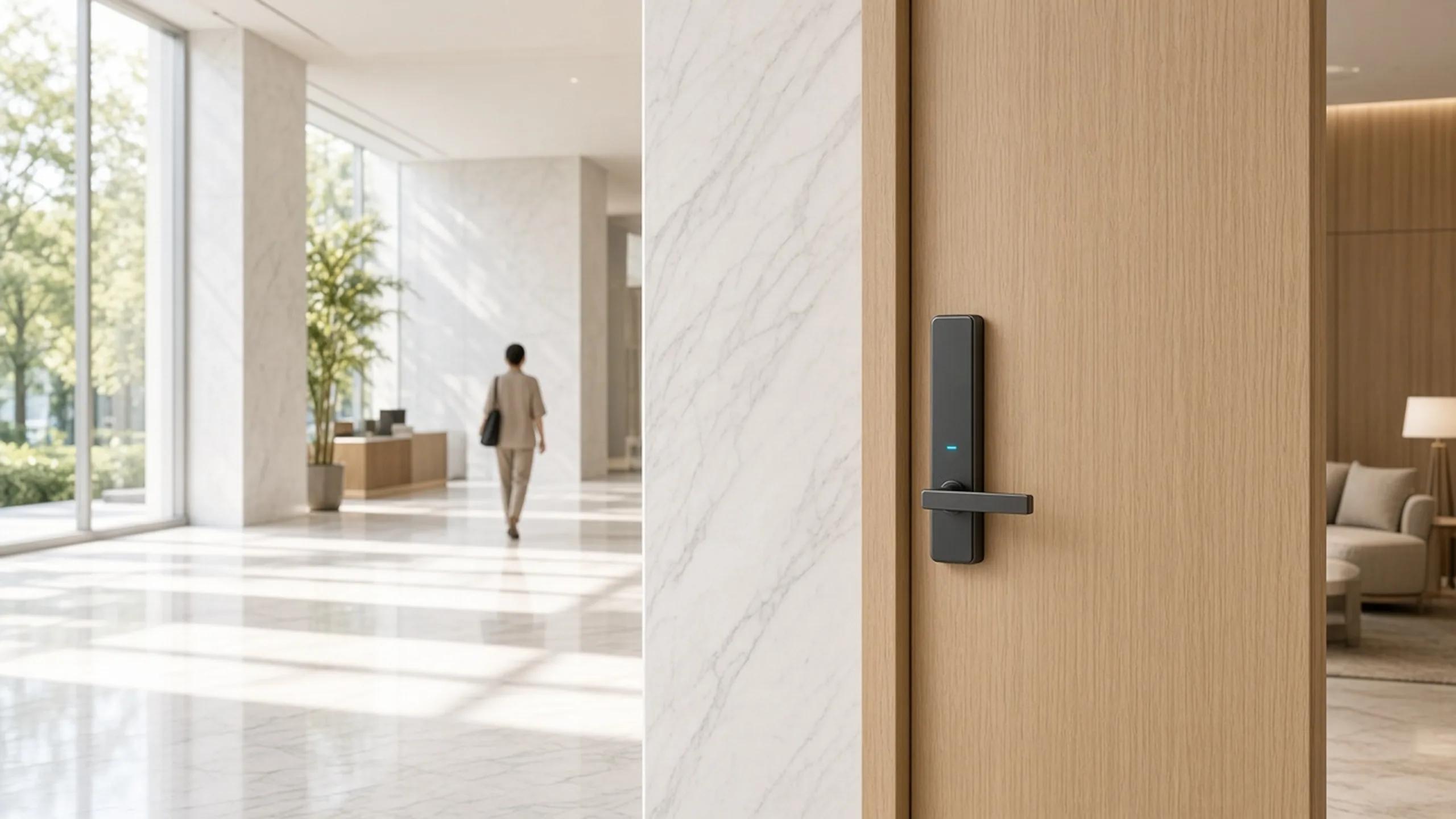
场景概览
酒店需要的不仅仅是一个独立的门锁。他们需要一个可管理的访问工作流程,连接前台操作、客房、员工区域、电梯和未来的平台集成。
Customer and product proof
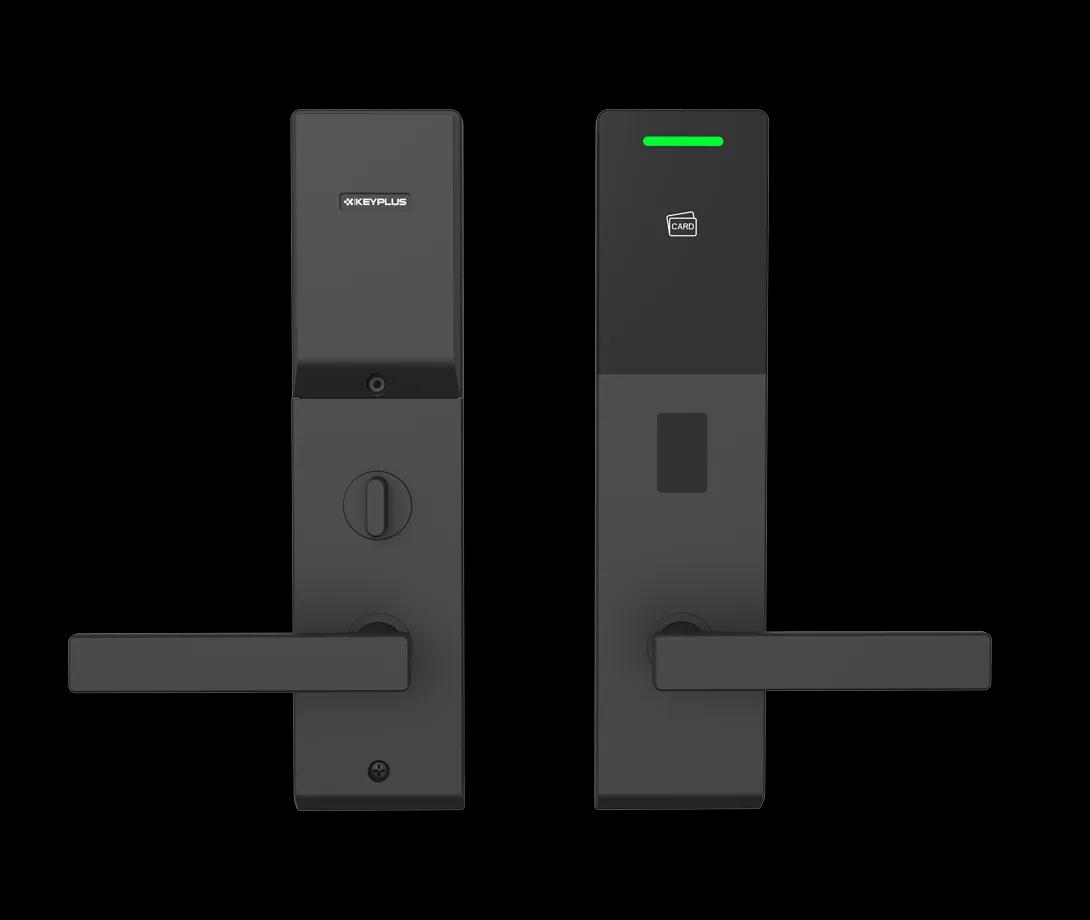
Use project footage and the HT-22 hotel lock as a starting point for evaluating guest-room deployment, hardware appearance and installation communication.
Real hotel project footage supplied by the customer.
Product demonstration for a hotel lock form factor.
 资料 03
资料 03Reference image for product presentation and selection.
核心痛点与解决思路
选择设备之前,先从属性操作问题入手。
高峰时段人工发卡、换房增加工作量。
酒店需要对客房、服务区和后台区域进行基于角色的访问。
房间状态、入住率和能源数据通常与访问工作流程脱节。
PMS、访客应用程序、电梯和建筑系统需要清晰的集成路径。
典型工作流程
Front desk or PMS creates the guest and stay record.
Room, floor and staff-area permissions are assigned by role and time period.
Card, mobile credential or supported access method is issued.
Room access, elevator rights and access events are linked for operation review.
Checkout or staff-role changes trigger permission recovery and audit records.
相关产品、解决方案和平台模块
继续匹配适合该场景的解决方案架构、AIoT 平台模块、硬件类别或咨询流程。
常见问题解答
PMS integration can be planned around check-in, checkout, room status and credential workflows when the required interface or API is available.
Selected hotel lock and edge workflows can be designed for offline authorization and later synchronization, depending on the hardware and project architecture.
Share the door photos, lock-body dimensions, door thickness, opening direction and local standard. The project team can then recommend a suitable hotel lock family and sample validation plan.
Yes. Role-based and time-based permissions can separate guest rooms, public doors, service areas and elevator floors.
No. Deployment can be cloud, local or cloud plus edge depending on property policy, network conditions and integration requirements.
Room count, door type and quantity, property location, lock method, PMS or platform requirements, installation scope and target delivery schedule are the best starting inputs.