
Monitor environmental quality
Temperature, humidity, CO₂, air-quality, light and noise sensors provide selected environmental readings within their measurement and installation limits.
KEYPLUS · システム
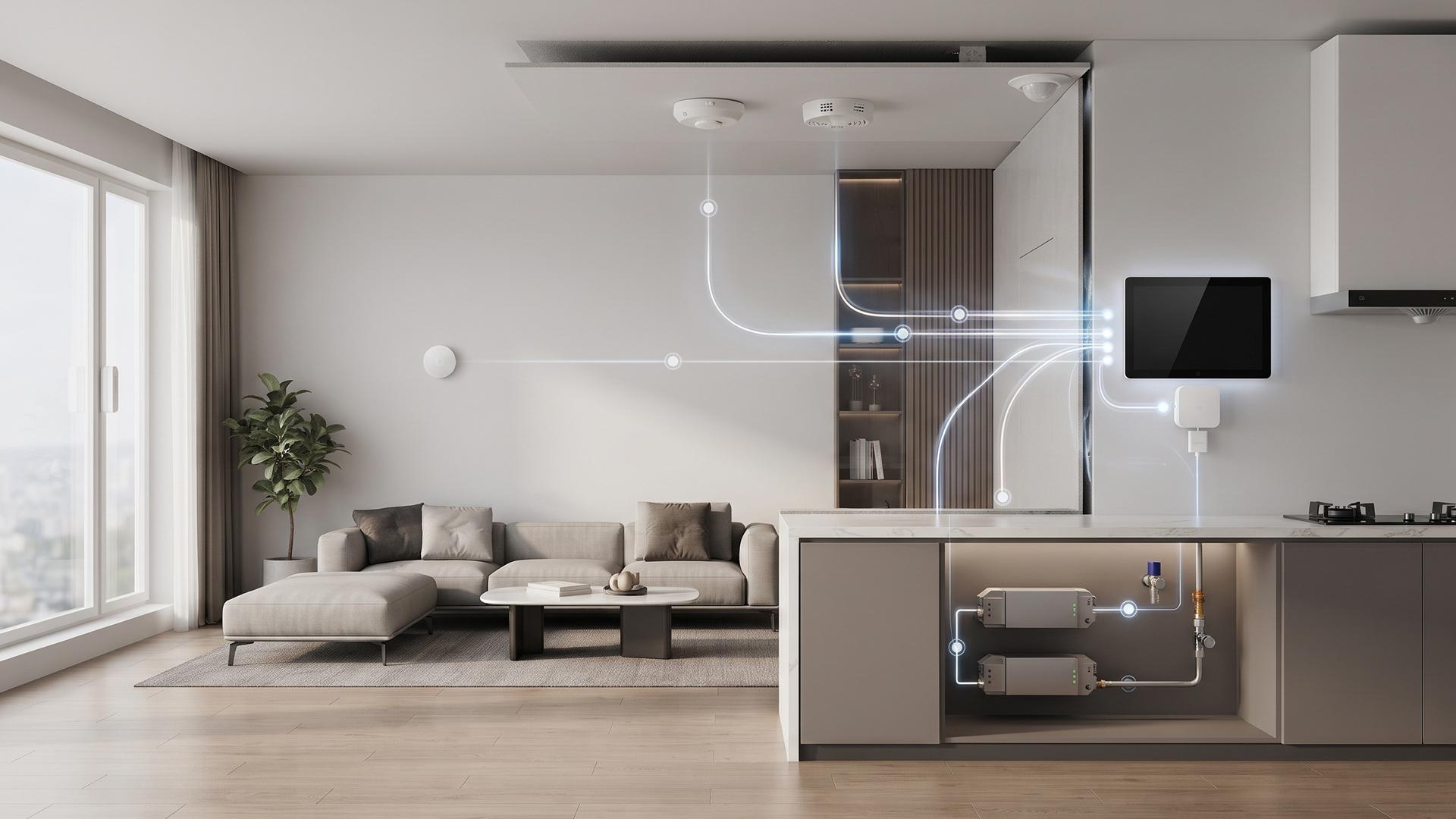
部屋、建物、機器の各条件を検知し、ゲートウェイやコントローラーを通じて承認された応答を接続します。KEYPLUSは、環境感知、占有意識、安全関連検知、デバイスの状態、境界制御を一つの設計されたシステムに統合し、明確なローカルな挙動とプラットフォームコンテキストを特徴としています。
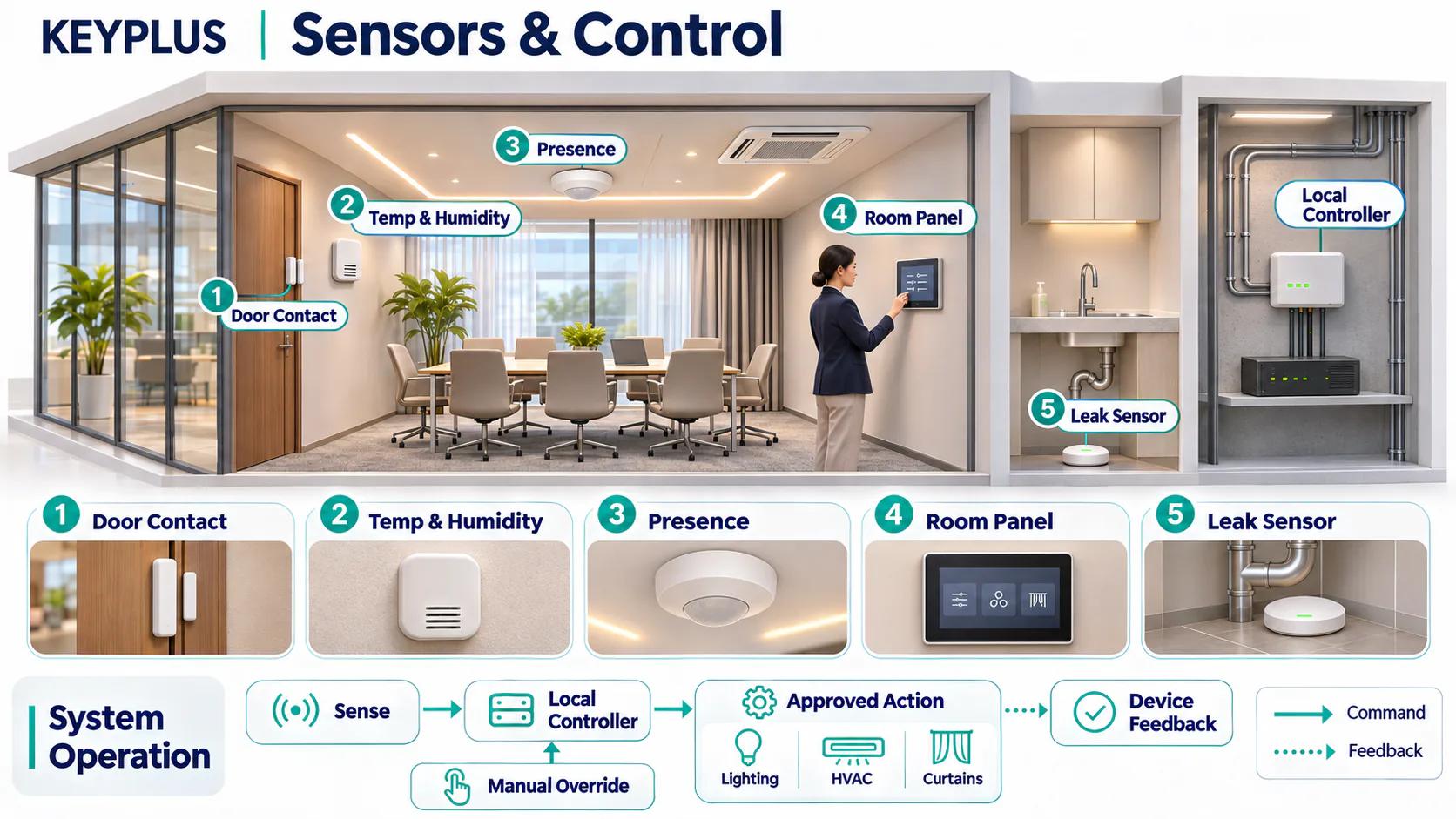
Sensing connects a physical condition with a useful signal. Placement, technology and local response give that signal its operating meaning, while critical protection keeps its independent local role.
Sensors bring conditions into view; gateways and controllers connect the signal; approved actuators provide the physical response. Those roles give monitoring and control a clear place in the field system.
Temperature, humidity, CO₂, air-quality, light and noise sensors provide selected environmental readings within their measurement and installation limits.
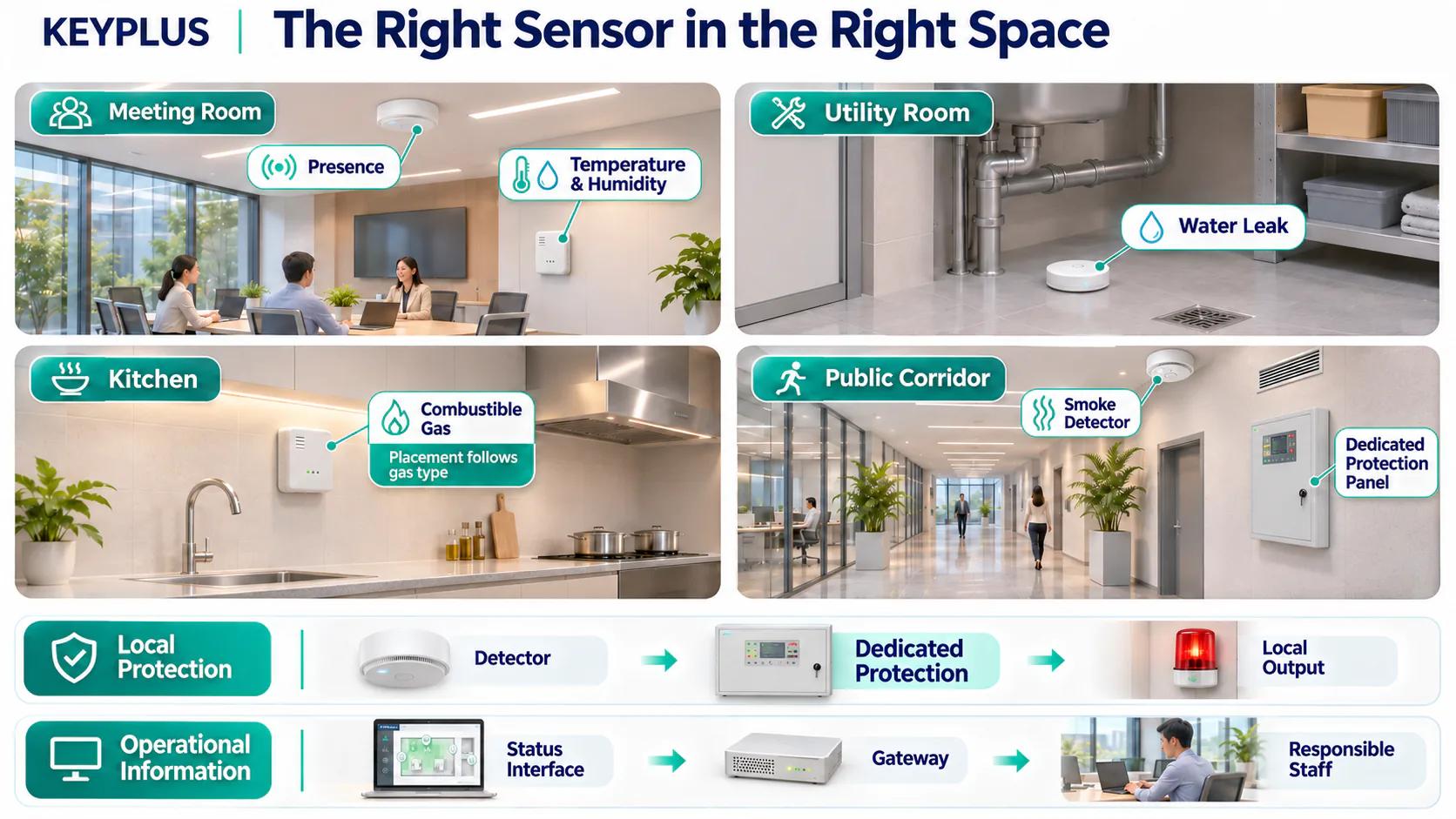
Occupancy, motion, human-presence, door, window and equipment-state sensors add context for room modes, services and space awareness. A signal does not necessarily identify an individual.
Water-leak, liquid-level, combustible-gas, smoke, heat and approved panel signals connect with defined notification and response workflows. Certified fire and gas systems retain their required local protection functions and authority.
Room and zone controllers, relays, dimmers, thermostats, fans, valves, curtain controls and equipment interfaces carry bounded commands, alongside the manual overrides and safety interlocks required by the application.
Local rules, offline behaviour and state reconciliation support continuity. Available battery, communication, calibration, tamper and fault information helps teams prioritize inspection and maintenance.
Wired and wireless sensors connect through local inputs, room or zone controllers and gateways. Actuators provide the approved physical response. Detection principle, range, accuracy, placement, power, interference and sampling determine the sensing role; actuator ratings and feedback define the control role. Response time, battery life, environmental ratings and firmware support complete the device profile. Monitoring access and control authority remain separate.
ルールは既知の閾値や組み合わせを評価することができます。分析は、繰り返される環境変化、迷惑な警告、機器の劣化を明らかにすることもあります。AI支援は、代表的な履歴を裏付けることで検査の優先順位をつけることができます。分析結果は引き続き審査の指標であり、認定された検知器、保護パネル、責任者を上書きするものではありません。
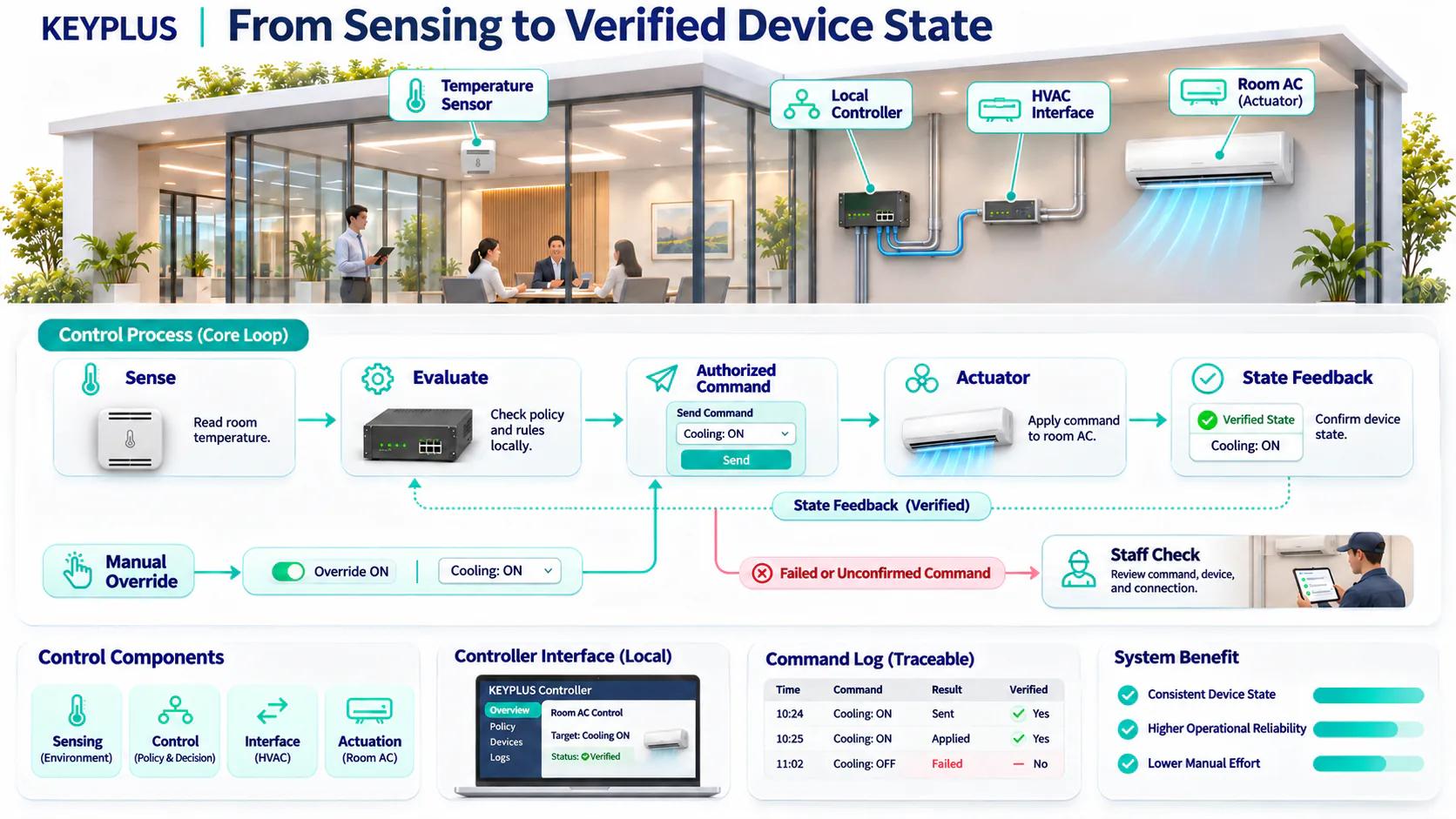
A supported sensor reports a leak, gas, presence or environmental condition
required local protection remains active
the gateway adds device and location context
the event reaches the appropriate priority and team
a permitted local action or service task follows
device feedback, a later reading or inspection provides completion evidence.
Local protection continues to have a dedicated role when the wider platform is unavailable. Device feedback and manual control connect the system with physical conditions, while safety-related equipment follows its own design and approval scope.
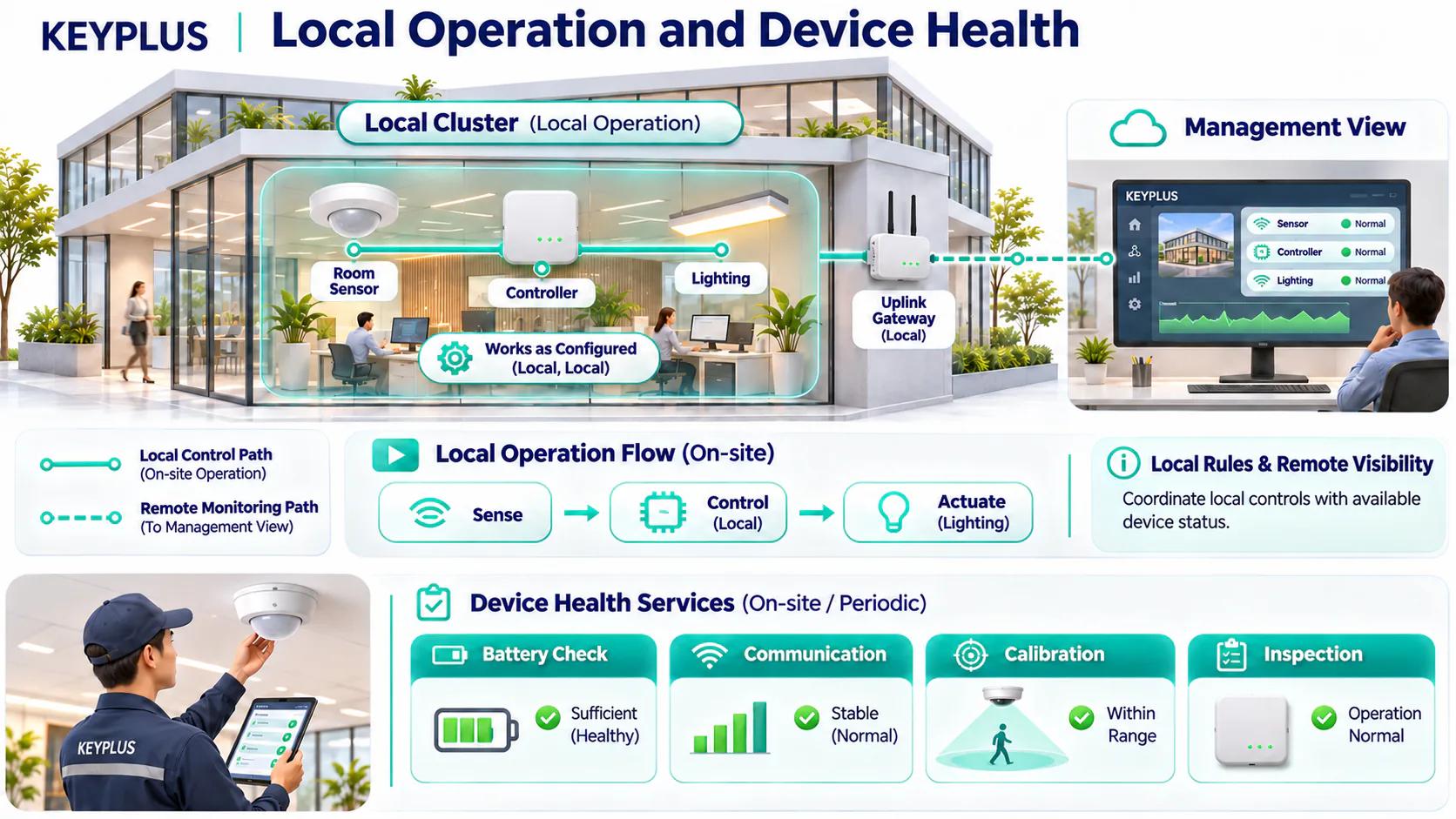
Sensor and control guide connects detection technology, placement, communication and the response at the actuator. Commissioning links normal operation, interruption and physical feedback, with life-safety devices handled through their separate design and acceptance process.
ゲストルーム、賃貸ユニット、教室、会議室、小売スペース、キッチン、プラントルーム、ユーティリティエリア、承認された非臨床病院スペースでは、異なるセンサーの組み合わせ、閾値、プライバシー制御および対応手順が必要です。
Explore environmental and device-state sensing, room controllers, actuators and the event workflows that connect a reading with a response.
No. Required protection systems remain independently designed, certified and authoritative; an approved interface may share selected status for wider response.
Not necessarily. Many presence and occupancy technologies indicate state without identifying an individual.
No. Notification, human review and permitted control serve different conditions, with local safety logic retained for its required role.
Not necessarily. Actuator state, a follow-up reading or inspection provides evidence of the physical result, separate from the command acknowledgement.
A sensor reading becomes operationally useful when it has a location, a responsible team and a permitted response. Local controllers and actuators connect that information with the physical space.